
Common wiper blade questions answered for Aussie drivers

TL;DR:
- Wiper blades in Australia should be replaced every 6 to 12 months based on performance, with inspection every three months due to harsh UV and weather conditions. Matching the correct size and connector type and replacing both blades simultaneously ensures optimal visibility and safety. Regular cleaning and proper installation can extend blade lifespan, while quality blades designed for Australian climates provide better durability.
Wiper blades rarely get attention until they fail you in the middle of a downpour on the Hume Highway. Yet they are one of the most safety-critical parts on your car, and common wiper blade questions about when to replace them, what size to buy, and how to fix squeaking come up constantly among Australian drivers. The answers matter more here than in most countries. Australian conditions, from fierce UV summers in Queensland to heavy winter rains in Victoria and Tasmania, put blades through punishment that drivers in milder climates simply never encounter. This article gives you direct answers to every question that matters.
Table of Contents
- Key takeaways
- 1. Common wiper blade questions: when do blades actually need replacing?
- 2. Why does blade size matter, and how do I find the right fit?
- 3. What causes squeaking and chattering, and can I fix it without replacing?
- 4. Why should I replace both blades at the same time?
- 5. How do I replace wiper blades safely at home?
- 6. How do I make my wiper blades last longer through Australian seasons?
- My experience: what most drivers get wrong about wiper blades
- GWC Wipers: premium blades built for Australian conditions
- FAQ
Key takeaways
| Point | Details |
|---|---|
| Replace every 6 to 12 months | Australian UV and heat degrade rubber faster than calendar-based rules suggest, so inspect every 3 months. |
| Match size and connector type | Driver and passenger blades often differ in length; always verify fit before purchasing replacements. |
| Replace both blades together | Replacing one blade creates uneven visibility; worn blades wear at a similar rate and should go at the same time. |
| Clean before you replace | Squeaking and chattering can sometimes be resolved with a thorough glass and blade clean before buying new blades. |
| DIY install takes under 10 minutes | Fitting new blades yourself is straightforward and safe with the right technique and a quick test swipe after. |
1. Common wiper blade questions: when do blades actually need replacing?
The most frequent question Australian drivers ask is simply: how do I know when my blades are done? The answer is performance-based, not calendar-based. Your blades are telling you they need replacing every time they leave streaks, skip across the glass, chatter noisily, or smear rather than clear.
Watch for these specific symptoms:
- Streaking across the windscreen in either direction
- Skipping or juddering where the blade bounces rather than gliding
- Squeaking or chattering during every swipe
- Visible rubber damage, including cracks, tears, or a split blade edge
- Incomplete clearing, where sections of the screen stay wet
The general rule is replace every 6 to 12 months, but Australian conditions frequently push that closer to the six-month mark. Intense UV exposure from our sun hardens and cracks rubber much faster than the mild Northern Hemisphere climates these guidelines were originally written for. If you park outside regularly, especially in Darwin, Perth, or anywhere in the outback, your blades are ageing faster than you realise.
Inspect blades every 3 months in harsh conditions rather than waiting for a storm to reveal the problem. Run a damp cloth along the rubber edge and feel for roughness, ridges, or brittleness. If the edge feels stiff rather than pliable, the blade is already compromised.
Pro Tip: Never wait until blades look bad. Rubber can degrade well before any visible cracking appears, and degraded rubber can cost you critical visibility in a sudden downpour.
2. Why does blade size matter, and how do I find the right fit?
This is one of those common wiper blade questions that seems simple but trips up a lot of drivers. Buying the wrong size means poor contact with the glass, reduced clearing area, and in some cases the blade physically fouling against the A-pillar or bonnet.
Most vehicles have different sizes for driver and passenger sides, and assuming both sides are the same is a common and costly mistake. The driver’s side is typically longer to cover more of the primary viewing area. Beyond length, the connector type on the wiper arm must match the attachment point on the replacement blade. There are multiple connector styles in use across Australian cars, including hook, pin-top, pinch-tab, and side-pin fittings.
Here is how to confirm the right fit before purchasing:
- Measure both existing blades from tip to tip before removing them
- Check your vehicle’s owner manual for the manufacturer-recommended sizes
- Use a vehicle-specific selector tool like the one on GWC Wipers to confirm compatibility by make, model, and year
- If upgrading to beam blades, verify your vehicle’s windscreen curvature is compatible
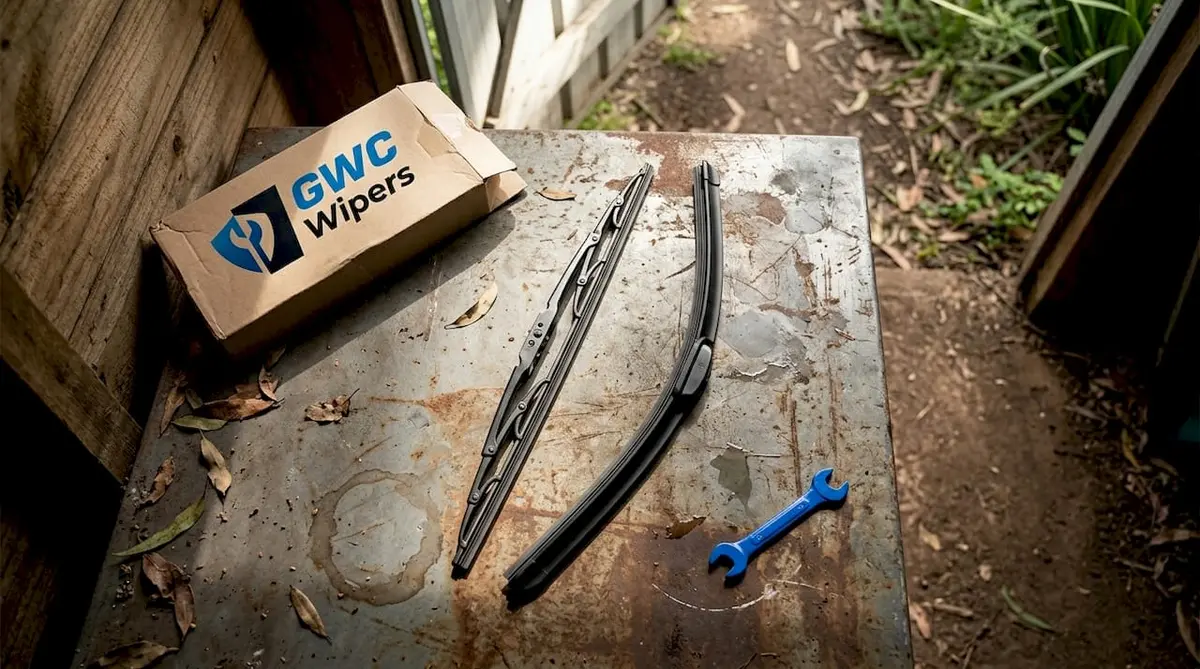
The blade type also matters. Conventional frame blades use a metal framework to distribute pressure, while beam blades use a single curved strip of material to maintain consistent contact across the glass. Beam blades generally perform better on curved modern windscreens and handle debris build-up more effectively. You can read more about blade types for Australian drivers to understand which design suits your vehicle.
3. What causes squeaking and chattering, and can I fix it without replacing?
Squeaking is one of the most common wiper blade questions, and the good news is it does not always mean immediate replacement. Squeaking and chattering often stem from dirty glass, debris buildup on the rubber edge, or even a dry windscreen. Before spending money on new blades, work through this process:
- Clean the windscreen thoroughly using a dedicated glass cleaner. Road grime, wax residue, and insect splatter create an uneven surface that makes blades judder.
- Wipe down the rubber edge of each blade with a cloth dampened with rubbing alcohol or white vinegar. This removes chemical films and loosens trapped dirt.
- Check the wiper arm angle. Sometimes arms lose tension over time or get knocked out of alignment, causing the blade to sit at the wrong angle to the glass.
- Test the blades on a wet screen after cleaning. If the noise disappears, cleaning was the fix.
If the squeaking persists after a thorough clean, the rubber edge itself is likely the problem. Microscopic heel-toe wear patterns develop along the rubber edge over time, creating a surface that can no longer glide cleanly. No amount of cleaning reverses that. Replacement is the only fix.
Pro Tip: When cleaning blades, always support the wiper arm in the raised position. If the arm snaps back onto the bare glass, it can crack the windscreen.
4. Why should I replace both blades at the same time?
This comes up constantly, and the logic is straightforward. Both blades on your car experience similar levels of wear and exposure. They face the same UV, the same heat, and the same wet seasons. Replacing only the worst-performing blade leaves a degraded blade on the other arm, and you are guaranteed to be back at the same issue within weeks.
The visibility risk is real. During heavy rain, inconsistent clearing between the driver and passenger sides creates blind spots that affect your ability to see pedestrians, cyclists, and other vehicles. Mismatched wipe quality is not just inconvenient. It is a safety concern.
Replacing both at once is also more economical when you consider the labour and time involved. Whether you are doing it yourself or having a mechanic fit them, doubling up costs very little extra and gives you a full reset on both sides of the windscreen.
5. How do I replace wiper blades safely at home?
DIY replacement is one of those tasks that sounds harder than it is. Most replacements take 5 to 10 minutes, even for first-timers. Here is how to do it safely:
- Lift the wiper arm away from the windscreen and support it in the raised position.
- Locate the release tab where the blade attaches to the arm. Press the tab and slide the blade downward to detach it.
- Note the connector style before removing the old blade completely, so you confirm your replacement has the correct attachment.
- Attach the new blade by sliding it onto the arm until you hear a firm click.
- Lower the arm back gently. Do not let it spring back unsupported.
- Repeat on the other side.
- Always test with a full swipe on a wet screen after installation. Check for skipping, noise, or sections that fail to clear, and reseat the blade if any issue is detected.
Common mistakes to avoid during installation:
- Letting the arm snap down onto bare glass without a blade attached
- Forcing the connector instead of pressing the release tab properly
- Forgetting to test before driving
For a detailed walkthrough with photos, the step-by-step install guide on GWC Wipers covers each attachment type used on popular Australian vehicles.
| Step | Action | Time estimate |
|---|---|---|
| 1 | Lift arm, press release tab, remove old blade | 1 to 2 minutes per side |
| 2 | Attach new blade until it clicks | 1 to 2 minutes per side |
| 3 | Lower arm gently, test on wet glass | 1 minute |
6. How do I make my wiper blades last longer through Australian seasons?
Wiper blade maintenance in Australia requires thinking about two distinct threats: heat and UV degradation in summer, and cold, wet conditions in winter. The approaches are different for each.
For summer:
- Park in shade or use a windscreen sun shield whenever possible. Sustained heat above 40°C accelerates rubber hardening significantly.
- Do not run dry wipers to clear dust. The friction damages the rubber edge quickly. Always spray washer fluid first.
- Wipe blades with a damp cloth regularly to remove the fine layer of UV-degrading grime that builds up during dry months.
- Premium blades designed for UV resistance use materials that hold flexibility longer under Australian sun exposure. This is worth considering when choosing replacements.
For winter and wet seasons:
- Lift wiper blades away from the glass overnight if frost is forecast. This prevents the rubber bonding to the glass and tearing when the wiper is activated. A winter car preparation checklist can help you build this habit as part of a broader cold-weather routine.
- Never use wipers to clear ice from the windscreen. The rubber is not designed for that, and the motor strain can also damage the wiper mechanism.
- Check that washer fluid is rated for low temperatures to avoid the nozzles freezing.
Consistent blade maintenance also means keeping the windscreen itself clean. A glass surface coated in road film, tree resin, or wax residue shortens blade life considerably, regardless of blade quality.
My experience: what most drivers get wrong about wiper blades
I have spoken with a lot of Australian drivers about wiper maintenance over the years, and the most consistent pattern I see is this: people wait until blades have clearly failed before acting. They wait for that rainy night when the screen is barely clearing before they take action.
What troubles me about that approach is that rubber can degrade well before any visible sign appears. By the time you see cracks or splits, the blade has likely been compromising your visibility for months. I would argue that a performance-based inspection every three months is worth more than any calendar reminder you set.
The other misconception I encounter regularly is that cleaning fixes everything. Cleaning removes surface contamination and can resolve some squeaking, but once the rubber has hardened or developed wear patterns along its edge, no cleaning routine brings it back. I have seen drivers spend 20 minutes cleaning blades that simply needed replacing.
My practical advice: buy quality blades suited to Australian conditions, replace them in pairs, and do not treat the task as difficult. Once you have done it yourself the first time, it takes under 10 minutes and saves you both money and a stressful drive in the rain.
— Faisal
GWC Wipers: premium blades built for Australian conditions
If the answers above have prompted you to check your blades, GWC Wipers makes finding the right replacement straightforward. The site stocks premium wiper blades engineered specifically for the UV exposure, heat, and seasonal rain that Australian drivers deal with year-round.
Whether you drive a Toyota, a Mercedes-Benz, or anything in between, GWC Wipers has vehicle-specific fitment covered. You can shop Toyota wiper blades or Mercedes-Benz wiper blades directly from dedicated product pages, each backed by a perfect fit guarantee, 12-month warranty, and free shipping Australia-wide. Detailed installation guides are included with every order, so your first DIY fit is fully supported. If you need guidance choosing between blade types or confirming compatibility, the GWC Wipers team is ready to help.
FAQ
How often should I replace my wiper blades in Australia?
Most Australian drivers should replace wiper blades every 6 to 12 months, but harsher UV and heat conditions in northern and inland regions often mean closer to 6 months. Inspect blades every 3 months and replace based on performance, not just time.
Can I use the same wiper blade size on both sides of my car?
Not usually. Most vehicles use different blade lengths on the driver and passenger sides. Always measure both existing blades or check your owner’s manual before purchasing replacements to confirm the correct sizes.
Why are my new wiper blades still streaking?
New blades can streak if there is a wax or chemical film on the windscreen. Clean the glass thoroughly with a dedicated glass cleaner. If streaking continues after cleaning, check that the blade is seated correctly on the arm and making full contact with the glass.
Is it safe to replace wiper blades myself?
Yes. DIY replacement typically takes 5 to 10 minutes per pair with no tools required. The key safety precautions are supporting the arm so it does not snap back onto bare glass and confirming each blade clicks securely into place before testing.
What is the difference between conventional and beam wiper blades?
Conventional blades use a metal frame with multiple contact points, while beam blades use a single curved piece of material to maintain even pressure across the entire glass. Beam blades generally perform better on curved modern windscreens and handle debris more effectively in Australian conditions.
Recommended
- Best windshield wiper blade types for Australian drivers | GWC Wipers
- Why regular wiper blade replacement matters for drivers | GWC Wipers
- Upgrade your windshield visibility: expert guide for Australian drivers | GWC Wipers
- Understanding wiper blade performance testing for safer driving in 2026 | GWC Wipers