
Stop Wiper Blade Skipping in Five Minutes, Faisal’s Australian Checklist
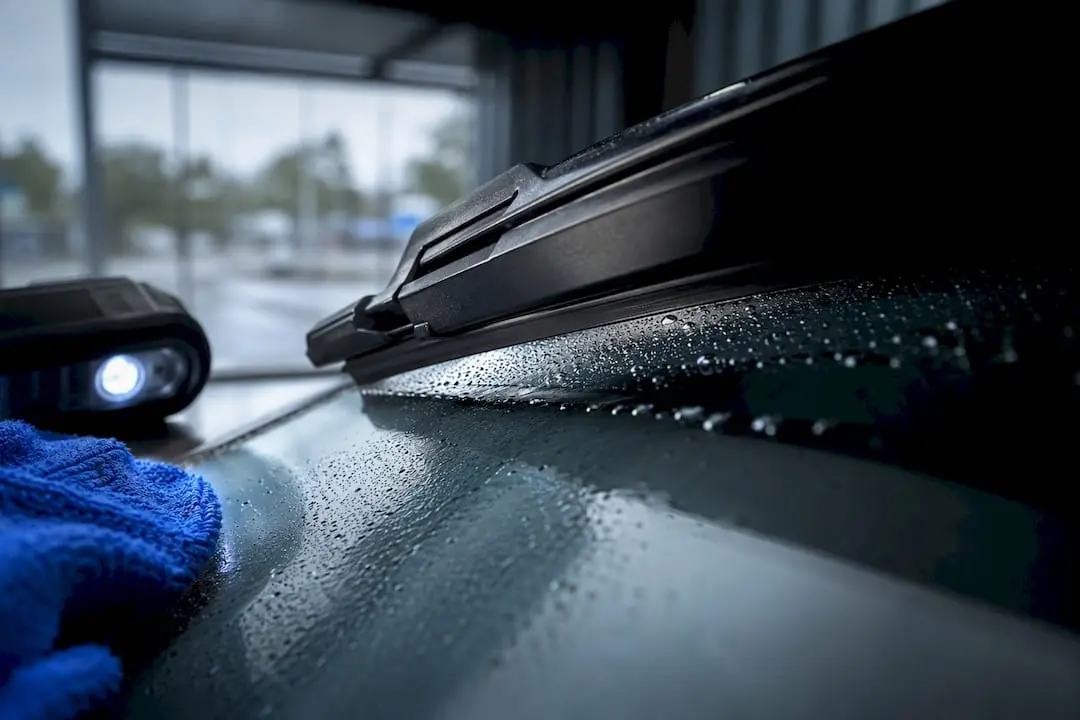
Clean the blade edge with a microfibre cloth and isopropyl alcohol, then decontaminate the windscreen and run the wipers with washer fluid. If the skip returns in the exact same spot, the blade is nicked or hardened and needs replacing rather than cleaning. Visible nicks, brittle rubber, or streaks that won’t clear after this test are your signal that it’s time for new blades, not another clean.
TL;DR:
- Properly cleaning the blade with alcohol and decontaminating the windscreen can resolve most early-stage skipping caused by debris or buildup.
- Mechanical issues such as bent arms or worn pivot points are common causes of persistent skipping after cleaning the blades and glass.
- Replacing blades is necessary when rubber becomes hardened, cracked, or develops nicks that prevent even contact, especially if cleaning doesn’t fix streaking.
- Using correctly fitted blades designed for your vehicle’s curved windscreen improves contact and reduces failure from geometry mismatches.
- Short-term fixes like alcohol wipes or talcum powder can temporarily reduce skip but are no substitute for timely blade replacement or addressing mechanical causes.
Table of Contents
- Why wiper blades skip in the first place
- How do you clean a skipping wiper blade?
- How do you decontaminate a windscreen that’s causing wiper skip?
- Could the wiper arm or pivot be causing the skip?
- When cleaning won’t fix it: signs you need new blades
- Fast remedial tricks if you can’t replace blades today
- Checking and repairing the wiper motor and linkage
- Faisal’s short diagnostic checklist
- Get the right blades fitted and stop the skip for good
- Sources
- FAQ
Why wiper blades skip in the first place
Skipping usually comes down to friction. Dry glass, glass sealants or coatings, and everyday road film all increase what’s called stick-slip friction, where the rubber grips the glass, releases, then grips again in a stutter. DetailingWiki describes this as wiper judder, and it’s the single most common reason otherwise healthy blades start hopping across the glass.
Mechanical issues make it worse. A bent arm, a loose pivot, or a poor attack angle (the angle the blade meets the glass at) can cause the blade to lift instead of gliding flat. Analysis of wiper blade dynamics shows that a larger attack angle raises the likelihood of the blade jumping, which explains why some vehicles seem more prone to chatter than others.
Then there’s the blade itself. Hardened rubber, a nick along the edge, or a section that’s come loose from the frame stops the blade from making even contact along its full length. No amount of cleaning fixes a physically damaged edge.
How do you clean a skipping wiper blade?
Before you touch anything, lift the wiper arm into service position (most vehicles do this automatically when you switch off with the wipers mid-sweep, or via a menu setting) and lay a towel over the bonnet or cowl to protect the paint.
- Wash the blade with warm water and a mild dish soap to lift grit, brake dust, and general road grime off the rubber.
- Wipe the rubber edge firmly with a microfibre cloth soaked in isopropyl or rubbing alcohol. This cuts through the waxy film that builds up on the moulded edge and causes it to stick.
- Run a fingernail or the folded edge of the cloth along the blade to dislodge any trapped debris sitting in the wiping edge itself.
- Wipe the blade dry on a clean section of microfibre and check it for an even, unbroken bead of contact.
- Top up washer fluid, run the wipers once, and watch closely. Consistent contact with no streaking means the blade’s fine. A repeat streak in the same location points to damage.
Pro Tip: Fold the microfibre into quarters and use a fresh section every couple of wipes. Dragging the same dirty patch back over the rubber just reintroduces the grit you’re trying to remove.
This same routine solves most early-stage judder, and it’s worth doing before you assume the blade is faulty. Our own guide to cleaning wiper blades and glass walks through the process with photos if you want a visual reference.
How do you decontaminate a windscreen that’s causing wiper skip?
A perfectly good blade will still skip on a windscreen coated in old wax, polish residue, or mineral deposits from bore water or road spray. These contaminants sit on the glass as a grabby film that fights the blade instead of letting it glide.
- Start with a dedicated automotive glass cleaner and a clean microfibre, working in straight lines rather than circles.
- For stubborn residue, a clay bar or a very fine detailing abrasive can lift what glass cleaner alone won’t shift, a technique detailers commonly use to restore a low-friction glass surface, though it’s worth practising on a small section first if you’re not confident with it.
- Rinse thoroughly and finish with a dry, lint-free wipe. Leftover glass cleaner residue can be just as grabby as the contamination you removed.
If glass sealants or aftermarket coatings are the culprit, judder often reappears within weeks of application, and our piece on wiper judder after a ceramic coating covers why that happens. Once the glass is clean, retest the wipers before you spend money on new blades. A five-minute decontamination fixes more skipping problems than people expect.
Could the wiper arm or pivot be causing the skip?
Once blade and glass are both clean, look at the hardware holding the blade against the glass. This is the step drivers skip, and it’s often where the real answer’s hiding.
- Check the arm’s shape against its opposite twin (driver’s side versus passenger’s side) for any visible bend or twist.
- Feel for play at the pivot point. Grab the arm near the base and gently rock it side to side. Any looseness or grinding suggests worn bushings or corrosion inside the pivot.
- Confirm the blade sits flush along the glass at rest, with no gap at either end, and that the connector or adaptor clip is fully seated and not cracked.
- Watch the blade at low speed across a curved section of the windscreen. Lifting or chatter here often points to attack angle, and small seating adjustments or a switch to a beam-style blade frequently resolves it on vehicles with more curved glass.
If the arm is genuinely bent or the pivot has real play, don’t try to bend it back yourself. Get a workshop to true it up. A forced fix on the arm can throw off spring tension and make the skip worse.
When cleaning won’t fix it: signs you need new blades
If you’ve cleaned the blade, decontaminated the glass, and the same streak still shows up in the same spot, the rubber edge itself is the problem. Once a nick or deformation sets into the wiping edge, no amount of cleaning restores even contact, and replacement is the only real fix.
Other clear signs include rubber that’s gone hard, glassy, or brittle to the touch, visible splits along the blade, or a section of rubber that’s separating from the frame. Poor clearing in heavy rain, even after a fresh clean, is another giveaway that the blade has lost its edge shape.
As a general rule, wiper blades need replacing roughly every six to 12 months depending on your climate and how much sun and grit they cop. Always replace both blades together, even if only one looks bad, since mismatched wear leads to uneven pressure and one side skipping again within weeks. When choosing new ones, get the correct length and connector type for your model, and consider a beam or hybrid design over a basic framed blade. Beam-style blades generally outlast conventional framed blades, particularly on curved windscreens where attack angle is already working against you.
Fast remedial tricks if you can’t replace blades today
Stuck with a skipping blade and no time to fit new ones? These short-term treatments buy you a few days of clearer glass without doing damage, provided you use them correctly.
- Rubbing alcohol wipe: softens hardened rubber slightly and strips the waxy film causing stick-slip. Reapply every few days.
- Quick detailer, applied sparingly: a light film of quick detailer on both rubber and glass can reduce friction and quieten judder for a few days to a couple of weeks.
- A light dusting of talcum powder on the rubber edge can temporarily cut sticking, though it wears off within a wipe cycle or two in rain.
Avoid heavy oils, silicone sprays, or thick sealants on the rubber itself. These can leave a residue that actually worsens contact over time rather than fixing it, even though they feel slippery when you apply them.
Pro Tip: Always test any treatment at low wiper speed on a quiet street before you rely on it in traffic or rain. If the blade still skips at low speed, it’ll skip worse at high speed.
Checking and repairing the wiper motor and linkage
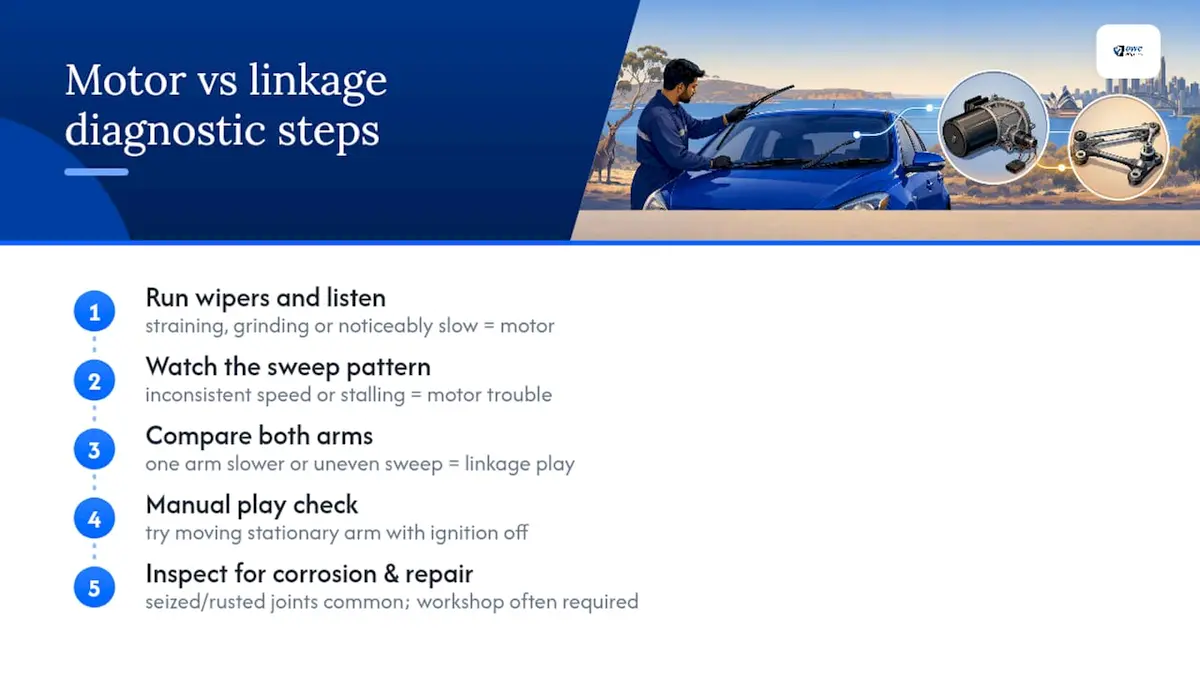
If both blades skip, chatter, or move unevenly no matter how clean they are, the fault might not be the blade at all. It’s worth ruling out the motor and linkage before you buy another set of blades.
Start the wipers and listen. A motor that’s straining, grinding, or noticeably slower than it used to be often signals worn brushes or a failing gearbox inside the motor housing. This is different to blade chatter. Motor trouble usually shows up as inconsistent speed or the wipers stalling partway through a sweep, rather than a rhythmic skip in one spot.
Next, check the linkage, the set of metal rods and joints connecting the motor to both wiper arms. Watch the arms as they sweep. If one arm moves noticeably slower than the other, hesitates, or the sweep pattern looks uneven compared to what you remember, a linkage joint may have worn play in it or a mounting bolt has loosened. You can sometimes spot this by gently trying to move a stationary arm by hand with the ignition off. Excessive play at the linkage joint, beyond a small amount of natural give, suggests a worn bushing that needs attention.
Corrosion is a common culprit here too, especially on vehicles that see a lot of coastal air or road salt. A linkage joint that’s seized or rusted can throw the whole wiper geometry out, which shows up as one blade skipping even though it’s mechanically fine.
Motor and linkage repairs involve dismantling trim and, often, careful reassembly to get the parking position right. Unless you’re confident with basic mechanical work, this is a job for a workshop rather than a driveway fix.
Faisal’s short diagnostic checklist
Here’s the order I run through every time a driver tells me their wipers are skipping: clean the blade, clean the glass, test with washer fluid, then inspect the arm and pivot. Replace the blade only if the same streak survives all of that.
In practice, most skipping resolves at the cleaning stage. Contamination and dry glass account for the bulk of cases I see. The ones that don’t clear up after a proper clean almost always trace back to a nicked edge or a genuinely bent arm, not a mysterious fault.
— Faisal
Get the right blades fitted and stop the skip for good
The right wiper blade fitment is key to preventing skipping that keeps coming back no matter how well you clean, since the wrong-sized or worn-out blade can’t hold even pressure along a curved windscreen. A blade that’s even a few millimetres off spec, or made from rubber that’s already hardening, will re-develop the same stick-slip pattern within weeks regardless of how carefully you decontaminate the glass.

A vehicle selector matching your make, model, and year to the correct blade length and connector type across many models helps ensure correct fitment without guesswork. These blades typically feature natural rubber with segmented pressure distribution designed for even contact across curved glass, often backed by satisfaction guarantees and warranties. If your car’s a Toyota, the fitment guide walks you through the exact steps. After fitting, run the same low-speed test from the cleaning steps above. Consistent, quiet contact means the job’s done. Check the selector for your vehicle and get a set sorted before the next downpour catches you with a smeared windscreen.
Sources
This article draws on wiper dynamics research covering attack angle and blade jump, practical detailing advice on glass decontamination, and standard vehicle maintenance guidance on replacement intervals. Full sources are linked throughout the sections above, including DetailingWiki’s explanation of wiper judder and the RAC’s guide to replacing windscreen wipers. For glass-specific decontamination methods, Diamondbrite’s guide to streak-free car glass is a solid companion resource.
- What is wiper judder - DetailingWiki
- Analytical study of wiper blade dynamics (attack angle and jumping)
- Signs it is time to replace wiper blades | Kalamunda Toyota (blog)
- How to change windscreen wipers | RAC Drive
FAQ
How do I stop my wiper blades from skipping?
Clean the rubber edge with isopropyl alcohol and decontaminate the windscreen with a proper glass cleaner, then run the wipers with washer fluid to test. If the skip persists in the same spot, the blade needs replacing rather than more cleaning.
Why do my wiper blades stutter or chatter?
Stuttering is usually caused by high friction between the rubber and glass from dryness, coatings, or contamination, which makes the blade stick and then jump rather than glide. A bent arm or poor attack angle on curved glass can cause the same chatter mechanically.
Why do brand new wiper blades skip straight away?
New blades often skip because the windscreen itself is contaminated with old wax, polish, or sealant residue that the new rubber can’t grip through. Decontaminating the glass before fitting new blades, and choosing a correctly sized set from a vehicle-specific fitment tool, usually solves this immediately.
What causes wiper blades to jump across the glass?
Jumping is largely a friction and geometry issue. Analysis of wiper blade dynamics found that a larger attack angle between the blade and glass increases the chance of jumping, especially on more curved windscreens, and it’s made worse by dry or contaminated glass.
How long do wiper blades usually last before they need replacing?
Most wiper blades need replacing every six to 12 months, depending on sun exposure, climate, and how often they’re used. Replace both blades together for even contact across the windscreen.