
Fleet wiper blade failures: the Australian guide for fleet managers
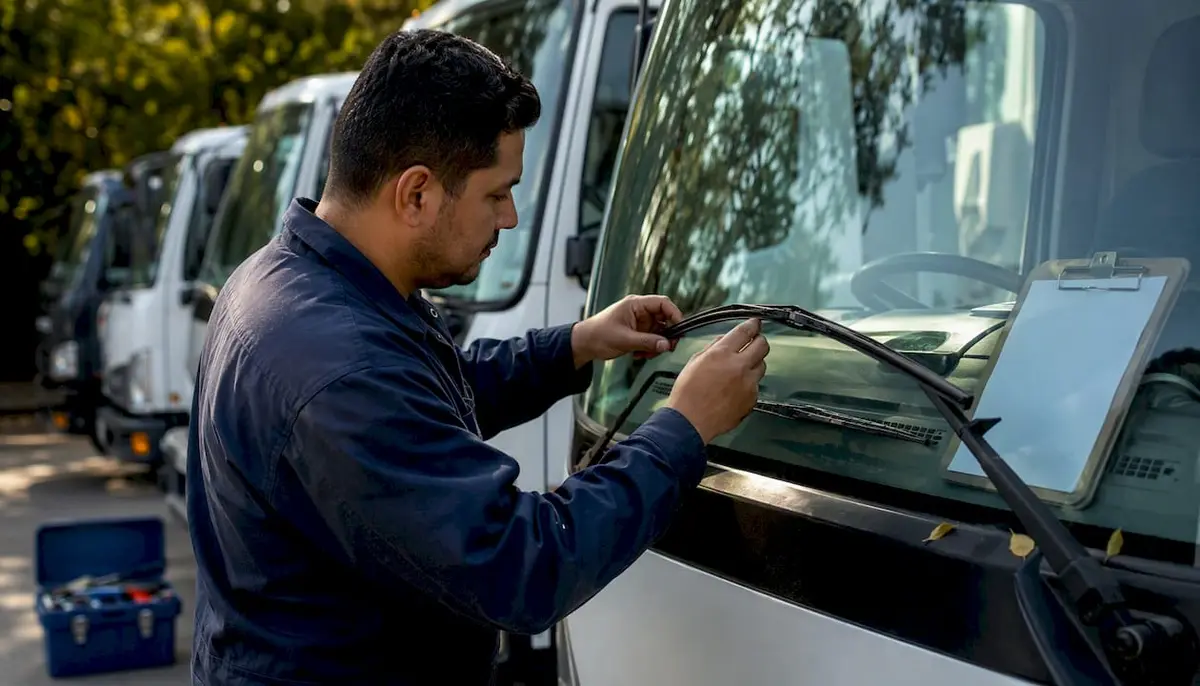
Australian fleets face seven blade-level failures that compromise driver safety: streaking and missed areas, splitting or tearing, loss of contact and uneven pressure, skipping and chatter, edge curling, rubber hardening from UV degradation, and adapter wear. If a vehicle arrives with impaired wipe performance, act on these steps immediately:
- Pull the vehicle from service if visibility is compromised in wet conditions.
- Run a full wipe test with washer fluid and inspect the blade edge by hand.
- Check the wiper arm for straightness before fitting a replacement blade.
- Replace the blade with a vehicle-specific fitment, not a generic multi-fit unit.
- Log the result against the vehicle ID and odometer reading before returning it to service.
Fleet Auto News and GWC Wipers both emphasise that gradual wipe degradation is frequently missed until a heavy downpour reveals the problem. Treating wipers as a safety-critical, scheduled-maintenance item, rather than a replace-on-break consumable, is the single most effective change a fleet manager can make.
Key takeaways
Scheduled, vehicle-specific wiper replacement is the most reliable way to protect driver visibility and reduce safety risk across an Australian fleet.
| Point | Details |
|---|---|
| Inspect on a schedule | Run pass/fail wiper checks every 3–6 months depending on operating environment, not only when drivers report problems. |
| Replace proactively | Set a 6-month cycle for coastal, outback, and high-UV fleets; 12 months for urban fleets with covered parking. |
| Choose vehicle-specific blades | Generic multi-fit blades produce uneven contact pressure; vehicle-specific fitment with segmented pressure distribution wipes cleanly for longer. |
| Stock spares by model | Hold at least one blade set per vehicle for every 50 vehicles, organised by make and model to reduce fitting errors. |
| GWC Wipers for Australian fleets | Vehicle-specific fitment across 2,500-plus models, UV-treated rubber, 12-month warranty, and free shipping Australia-wide. |
Table of Contents
- What are the most common fleet wiper failures, and how do you spot them?
- Why Australian conditions accelerate blade failure faster than use alone
- Fleet inspection checklist: pass/fail criteria and record fields
- How to build a preventative replacement schedule for your fleet
- How to choose replacement wiper blades for your fleet
- Post-install checks every fleet mechanic should run
- The wiper maintenance advice most fleets are still getting wrong
- GWC Wipers: fitment-guaranteed blades built for Australian fleets
- Sources
- FAQ
What are the most common fleet wiper failures, and how do you spot them?
Understanding each failure type by sight and sound lets mechanics and drivers catch problems before they become safety events.
Streaking and missed areas. The blade leaves dry bands or smears across the screen. Run your finger along the wipe edge: a hardened, glazed, or uneven surface confirms the rubber has lost its flexibility. The root cause is usually aged rubber that no longer conforms to the windscreen curvature, or an incorrect blade profile for the vehicle.
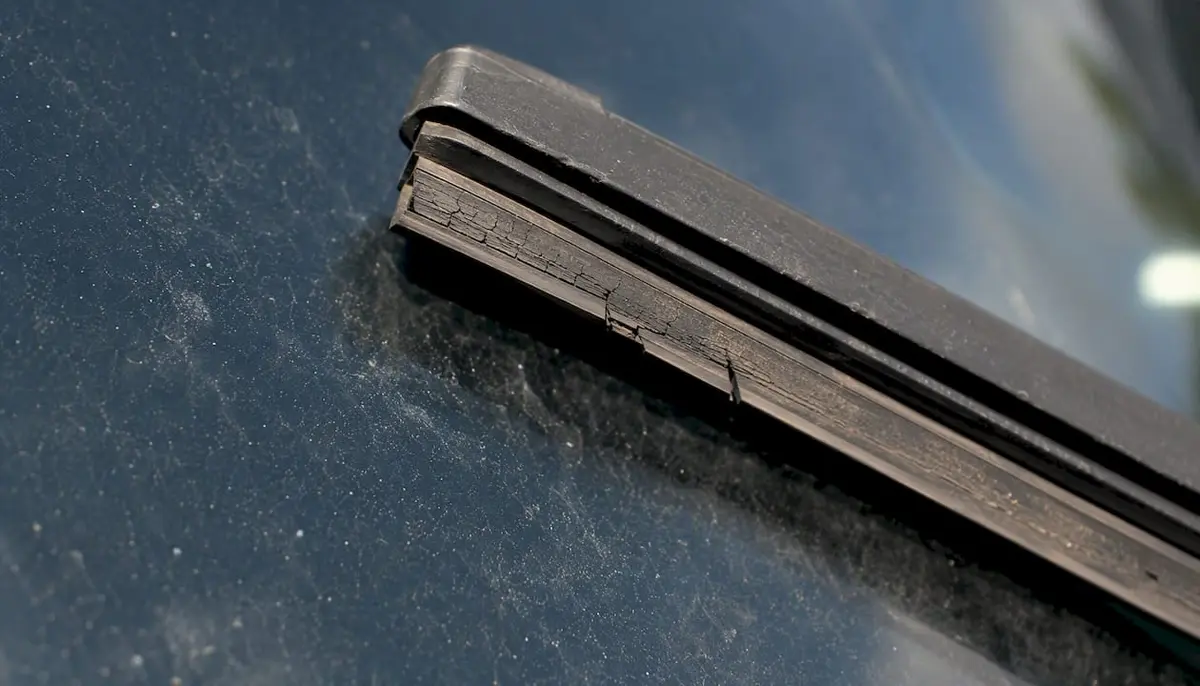
Splitting and tearing. Visible cracks, chunks missing, or a frayed wipe edge. Chemical attack from insect residues, fuel splash, and harsh cleaning products degrades low-grade rubber quickly. A blade that tears in sections will leave large unswept areas.
Loss of contact and uneven pressure. One end of the blade lifts off the glass while the other drags. Generic multi-fit blades commonly produce uneven contact pressure on modern windscreens, causing missed areas and accelerated wear. Vehicle-specific blades with segmented pressure distribution solve this at the source.
Skipping, chatter, and judder. The blade bounces across the glass rather than wiping smoothly. A warped rubber edge is one cause; a bent wiper arm is another. Automatic car washes with stiff rollers can knock arms out of alignment, and once an arm is bent, replacing the rubber alone will not restore a clean wipe. The arm must be checked and realigned or replaced.
Edge curling. The wipe edge rolls away from the glass, leaving a wide unswept strip. UV heat causes the rubber to deform permanently. This is common on vehicles parked outdoors in Queensland, the Northern Territory, and Western Australia.
Rubber hardening. The blade feels stiff and produces a harsh scraping sound. UV exposure and heat dry out the rubber compound over time, reducing its ability to flex against the glass. Hardened blades often pass a visual check but fail immediately under rain.
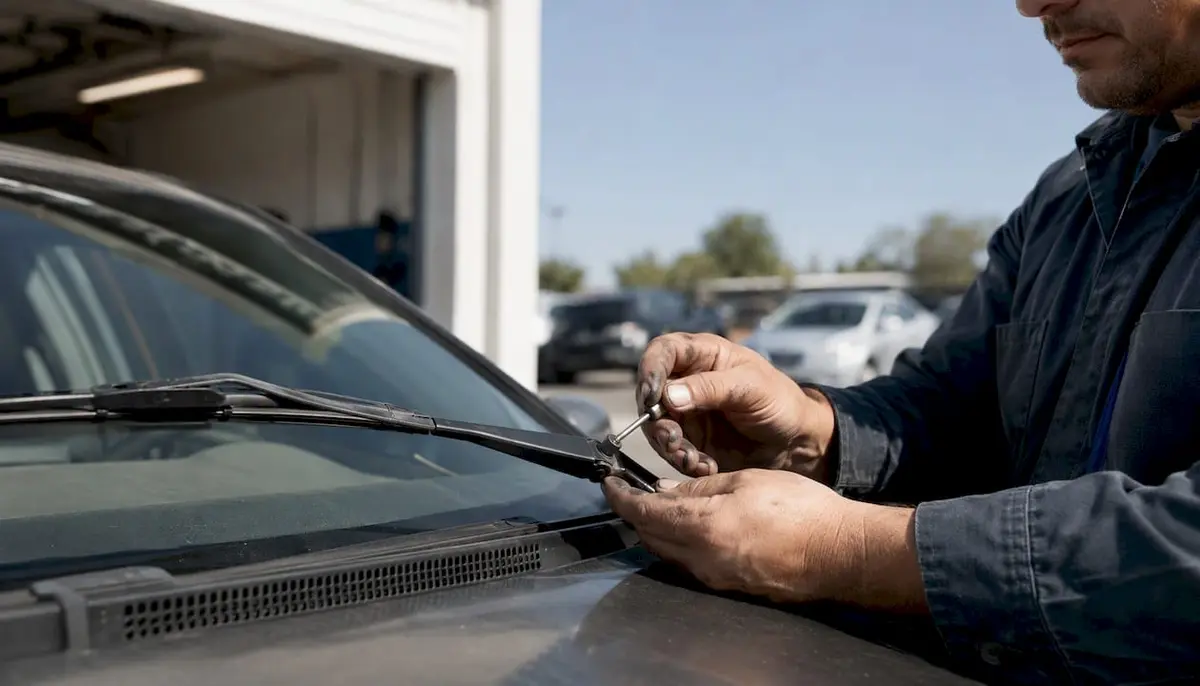
Adapter and connector wear. The blade rocks or sits at an angle on the arm. A worn or incorrectly fitted adapter causes intermittent contact and uneven pressure across the full sweep. Always confirm the adapter type matches the arm hook before fitting.
Pro Tip: Lift the blade off the glass and flex the rubber by hand. It should bend smoothly and spring back. Any stiffness, cracking, or deformation means it is past its service life, regardless of how it looks from the driver’s seat.
Why Australian conditions accelerate blade failure faster than use alone
In Australia, environmental exposure, particularly UV radiation and heat, shortens wiper blade life more than use alone. A blade on a vehicle parked outdoors in Darwin or Broken Hill degrades faster than the same blade on a vehicle doing twice the kilometres in a covered car park in Melbourne. This distinction matters for how you set replacement intervals.
Dust and sand act as abrasives, scoring the wipe edge on every stroke. Coastal salt accelerates corrosion of metal fittings and the spring tension components inside the blade assembly. Urban pollutants and insect debris chemically attack the rubber surface, softening it unevenly and causing premature tearing. These climate-specific pressures are why a replacement schedule built on kilometres alone will underserve vehicles in harsh operating environments.
Pro Tip: Where depot parking is outdoors, fitting blade covers or parking vehicles nose-in under shade reduces UV exposure significantly. For vehicles in coastal or outback routes, specify blades with UV-treated rubber or silicone-coated edges and shorten the inspection interval by one month.
Fleet inspection checklist: pass/fail criteria and record fields
A repeatable inspection, run at every scheduled service and during daily walk-arounds in high-risk conditions, catches failures before they reach the driver in the rain. Adapt the pass/fail language from commercial vehicle inspection standards to your own fleet forms.
Inspection points and pass/fail criteria:
- Visual rubber check: Inspect the full blade edge for cracks, tears, hardening, or deformation. Fail: any visible tear, missing section, or surface cracking.
- Full wipe test with washer fluid: Run the wipers through at least three full cycles. Fail: streaking, missed areas covering more than 20% of the sweep, or audible chatter.
- Arm alignment check: With the blade lifted, sight along the arm. Fail: visible bend, twist, or arm that does not return to the park position cleanly.
- Adapter and security check: Confirm the blade seats firmly on the arm with no rocking. Fail: any lateral movement or incorrect adapter type.
- Washer spray coverage test: Activate the washers and confirm fluid reaches the full wipe zone. Fail: no spray, blocked nozzle, or spray missing the wipe area.
Practical diagnostic steps for smearing, judder, and loose pivot nuts are worth keeping on the workshop wall as a quick-reference guide.
Minimum record fields: Vehicle ID, odometer reading, inspection date, inspector name, result (pass/replace), and action taken.
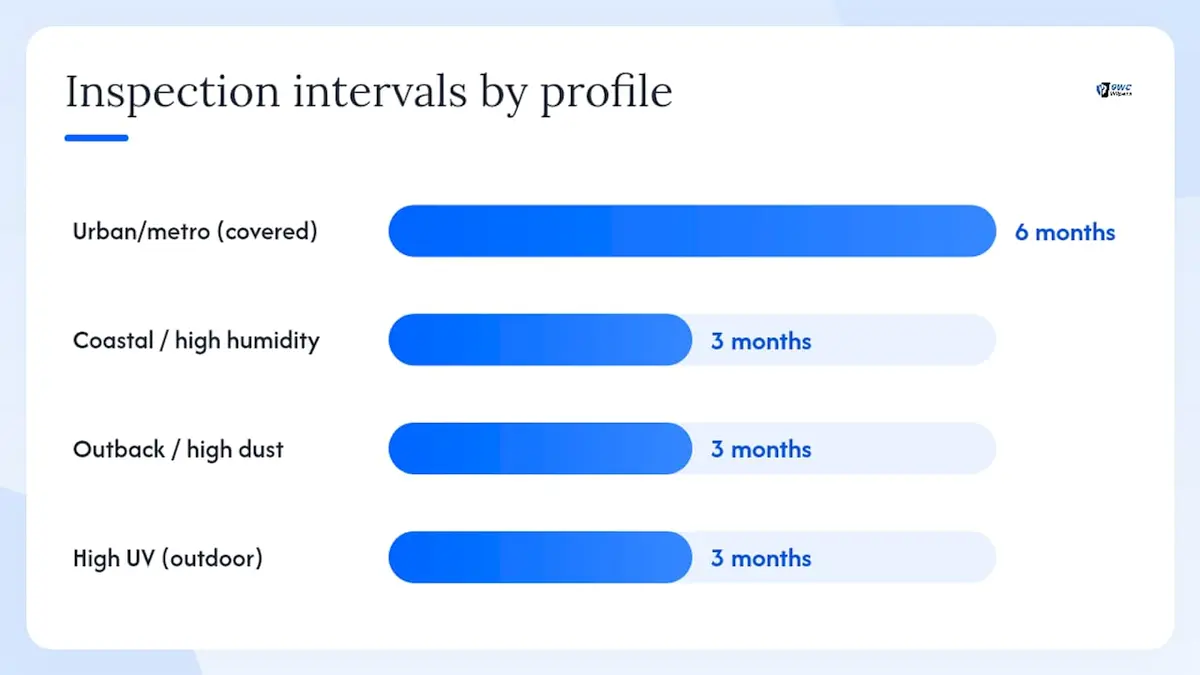
Recommended inspection frequency by operating profile:
| Operating profile | Inspection interval |
|---|---|
| Urban/metro, covered parking | Every 6 months |
| Coastal or high-humidity routes | Every 3 months |
| Outback/remote, high dust | Every 3 months |
| High UV, outdoor depot parking | Every 3 months regardless of km |
How to build a preventative replacement schedule for your fleet
Reactive replacement, waiting until a driver complains, means the problem has already been present through multiple wet-weather events. Fleet reporting confirms that gradual wipe degradation becomes the new normal, with drivers unconsciously adjusting to reduced visibility until a severe storm reveals how bad the blades have become.
Scheduled replacement removes that risk. For most Australian urban fleets, a 12-month or 15,000 km replacement cycle is a reasonable baseline. Coastal, outback, and high-UV environments warrant a 6-month cycle. The expected service life under different Australian conditions is shorter than many fleet managers assume, particularly for vehicles parked outdoors year-round.
For spares policy, hold at least one set of blades per vehicle in stock for every 50 vehicles in the fleet. Stocking by make and model group, rather than by a generic size, reduces fitting errors and speeds up turnaround. The lifecycle cost argument for durable wipers is straightforward: a premium blade that lasts 18 months costs less per month than a cheap blade replaced every six.
Pro Tip: Add wiper inspection as a line item on your existing safety inspection form. It takes under two minutes and means the check happens consistently, not only when someone remembers.
How to choose replacement wiper blades for your fleet
The single most common purchasing mistake in fleet procurement is buying generic multi-fit blades to simplify ordering. Generic blades are designed to fit a wide range of vehicles, which means they fit none of them perfectly. The result is uneven pressure distribution, missed wipe areas, and faster wear on the rubber edge.
Vehicle-specific blades with segmented pressure distribution conform to the exact curvature of each windscreen model. For Australian conditions, look for:
- Natural rubber with UV treatment or silicone-coated edges for heat and UV resistance.
- Aerodynamic blade design to prevent lift and flutter at highway speeds.
- Corrosion-resistant fittings on all metal components, particularly for coastal fleets.
- Preassembled adaptors matched to the vehicle’s arm type, reducing installation error.
- A fitment guarantee and clear warranty terms, so procurement risk is covered.
Choosing the right blade for each vehicle in your fleet is not a luxury, it is the difference between a blade that wipes cleanly for 18 months and one that streaks from the first wet day. Vehicle-specific fitment, UV-treated materials, and a genuine warranty are the three criteria that separate a reliable fleet blade from a cheap consumable.
Avoid blades sold with a large adaptor kit and no vehicle-specific guidance. Confusing adaptor options are a documented barrier to timely replacement and increase the likelihood of installation error. For blade type comparisons suited to Australian conditions, beam blades generally outperform conventional frames in high-UV and high-dust environments.
Post-install checks every fleet mechanic should run
A new blade fitted incorrectly performs no better than a worn one. Run these checks on every vehicle before it returns to service.
Pre-install:
- Confirm the part number against the vehicle make, model, and year using a vehicle selector tool.
- Clean the mounting boss on the arm and inspect the arm for straightness.
- Check that the preassembled adaptor matches the arm hook type.
Installation:
- Attach the blade to the arm following the manufacturer’s fitting sequence.
- Confirm the blade clicks or locks into the adaptor with no lateral movement.
- Lower the arm gently onto the glass; never let it snap down onto a dry screen.
Post-install test (under five minutes):
- Activate washer fluid and run three full wipe cycles at low speed.
- Check for streaking, chatter, or any section of the blade lifting off the glass.
- Run at highway speed (or simulate with a high-speed wipe setting) and confirm no flutter.
- Inspect the blade edge visually after the test for any sign of incorrect seating.
The wiper maintenance advice most fleets are still getting wrong
Fleet maintenance culture tends to treat wipers the way it treats cabin air filters: replace them when someone complains, not on a schedule. The problem with that approach is that wiper degradation is gradual and cumulative. A blade that produces a faint streak in dry conditions will produce a near-opaque smear in a Queensland downpour. By the time a driver notices, the safety margin is already gone.
The second mistake is over-relying on kilometre-based intervals without accounting for environment. A Toyota HiLux doing regional runs in the Pilbara needs new blades twice as often as the same vehicle doing urban deliveries in Adelaide, even at lower mileage. UV exposure and dust abrasion are the dominant wear mechanisms in those conditions, not wipe cycles.
The third, and most avoidable, mistake is fitting generic blades to save a few dollars per vehicle. The cost difference between a generic blade and a vehicle-specific premium blade is small. The performance difference, particularly on modern curved windscreens, is significant. Fleets that have moved to scheduled replacement with vehicle-specific blades consistently report fewer driver complaints and lower total replacement costs over a 24-month period.
GWC Wipers: fitment-guaranteed blades built for Australian fleets
Fleet procurement needs certainty: the right blade, for the right vehicle, with no installation guesswork. GWC Wipers delivers exactly that for Australian fleets, with vehicle-specific fitment across more than 2,500 models, UV-treated natural rubber construction, aerodynamic design, corrosion-resistant fittings, and preassembled adaptors that reduce fitting time and error.
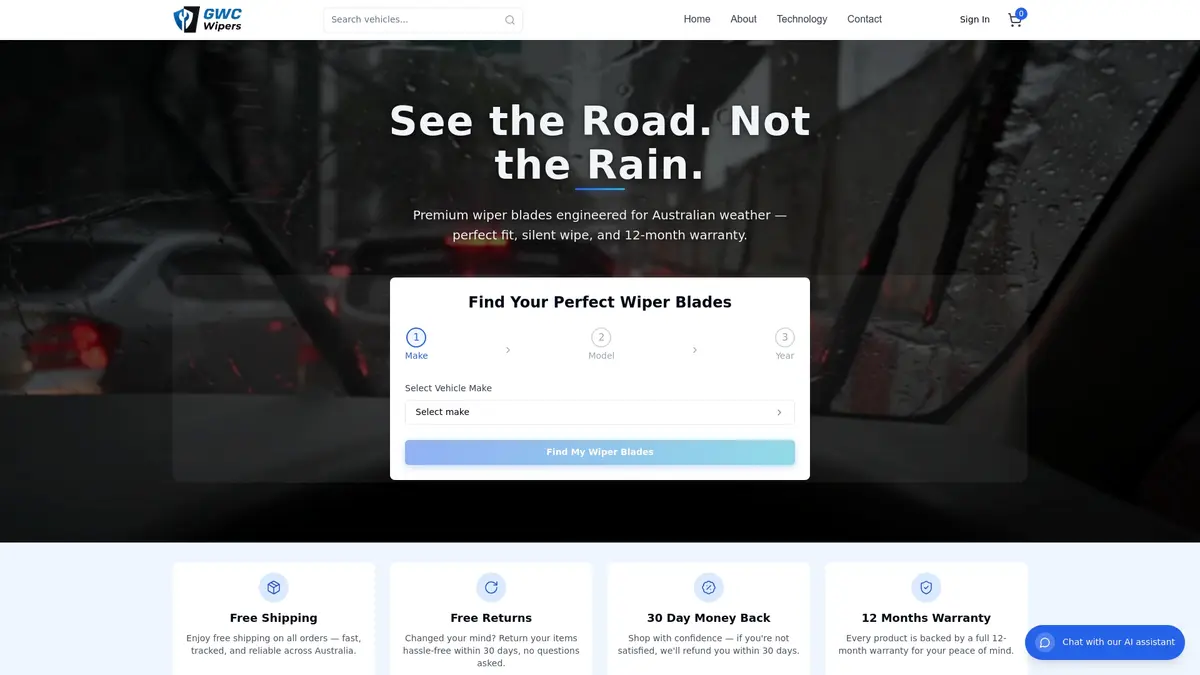
Every order is backed by a 30-day money-back guarantee and a 12-month warranty, which removes procurement risk for fleet managers ordering in volume. The vehicle selector tool confirms the correct blade for each make, model, and year before you order, and free shipping applies across Australia. For fleets running Toyota, Mercedes-Benz, or Mitsubishi vehicles, model-specific pages make bulk ordering straightforward. Use the vehicle selector at Gwcwipers to confirm fitment for every vehicle in your fleet and place your first order today.
Sources
- Understanding how Wiper Blades Work, and Why They Fail
- Don’t overlook wiper blades in your fleet maintenance program - Fleet Auto News
- RESEARCH ANALYSIS: Review of wiper systems - Just Auto
- 5 Common Window Wiper Problems and how to solve them | Control Connections
- Sec. 11.14.04.17. Windshield Wipers and Washers, Chapter 11.14.04. Safety Standards for Trucks, Truck Tractors, Commercial Buses, and Type I School Vehicles, Subtitle 14.
FAQ
What are the most common wiper blade failures in Australian fleets?
Streaking, rubber hardening, edge curling, splitting, skipping or chatter, loss of contact, and adapter wear are the seven most frequent blade-level failures. UV exposure and heat accelerate most of them faster than kilometre-based wear alone.
How often should fleet wiper blades be replaced in Australia?
Urban fleets with covered parking should replace blades every 12 months or 15,000 km. Coastal, outback, and high-UV outdoor fleets need a 6-month cycle, regardless of kilometres travelled.
Why do generic wiper blades fail faster on modern vehicles?
Generic multi-fit blades cannot match the exact curvature of modern windscreens, producing uneven contact pressure that causes missed areas, judder, and accelerated rubber wear. Vehicle-specific blades with segmented pressure distribution resolve this.
What should I check after fitting new wiper blades on a fleet vehicle?
Run three full wipe cycles with washer fluid at low speed, check for streaking or blade lift, then test at high-speed wipe to confirm no flutter. The whole post-install check takes under five minutes.
Does GWC Wipers supply blades for mixed Australian fleets?
GWC Wipers covers more than 2,500 vehicle models with fitment-guaranteed, vehicle-specific blades, backed by a 30-day money-back guarantee and a 12-month warranty, with free shipping across Australia.