
How to maintain Honda wipers in heat: 2026 guide
TL;DR:
- Heat severely damages Honda wiper blades by causing hardening, curling, and streaking, especially in Australian summer temperatures exceeding 35°C. Regular cleaning, selecting heat-resistant materials like silicone, and utilizing Honda’s maintenance mode can extend blade lifespan and maintain visibility. Neglecting these measures leads to accelerated wear, cracking, and compromised safety during intense heat conditions.
Maintaining Honda wipers in heat is the single most effective step you can take to preserve clear visibility and road safety during an Australian summer. Rubber wiper blades are highly vulnerable to thermal degradation, and Australia’s intense UV radiation accelerates that process faster than most drivers realise. The industry term for this process is thermal ageing, and it causes blades to harden, curl, and streak long before their expected service life ends. Understanding what heat does to your blades, and how to counter it, is what separates a driver with clear sight lines from one squinting through smeared glass on a 40°C day.
How does heat damage Honda wiper blades?
Heat is the primary enemy of wiper blade rubber, and the damage begins well before you notice streaking. Failure rates for conventional rubber wiper assemblies increase by an average of 3.2 times once ambient temperatures cross 35°C, reducing service life from 12 months to as little as 3.2 months. For Honda owners in cities like Perth, Adelaide, or western Sydney, where summer days regularly exceed that threshold, this is not a worst-case scenario. It is the baseline.
The mechanism behind this degradation is measurable. Rubber hardness increases by 18 to 25 points on the Shore A scale after sustained heat exposure, which means the blade loses the pliability it needs to conform to your curved windscreen. Once the rubber stiffens, it cannot maintain consistent contact across the glass, and streaking area rises to 61% or more after just 24 hours above 45°C. That is not a minor inconvenience. It is a genuine visibility hazard.
UV radiation compounds the problem significantly. Windshield surfaces in full sun can exceed 65°C, causing rubber blades to expand and lose their curve, accelerating cracking without rain lubrication. In Australian conditions, where vehicles are often parked outdoors for hours, this thermal cycling without moisture is relentless. The molecular structure of the blade edge breaks down progressively, and by the time you see cracking or curling, the damage is already advanced.
| Temperature exposure | Effect on rubber blade | Estimated service life impact |
|---|---|---|
| Below 35°C | Minimal hardening, normal flexibility | Up to 12 months |
| 35°C to 45°C | Moderate Shore A hardness increase | Reduced to 6 to 8 months |
| Above 45°C (24 hrs) | Streaking area exceeds 61%, significant curling | As low as 3.2 months |
| 65°C+ (parked in sun) | Blade expands, loses curve, cracking accelerates | Immediate performance loss |
Understanding this table changes how you think about Australian weather impacts on your Honda’s blades. The damage is cumulative and largely invisible until it reaches a critical threshold.
What are the best practices for cleaning Honda wipers in summer?
The most reliable way to extend wiper blade life in hot weather is consistent, correct cleaning. Cleaning rubber blades every 2 to 4 weeks with mild soap and warm water can extend wiper blade life by 30% or more. That figure reflects the removal of abrasive grit and road film that accelerates surface hardening when baked onto the blade by heat.
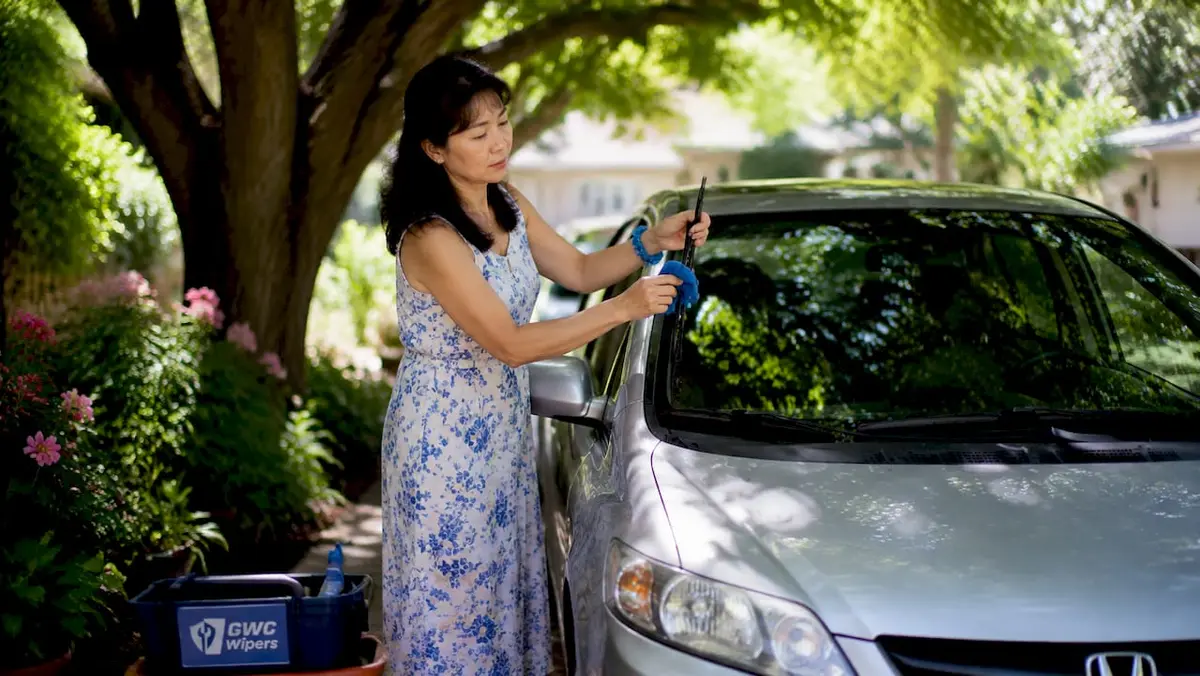
The correct Honda wiper cleaning technique follows a clear sequence:
- Park your Honda in shade before starting. Hot rubber is more susceptible to tearing during cleaning, and working in direct sun means the blade dries too quickly, leaving residue.
- Lift the wiper arm carefully and support it. Never let the arm snap back against the glass without a blade in place, as this can crack the windscreen.
- Dampen a microfibre cloth with a mild soap and warm water solution. Using microfibre cloths and mild soap is the standard approach to avoid abrading the rubber edge and glass surface during cleaning.
- Wipe along the full length of the rubber edge in one direction, from base to tip. Do not scrub back and forth, as this can lift the rubber lip.
- Follow with a clean damp cloth to remove soap residue, then allow to air dry before lowering the arm.
- Clean the windscreen glass thoroughly at the same time. A dirty windscreen accelerates blade damage due to increased abrasion, so treating both surfaces together is the correct approach.
Pro Tip: Never wipe blades dry across a dusty or gritty surface. Even a single dry pass across fine road grit can score the rubber edge and create permanent streaking. Always wet the cloth first.
Avoid household glass cleaners containing ammonia. These products degrade rubber compounds quickly and are particularly damaging in heat, where the chemical reaction accelerates. Stick to mild automotive soap or a purpose-made blade cleaner.
Which blade materials offer the best heat resistance for Honda drivers?
Not all wiper blades respond to heat the same way, and the material choice you make directly affects how long your blades perform reliably through an Australian summer. The three main categories are conventional rubber, silicone, and heated blades, each with distinct thermal properties.

Conventional rubber blades are the most common and the least heat-resistant. They perform adequately in mild climates but degrade rapidly under sustained UV and thermal load. Most standard Honda OEM blades fall into this category, which is why replacement intervals shorten so dramatically in Australian conditions.
Silicone wiper blades handle heat and UV exposure better than conventional rubber, maintaining shape and flexibility longer. Silicone resists heat-induced hardening and edge curling because its molecular structure is more thermally stable than natural or synthetic rubber compounds. For Honda owners in Queensland or the Northern Territory, silicone blades are the practical choice for summer performance.
UV-stabilised polymer formulations significantly resist heat distortion common to standard rubber, and blades validated to ISO 16750-4 thermal cycling standards offer measurable durability advantages. This certification means the blade has been tested through repeated heat and cold cycles without losing its wiping geometry. When selecting replacement blades for your Honda, look for this specification on the packaging or product listing.
Key features to prioritise when choosing heat-resistant blades for your Honda:
- UV-stabilised rubber or silicone compound construction
- Multiple pressure points along the blade length for consistent glass contact
- Aerodynamic beam or frameless design that reduces heat absorption compared to metal-framed blades
- ISO 16750-4 or equivalent thermal resilience certification
- Confirmed compatibility with your specific Honda model and year
The UV resistance in wiper blades question matters more in Australia than almost anywhere else. The country’s UV index regularly reaches extreme levels, and blades without UV stabilisation can degrade visibly within a single summer season.
How do you inspect Honda wipers for heat damage?
Knowing what to look for is as valuable as knowing how to clean. Heat damage presents in predictable ways, and catching it early means you can address the problem before it affects your visibility on the road.
The most common signs of heat-related wiper damage include:
- Streaking: Bands of uncleared water left after each wipe, indicating the rubber edge has hardened or deformed
- Chattering: A skipping or vibrating motion across the glass, caused by the blade losing its curved profile
- Visible cracking: Fine splits along the rubber edge or body, often appearing after the first summer heat wave
- Curling or lifting: The blade edge curls away from the glass at the ends, a direct result of thermal expansion and contraction cycles
- Smearing: A greasy film distributed across the windscreen rather than cleared, indicating rubber breakdown
Rear wipers on SUVs and hatchbacks often suffer unnoticed heat damage, hardening and sticking due to less frequent use. Honda CR-V, HR-V, and Jazz owners should check rear blades at the same time as front blades, as neglected rear wipers risk motor strain and glass scratching. This is one of the most commonly overlooked aspects of wiper maintenance.
Testing is straightforward. Run your wipers on a lightly wetted windscreen and observe the wipe pattern. Any streaking, chattering, or incomplete clearing at normal speed indicates the blade needs attention. If cleaning does not resolve the issue within one or two wipe cycles, replacement is the correct next step.
Pro Tip: Apply a small amount of silicone spray to a cloth and wipe along the rubber edge after cleaning. This restores surface flexibility temporarily and can extend the life of a blade that is beginning to harden but has not yet cracked.
For a full step-by-step replacement guide, the process is straightforward and does not require specialist tools on most Honda models.
What Honda-specific features help with wiper maintenance?
Honda includes a wiper maintenance mode on many of its current models, and it is one of the most practical features available to owners who maintain their own vehicles.
To activate wiper maintenance mode on compatible Honda models, follow these steps:
- Turn the ignition to the ON position without starting the engine.
- Move the wiper stalk to the intermittent or low wipe setting.
- Turn the ignition OFF while the wipers are in motion. The blades will stop in a raised, vertical position.
- Carry out your cleaning or blade replacement with the blades held safely away from the glass.
- Turn the ignition back ON to return the wipers to their parked position at the base of the windscreen.
This mode is available on models including the Honda Civic (10th generation onwards), Honda CR-V (5th generation onwards), Honda HR-V, and Honda Jazz. The benefit in hot weather is significant. Blades parked at the base of the windscreen in summer heat sit directly on the hottest part of the glass, where radiated heat is most intense. Accessing them in the raised position reduces the risk of the rubber sticking to the glass or tearing during removal.
When handling wiper arms in heat, always support the arm with your free hand. A spring-loaded arm released without a blade in place will strike the glass with enough force to cause cracking, particularly on heated glass that is already under thermal stress.
Key takeaways
Consistent cleaning, correct material selection, and Honda-specific maintenance features together form the most reliable defence against heat-related wiper failure in Australian conditions.
| Point | Details |
|---|---|
| Heat accelerates rubber failure | Temperatures above 35°C can reduce blade service life from 12 months to just 3.2 months. |
| Clean every 2 to 4 weeks | Regular cleaning with mild soap and microfibre cloths extends blade life by 30% or more. |
| Choose silicone or UV-stabilised blades | These materials resist heat-induced hardening and curling far better than standard rubber. |
| Inspect rear wipers too | Honda SUV and hatchback rear blades harden unnoticed and can scratch glass if neglected. |
| Use Honda’s wiper maintenance mode | This feature raises blades to a safe vertical position, making heat-season maintenance safer and easier. |
What I’ve learned from watching Honda wipers fail in Australian summers
I’ve seen the same pattern repeat itself with Honda owners across Australia. The blades look fine in June. By February, they’re streaking badly and the driver has no idea why. The assumption is always that the blades are defective. In most cases, they simply weren’t maintained through the heat.
The mistake I see most often is treating wiper maintenance as a wet-season task. Drivers clean their blades when it rains and ignore them through the dry summer months. But dry heat is when the real damage accumulates. Thermal cycling without moisture causes rubber blades to crack and distort permanently, lowering wiping efficiency. By the time the first autumn rains arrive, the blades are already compromised.
My honest advice is to treat your Honda’s wipers the same way you treat your tyres. You wouldn’t ignore tyre condition through summer and expect them to perform safely when conditions change. Wipers deserve the same respect, because they are your primary visibility tool in any sudden downpour.
One more thing worth saying plainly: not all wiper blades perform equally in Australian heat. Fitting a generic, low-cost replacement blade to a Honda Civic or CR-V and expecting it to last through a Queensland summer is unrealistic. The summer car care standard for wiper blades in high-heat climates specifically calls for UV-stabilised materials, and that specification exists for good reason. Spend slightly more on the right blade and you will replace it far less often.
— Faisal
GWC Wipers: heat-resistant blades built for Honda owners
If your Honda’s wipers are showing signs of heat damage, or you want to get ahead of the problem before summer peaks, Com has you covered.
Com stocks a full range of premium wiper blades engineered specifically for Australian UV and heat conditions, with options confirmed for Honda models including the Civic, CR-V, HR-V, Jazz, and ZR-V. Every blade is built with durable, heat-resistant materials and comes with a 12-month warranty, free shipping across Australia, and a 30-day money-back guarantee. Use the vehicle selector tool on the Com website to find the exact fit for your Honda, or browse the Honda ZR-V wiper blades range to get started. The Com support team is also available to answer any questions about blade selection, installation, or care.
FAQ
How often should I replace Honda wiper blades in summer?
In Australian summer conditions, Honda wiper blades exposed to sustained heat above 35°C may need replacement every 3 to 6 months rather than the standard 12 months. Regular cleaning and inspection every 2 to 4 weeks will help you identify when replacement is needed before performance drops.
Are silicone wiper blades worth it for Australian Honda owners?
Silicone blades maintain shape and flexibility in heat far better than conventional rubber, making them a practical upgrade for Australian conditions. They resist UV-induced hardening and edge curling, which are the two most common failure modes in hot climates.
What is Honda wiper maintenance mode and which models have it?
Honda wiper maintenance mode moves the blades to a raised vertical position for safe cleaning or replacement without risk of the arm snapping onto the glass. It is available on the Honda Civic (10th generation onwards), CR-V (5th generation onwards), HR-V, and Jazz.
Can I use household glass cleaner on Honda wiper blades?
No. Products containing ammonia degrade rubber compounds and accelerate heat-related hardening. Use mild automotive soap and warm water with a microfibre cloth instead.
Why are my rear Honda wipers worse than the front ones?
Rear wipers on Honda SUVs and hatchbacks are used less frequently, which means heat damage accumulates without the natural cleaning effect of regular use. Check and clean rear blades at the same time as front blades to avoid hardening, sticking, and potential glass scratching.