
How to optimise wiper blade sales: a practical guide

Wiper blades are one of the most consistently overlooked profit opportunities in automotive retail. Many vehicles visiting a service centre need new blades, yet the sale is missed far more often than it is made. The strategies below show you exactly how to change that, covering everything from service workflow integration and ethical upselling to seasonal timing, digital marketing, and stocking the right product mix for the Australian market.
Table of Contents
- 1. How to optimise wiper blade sales from day one
- 2. How to embed wiper blade checks into your service workflow
- 3. How to handle objections and upsell ethically
- 4. How seasonal and weather patterns can lift your sales volumes
- 5. Why GWC Wipers are a strong choice for Australian retailers
- 6. What your sales data can tell you about buying patterns
- 7. How digital marketing can drive wiper blade demand
- 8. How to position your pricing against the Australian market
- GWC Wipers: premium blades built for Australian conditions
- Key takeaways
- FAQ
1. How to optimise wiper blade sales from day one
The fastest way to lift wiper blade sales is to make asking about them non-negotiable. A simple, safety-focused question like “When were your wipers last replaced?” costs nothing and opens the conversation naturally. Customers rarely request blades unprompted, but they respond well when a trusted advisor raises the topic as a safety matter rather than a sales pitch.
- Ask every customer about wiper condition during vehicle check-in, not as an afterthought at the end.
- Show physical evidence of wear during the inspection. Pulling a cracked or cupped blade off the arm and placing it in the customer’s hand is more persuasive than any verbal description.
- Offer free installation. Charging a separate labour fee for blade fitting is one of the most common reasons customers decline. Remove that barrier entirely.
- Add wiper blade inspection to every multi-point inspection (MPI) procedure, without exception.
- Train service advisors regularly on product knowledge, inspection technique, and how to present findings clearly and honestly.
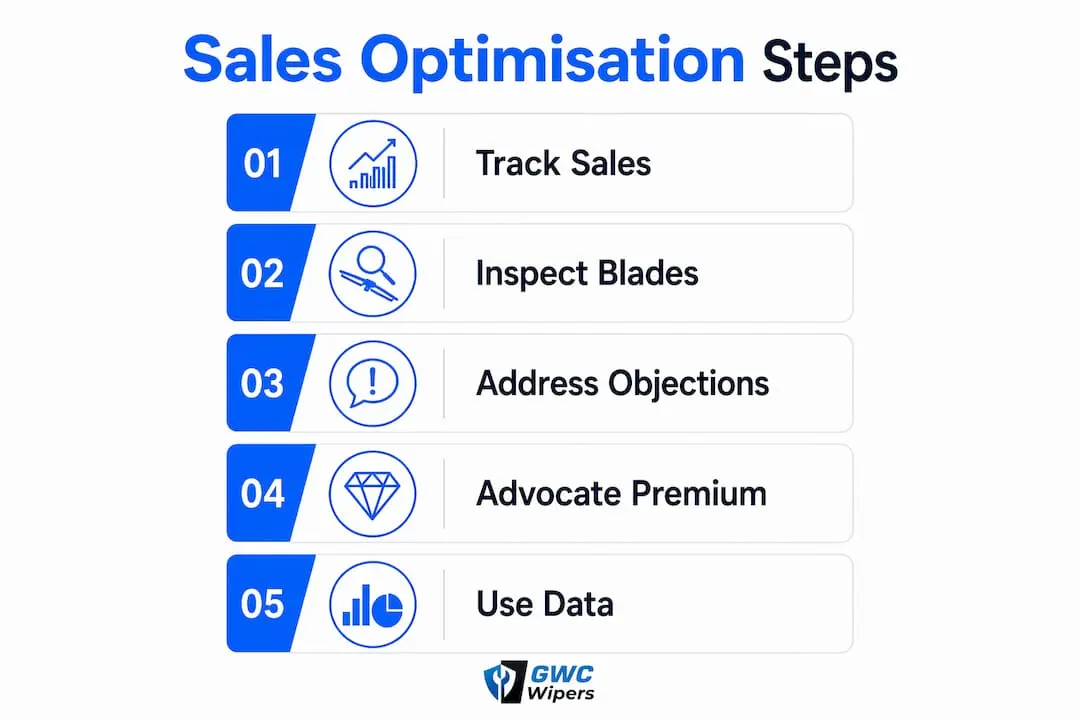
Pro Tip: Track wiper blade units sold daily against your repair order count. Post the numbers where your team can see them. This single metric keeps the opportunity visible and holds advisors accountable without requiring a lengthy management conversation.
2. How to embed wiper blade checks into your service workflow
The most reliable way to increase wiper blade sales is to make the check automatic, not optional. When blade inspection sits inside your standard MPI procedure, it happens on every vehicle, every visit, regardless of which advisor is on duty.
- Add a dedicated wiper blade line to your MPI checklist, rated red, yellow, or green based on condition.
- During vehicle check-in, use a standardised question: “When did you last have your wiper blades replaced?” It takes five seconds and sets the expectation early.
- Document blade condition with photos or a brief video during the service. Digital inspection tools that send findings directly to the customer’s phone make the evidence undeniable and remove scepticism.
- Include a wiper blade proposal in every service write-up where the inspection flags wear, even if the customer deferred last time.
- Bundle blades with related services. Pairing them with an oil change or tyre rotation as a maintenance package increases uptake because the customer is already spending and already thinking about vehicle upkeep.
A well-structured service appointment checklist that includes wiper blade inspection signals thoroughness to customers before they even arrive. That expectation makes the recommendation feel like part of the service, not an add-on.
3. How to handle objections and upsell ethically
Customers push back on wiper blade recommendations for three main reasons: they think the price is too high, they doubt the urgency, or they feel they are being sold something they do not need. Each objection has a straightforward, honest response.
- Acknowledge price concerns directly. “I understand, they are not cheap” is more disarming than a defensive justification.
- Let the evidence do the work. Showing photos of blade wear builds trust far more effectively than describing the problem verbally. A customer who can see the deterioration rarely argues the urgency.
- Emphasise visibility and safety, not the product itself. Framing the recommendation around wet-weather driving safety connects to something the customer genuinely cares about.
- Include installation at no extra charge. Removing the installation fee eliminates the most common friction point and makes the total cost feel reasonable.
- Ask questions rather than making statements. “Have you noticed any streaking or squeaking lately?” invites the customer into the conversation rather than putting them on the defensive.
Pro Tip: Script your advisors around safety outcomes, not product features. “I want to make sure you can see clearly on the drive home tonight” lands very differently from “Your blades are worn and need replacing.” Approval rates improve when the customer feels cared for rather than sold to.
4. How seasonal and weather patterns can lift your sales volumes
Australia’s climate creates natural demand windows that smart retailers plan around. The lead-up to the wet season in northern and eastern states, the onset of winter in Victoria and South Australia, and the intense UV exposure of a Queensland summer all affect blade performance and customer receptiveness.
- Map your peak sales windows. In most Australian markets, April through June and September through November are the strongest periods for wiper blade demand, as customers prepare for winter rain or spring storms.
- During periods of heightened safety concern, seasonal peaks shift customer focus from price to performance. This is the right time to recommend premium silicone blades, which resist UV degradation and maintain flexibility across temperature extremes.
- Use climate-specific messaging in your service bay and customer communications. “Ready for the wet season?” resonates with a Darwin or Cairns customer in a way that generic messaging does not.
- Build seasonal maintenance packages that include wiper blades alongside cabin air filters, tyre pressure checks, and fluid top-ups. Customers respond well to a single, clearly priced package.
- Adjust your inventory levels four to six weeks before your local peak period. Running out of stock during a demand surge is a missed sale you cannot recover.
5. Why GWC Wipers are a strong choice for Australian retailers
GWC Wipers designs and manufactures blades specifically for Australian conditions, which matters when your customers are dealing with everything from tropical downpours to outback UV exposure. The product range covers a broad vehicle catalogue, and the fit is guaranteed through a vehicle selector tool that matches blades to make, model, and year with no guesswork.

The blades use advanced materials built for durability and clear visibility across varied weather. Silicone compounds resist the UV degradation that shortens blade life in hot climates, while the aerodynamic design handles highway wind lift without lifting off the glass. Detailed step-by-step installation guides support DIY fitting, which reduces the barrier for customers who prefer to fit blades themselves.

| Feature | GWC Wipers benefit |
|---|---|
| Australian-designed | Tailored for local climate extremes, from tropical rain to harsh UV |
| Vehicle selector tool | Guaranteed correct fit by make, model, and year |
| Advanced materials | Silicone and durable rubber compounds for long service life |
| 12-month warranty | Customer confidence backed by a clear guarantee |
| 30-day money-back | Removes purchase risk for new customers |
| Free shipping | Available across Australia with no minimum order threshold |
For retailers, stocking a product with a strong guarantee and free shipping removes two of the most common customer hesitations before the conversation even starts. Understanding why wiper blade quality matters gives your advisors the product knowledge to speak confidently about what separates a premium blade from a budget option.
6. What your sales data can tell you about buying patterns
Sales data is one of the most underused tools in wiper blade merchandising. Tracking blade units sold per repair order each month reveals patterns that are not visible day to day, including which advisors are consistently presenting the opportunity and which are skipping it.
Pull your wiper blade sales count monthly and compare it against total repair orders. The gap between those two numbers is your missed opportunity figure. If your service centre processes 400 repair orders a month and sells blades on 40 of them, you are capturing a fraction of the available demand given that 80% of vehicles visiting service centres need new wiper blades.
Look at purchasing patterns by vehicle age and service type. Customers coming in for oil changes on vehicles over three years old are your highest-probability blade buyers. Segment your data this way and you can brief advisors specifically on which customers to prioritise each day. A balanced product mix across entry-level, mid-range, and premium tiers also stabilises your margin, because premium lines improve profit per transaction while volume lines keep turnover consistent.
7. How digital marketing can drive wiper blade demand
Your service bay is not the only place to sell wiper blades. Digital channels let you reach customers between visits, which is when most of them are actually thinking about their vehicle.
Email and SMS reminders tied to service history are highly effective. A message sent six months after a customer’s last blade replacement, timed to coincide with the start of the wet season, feels relevant rather than intrusive. Pair it with a direct link to your online booking or product page and the conversion path is short.
Social media content that shows real-world blade wear, before-and-after visibility comparisons, or a quick installation video builds credibility and keeps your brand visible. Short-form video on platforms like Instagram and Facebook performs well for this kind of visual, safety-focused content. Google Business Profile posts and local search ads targeting terms like “wiper blades near me” or “wiper blade replacement [suburb]” capture customers who are already in buying mode. For retailers stocking GWC Wipers, linking directly to vehicle-specific product pages, such as Mercedes-Benz wiper blades or Toyota wiper blades, gives customers an immediate, frictionless path to the right product.
8. How to position your pricing against the Australian market
The Australian wiper blade aftermarket spans a wide price range, from low-cost imported conventional blades to premium silicone beam blades at the higher end. Competing purely on price in this market is a losing strategy for most independent retailers and service centres, because volume-focused online marketplaces will consistently undercut you on entry-level products.
The stronger position is value at the mid-range and premium tiers, backed by expert fitting, a warranty, and the convenience of having it done during a service visit. Customers who have just experienced a blade failure in heavy rain are not price-shopping. They want the right product, fitted correctly, by someone they trust.
Distributors targeting a blended gross margin use premium lines to achieve higher margins on individual transactions while entry-level SKUs maintain volume and market coverage. Knowing where your current product mix sits against those benchmarks tells you whether you are leaving margin on the table or relying too heavily on low-margin volume. Review competitor pricing on the brands you stock every quarter, not to match them, but to understand where your premium offering needs stronger justification.
GWC Wipers: premium blades built for Australian conditions
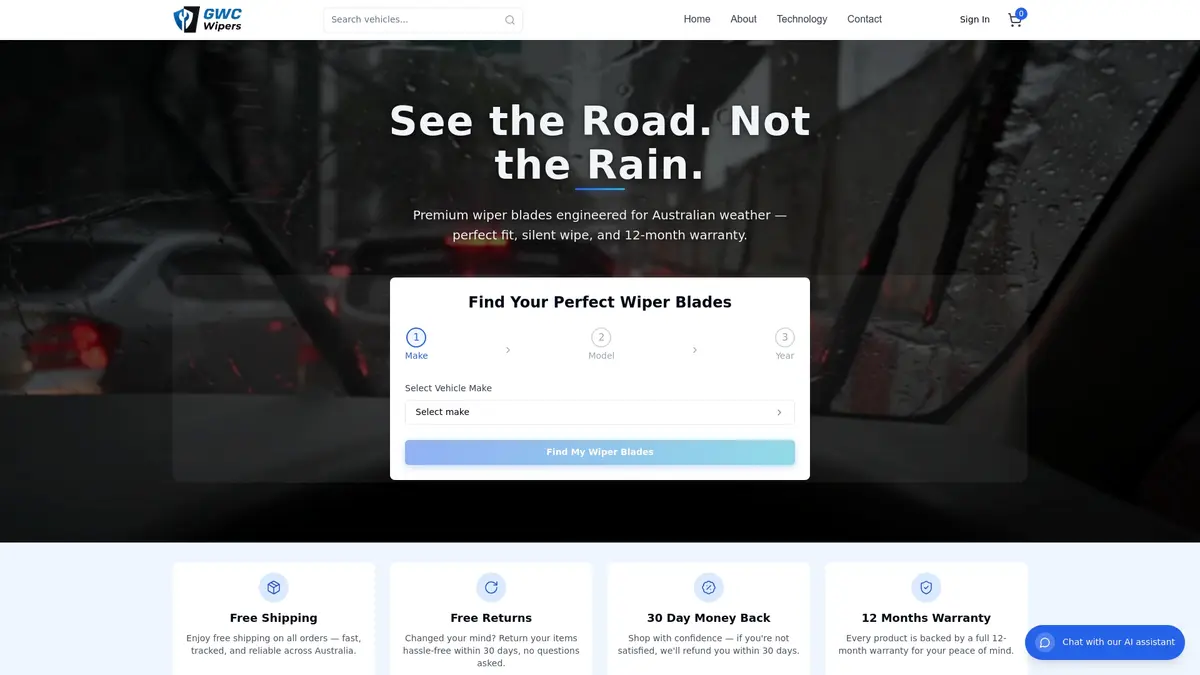
GWC Wipers gives Australian retailers and service advisors a product they can recommend with genuine confidence. Every blade is designed for local weather, backed by a 12-month warranty and a 30-day money-back guarantee, and ships free across Australia. The vehicle selector tool removes fitment uncertainty, so your team spends less time checking catalogues and more time serving customers.
Whether you are stocking blades for a busy service centre or advising a customer on the right fit for their Land Rover Discovery Sport or Alfa Romeo Giulietta, GWC Wipers has a vehicle-specific solution ready to go. The full product range covers hundreds of Australian vehicle makes and models, with detailed installation guides that support both trade fitting and confident DIY. Browse the range today and find the right blade for every vehicle on your service schedule.
Key takeaways
Optimising wiper blade sales requires consistent inspection habits, evidence-based customer communication, and a product mix that supports both volume and margin across the Australian market.
| Point | Details |
|---|---|
| Proactive asking drives sales | 80% of vehicles visiting service centres need new wiper blades; most sales are missed because no one asks. |
| Visual proof closes the sale | Showing photos or physical evidence of blade wear increases customer approval more than verbal description alone. |
| Seasonal timing lifts premium sales | Wet season and pre-winter periods shift customer focus from price to performance, making premium blades easier to recommend. |
| Balanced product mix stabilises margin | A blended gross margin requires a mix of entry-level volume SKUs and premium lines with higher margins. |
| GWC Wipers suits Australian retailers | Australian-designed blades with a 12-month warranty, 30-day money-back, and free shipping reduce customer hesitation at point of sale. |
FAQ
Are more expensive wiper blades worth recommending to customers?
Yes, in most cases. Premium blades, particularly silicone beam designs, last longer, resist UV degradation, and perform better in heavy rain and extreme heat, which are conditions Australian drivers face regularly. The higher upfront cost typically means fewer replacements and fewer customer complaints.
How can you make wiper blades work better between replacements?
Keeping the windscreen clean and lifting blades off the glass during extended sunny periods reduces rubber degradation from UV exposure and heat. Wiping the blade edge with a damp cloth during each service visit removes road grime that causes streaking and squeaking.
Should you use WD-40 on wiper blades?
No. WD-40 is a petroleum-based product that degrades rubber compounds and leaves a film on the windscreen that worsens visibility. Clean blades with water or a dedicated rubber cleaner instead.
How often should wiper blades be replaced in Australian conditions?
Industry guidelines recommend periodic replacement within about a year, but Australian conditions often shorten that cycle. Vehicles in high-UV regions like Queensland or the Northern Territory may need replacement closer to every six months due to accelerated rubber degradation from heat and sun exposure.
How does tracking daily wiper blade sales improve team performance?
Tracking blade units sold against daily repair order counts makes the opportunity visible and measurable. When advisors can see the numbers posted each day, the sale becomes a team target rather than an afterthought, which drives consistent effort without requiring constant management intervention.