
Replace Wipers Every 6–12 Months: Summer Wiper Blades in Australia
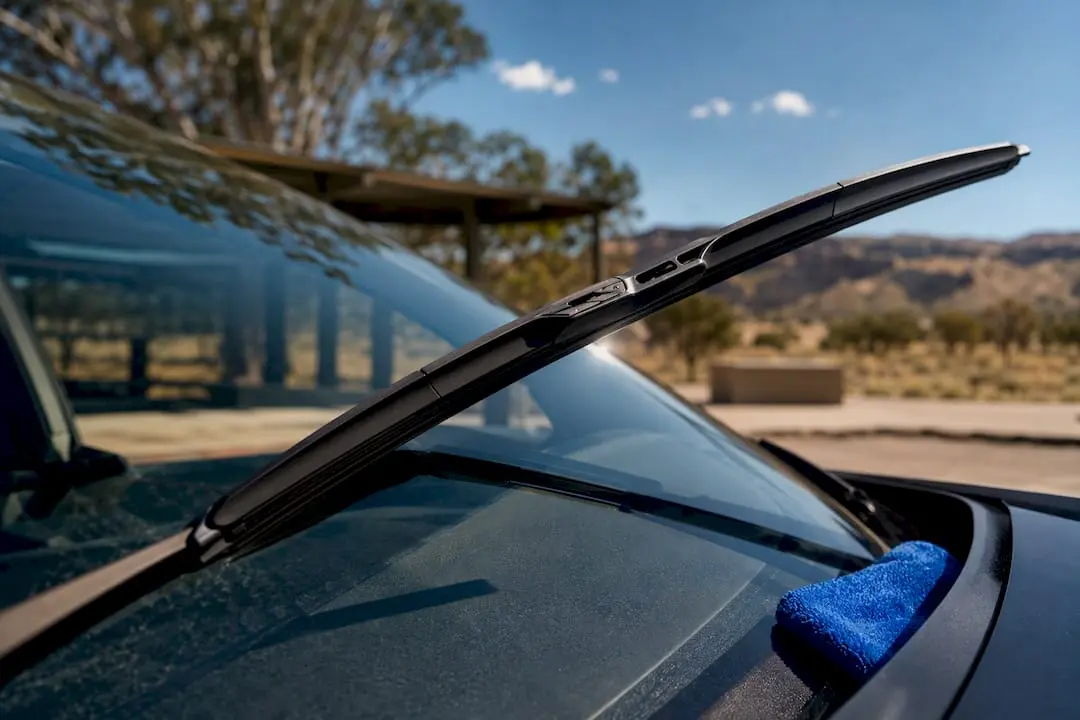
There is no special summer wiper blade category worth chasing. What matters is choosing blades with UV resistant, heat flexible rubber and the correct fitment for your vehicle, then replacing them the moment you see cracking, hardening or splits, ideally before the wet season arrives. You can use online vehicle selector tools to check the right fit for your car quickly.
TL;DR:
- Most Australian drivers should prioritize UV-resistant, heat-flexible rubber blades and replace them at signs of cracking or hardening, often within six to twelve months.
- Beam blades with fewer joints perform better in dusty inland areas, while corrosion-resistant fittings are crucial for coastal drivers exposed to salt spray.
- UV exposure and high temperatures accelerate rubber degradation, causing cracks, brittleness, and curling, which reduce wiping performance and safety.
- Proper fitting using a vehicle selector tool and regular inspection ensures the blades operate effectively and meet safety standards, especially after intense heat or storms.
- Maintaining clean windshields with appropriate washer fluid and park shading prolongs blade lifespan and improves visibility during Australian summer conditions.
Table of Contents
- Blade types and materials: what actually resists Australian heat
- Why summer heat and UV wreck rubber faster than you’d think
- When to replace: timing and safety rules that matter
- How to choose the right replacement blades
- Fitting new blades and testing them properly
- Maintenance that keeps blades working through summer
- GWC Wipers: local fitment help when you need it
- How dust, dirt and insects wear down your blades
- Why hot weather changes how washer fluid performs
- Why I keep coming back to inspection over guesswork
- Get the right fit before the next storm hits
- Sources
- FAQ
Blade types and materials: what actually resists Australian heat
Two main designs sit on Australian windscreens: beam blades and conventional (frame) blades. Beam blades use a single curved rubber and metal strip with no external frame, which spreads pressure evenly along the glass and resists the kind of dust build-up that clogs traditional joints. Conventional blades rely on a metal frame with several pressure points (called “fingers”) gripping the rubber. They are often cheaper, but the extra joints can trap grit and cause uneven wear in dusty inland regions.
Rubber compound matters just as much as design. Natural rubber blades perform well when treated with UV inhibitors, but cheaper untreated rubber hardens quickly under harsh sun. Silicone blades resist heat and UV more consistently and tend to last longer between replacements, though they can cost more upfront. Coated rubbers sit in between, offering better durability than raw rubber at a lower price than silicone.
For Australian conditions, the practical trade-offs look like this:
- Coastal drivers face salt spray as well as UV, so corrosion resistant fittings matter alongside rubber quality.
- Inland and outback drivers deal with dust and grit, favouring beam designs with fewer joints to clog.
- Drivers who park mostly in shade get more life from any blade type, but UV exposure during actual driving still counts.
Our guide to selecting wipers for heatwaves goes deeper on matching rubber type to your climate.
Why summer heat and UV wreck rubber faster than you’d think
Heat and ultraviolet light break down the polymer chains in wiper rubber over time. The result is rubber that loses flexibility, then cracks and splits where it flexes against the glass thousands of times a day. This is a chemical ageing process, not simple mechanical wear, which is why a blade can look fine sitting still but fail the moment it starts moving across hot glass.
After a hot season, run your fingers along the wiping edge and check for these signs:
- Visible splits or cracks along the rubber edge.
- Brittleness or a hardened feel where the rubber should flex easily.
- Curled or lifted edges that no longer sit flat against the glass.
- Fraying or a rough, torn texture instead of a smooth edge.
- Missing chunks of rubber, usually near the blade’s centre or tip.
UV exposure ages wiper rubber even on a car that barely leaves the driveway, according to RACV’s maintenance guidance, because sun exposure while parked does as much damage as time spent driving. A car parked in direct sun all summer can need new blades even with low kilometres on the clock.
When to replace: timing and safety rules that matter
Condition should drive your decision, not the calendar, but there are useful benchmarks. Follow these:
- Replace immediately if you find splits, brittleness, curling or fraying during a tactile inspection.
- Expect to replace blades roughly every six to 12 months depending on exposure, with harsher conditions pushing that closer to six months.
- Replace before the first major wet-season storm if your blades spent summer exposed to sun and heat, even if they still look serviceable.
There is a roadworthiness angle too. The NHVIM inspection manual lists cracked, hardened, frayed, curled, torn or missing wiper rubber as a reason a vehicle can be rejected at inspection, and requires wipers to operate properly at all speeds and return to a parked position. Streaking and chatter are not cosmetic annoyances under this framework, they are safety defects that affect your ability to see the road.
How to choose the right replacement blades
Getting fitment right matters more than any marketing claim about “summer” performance. Start with your vehicle’s make, model and year, then measure the existing blade length or use a reliable vehicle selector rather than guessing from memory.
Work through this checklist before you buy:
- Confirm the connector type on your wiper arm (hook, pin, or side-lock styles all differ) and check it engages securely with the new blade.
- Always replace both blades in pairs, even if only one shows damage, since they wear at similar rates.
- Look for listings that specify UV resistance, a fitment guarantee and a warranty rather than vague “universal fit” claims.
- Check that the seller states exact blade lengths for driver and passenger sides, since many vehicles use different lengths on each.
RACQ’s DIY guide recommends using your old blade as a template and confirming the claws engage properly before lowering the arm back onto the glass.
Pro Tip: Photograph your current blade’s connector and length before shopping. It saves a return trip if the listing photos aren’t clear.
Fitting new blades and testing them properly
Most Australian vehicles use either Euro-style or hook-style (insert) blades. For Euro-style blades, lift the arm to its service position, press the small release tab, then slide the old blade out and click the new one in until it locks. For hook-style blades, unclip the old rubber insert from the frame and slide the new one in along the same guide rails.
Once fitted:
- Lower the arm gently onto the glass, never let it snap down.
- Run the washer fluid and wipers at low and normal speed, checking for chatter, skipping or streaking.
- Confirm both blades park correctly at the bottom of the windscreen.
- If streaking continues, check for glass contamination or weak arm spring pressure before assuming the new blade is faulty.
Maintenance that keeps blades working through summer
Clean glass matters as much as clean rubber. Wipe your windscreen with automotive glass cleaner and a microfibre cloth rather than household detergents, which can leave residue that degrades rubber over time. Similar streak-free glass techniques are detailed by UK detailing specialists and apply just as well to Australian conditions.
A few habits extend blade life through the hottest months:
- Use approved washer fluid rather than plain water, and top it up before long trips.
- Clear insect residue and salt film promptly rather than letting wipers grind over dried debris.
- Park in shade or use a windscreen cover when you can, particularly during heatwaves.
- Check blade condition monthly during extended hot spells, not just at the start of summer.
Our climate-specific wiper tips and all-season wiper hacks cover more detail on stretching blade life between replacements.
GWC Wipers: local fitment help when you need it
Finding the right blade shouldn’t involve guesswork. A vehicle selector tool allows drivers to search by make, model and year to find the exact blade length and connector their car needs.
A few things worth knowing:
- Many sellers offer fitment guarantees to cover cases where the product doesn’t match.
- Some sellers include a 30-day money-back guarantee and a 12-month warranty on their wiper blades.
- Installation guides often accompany orders to help make DIY fitting straightforward.
These backing details matter more in summer, when heat-damaged rubber tends to fail without much warning.
How dust, dirt and insects wear down your blades
Australian summers bring more than heat. Dust storms in inland regions and swarms of insects on rural highways leave residue that dried wiper rubber struggles to clear. Once a blade edge has hardened from UV exposure, it can no longer flex around debris the way fresh rubber does, so grit gets dragged across the glass instead of lifted off it.
This creates a compounding problem. A hardened blade scrapes rather than wipes, which can leave fine scratches on the glass over time and reduces visibility exactly when insect strikes or dust are heaviest. Coastal drivers face an added layer of salt residue, which combines with dust to form a gritty film that ordinary water struggles to shift.
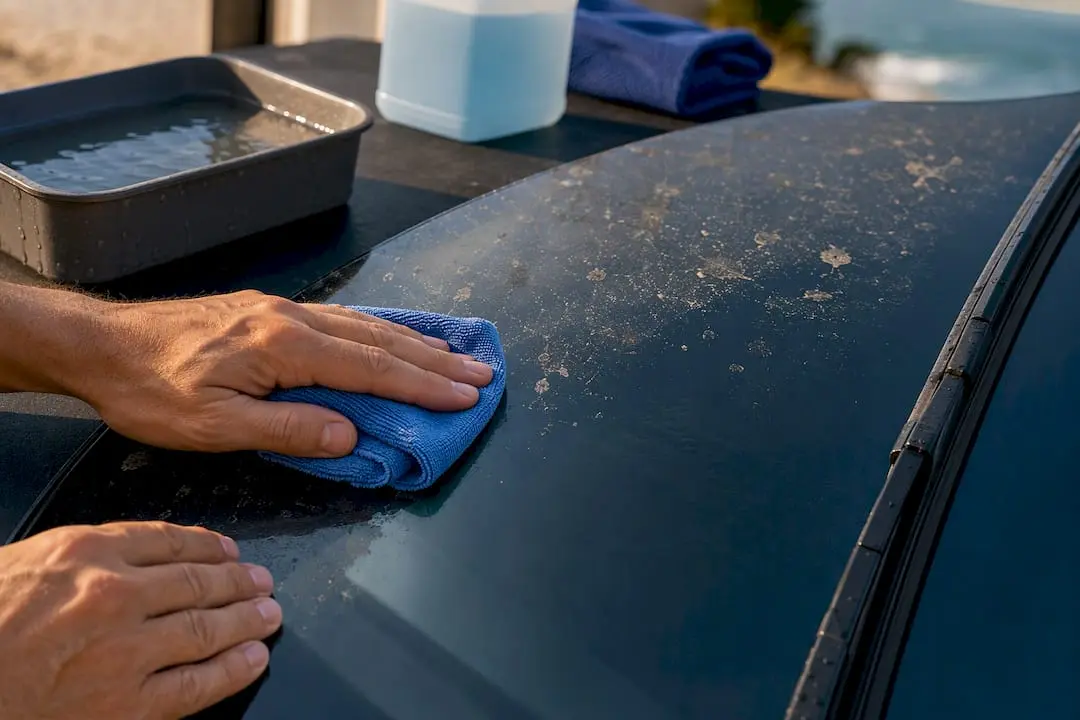
Regularly clearing this build-up with proper washer fluid and a soft cloth before it dries hard protects both the glass and the blade. Letting a windscreen bake in the sun with dried bug residue on it makes the next wipe worse, since the wiper drags over hardened patches rather than sliding across a clean surface. Blades in good condition with supple, UV-resistant rubber cope with this far better than hardened ones, which is another reason condition-based replacement matters more than sticking to a fixed schedule.
Why hot weather changes how washer fluid performs
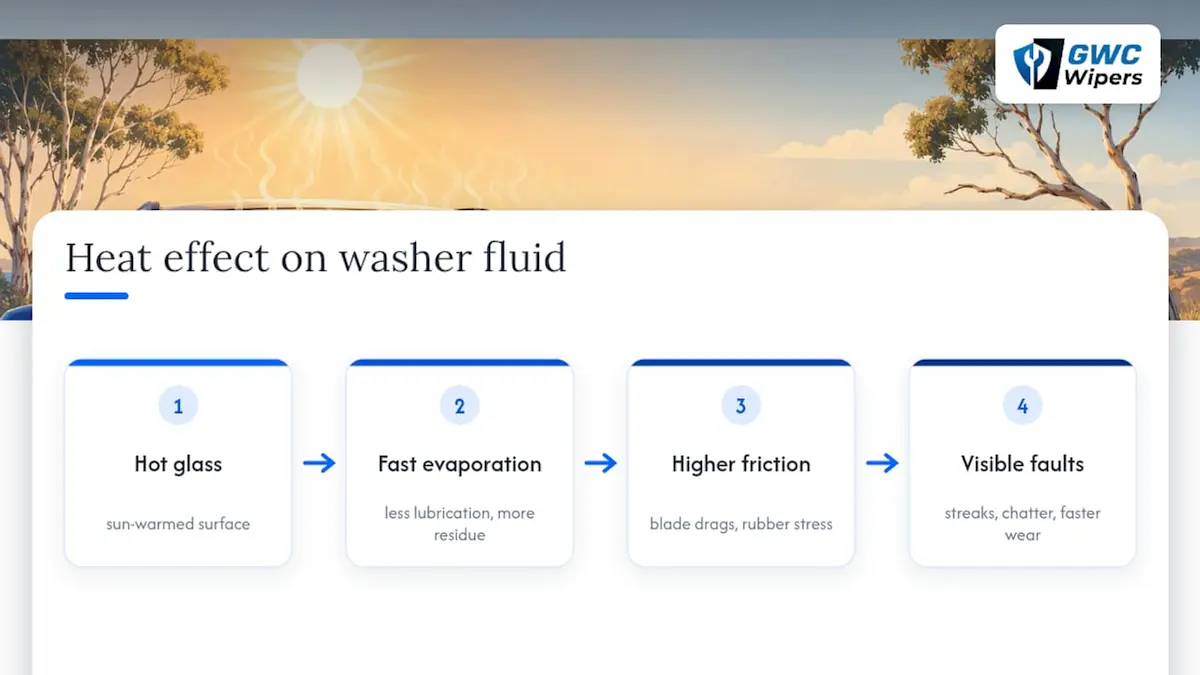
Heat affects more than the rubber on your blades, it also changes how washer fluid behaves once it hits hot glass. In extreme heat, fluid can evaporate faster on contact with sun-warmed glass, leaving less lubrication for the blade to glide across and increasing friction against already stressed rubber.
Some washer fluid formulations are also more prone to leaving residue when they evaporate quickly, which can build up along the wiper’s path and contribute to streaking. Checking that your washer fluid is compatible with your climate and topping it up before long, hot drives reduces the chance of your wipers dragging across a dry or partially clean windscreen, which accelerates rubber wear.
Combining fresh, approved washer fluid with blades that still have flexible, UV-resistant rubber gives you the best chance of a clean, streak-free wipe even on the hottest days. Neglecting either side of that pairing, worn rubber or evaporating fluid, tends to show up as streaks and chatter well before summer ends.
Why I keep coming back to inspection over guesswork
If there is one habit worth building, it is running your fingers along the wiper edge after every hot spell rather than waiting for streaks to appear. Clear vision through your windscreen is a safety requirement, not a convenience. When you do replace, use a proper vehicle selector and always fit both blades together.
— Faisal
Get the right fit before the next storm hits
Guessing at blade length or connector type wastes time and often means a second order. A vehicle selector matches your car’s make, model and year to the appropriate blades, helping you order once and fit correctly the first time.
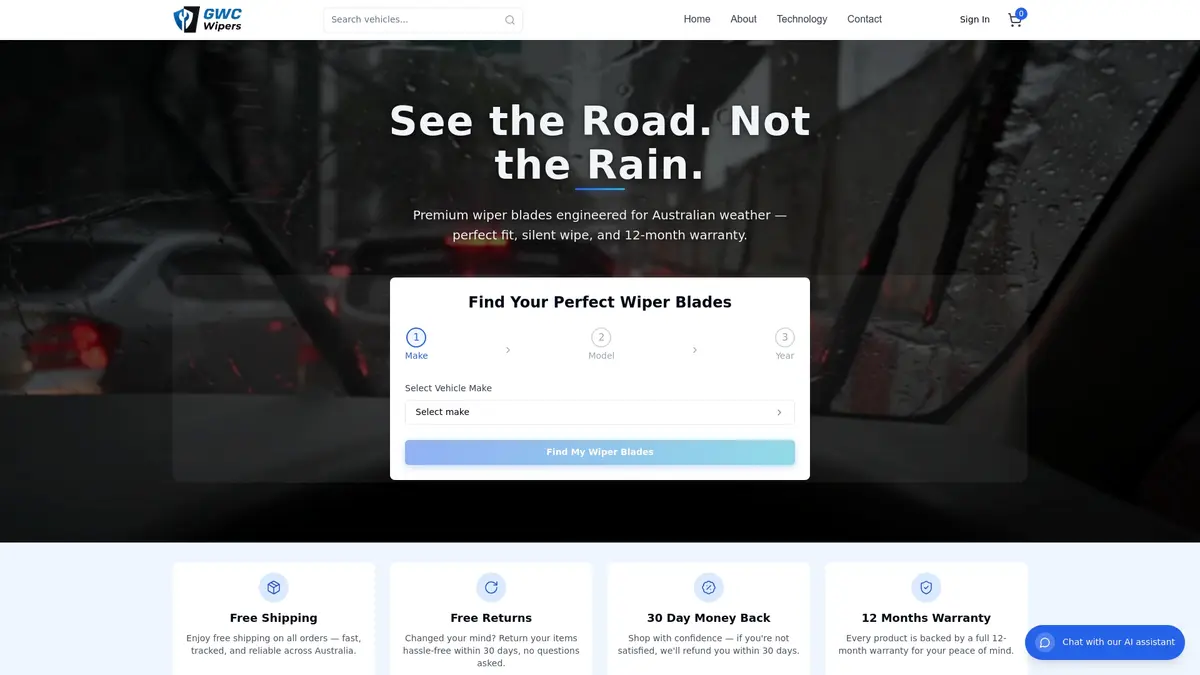
If you drive a Toyota or a Ford, our make-specific pages take you straight to the right fitment without scrolling through unrelated listings. Every order across our full wiper blade range ships with a fitment guarantee, and includes:
- A 30-day money-back guarantee if the fit or performance isn’t right.
- A 12-month warranty covering the rubber and mechanism.
- Free shipping across Australia and an included fitting guide.
Check your Perfect Fit by make, model and year today, and get blades built for the heat before the wet season tests them.
Sources
- NHVIM v3.1 section 10 – Windscreens and windows
- How to change wiper blades | RACQ
- Easy DIY car maintenance tips and safety checks | RACV
FAQ
What are the best wiper blades for Australian summer conditions?
The best choice is a beam or quality conventional blade made with UV resistant, heat flexible rubber and fitted correctly to your specific vehicle. Brand quality and correct fitment matter more than any “summer” label, since no blade is exempt from heat and UV ageing.
What’s the difference between winter and summer wiper blades?
There is no dedicated summer wiper blade category, the difference in conditions comes down to how heat and UV affect rubber versus how cold and ice do. Winter focused blades sometimes add extra flexibility for low temperatures, while summer performance depends mainly on UV resistant rubber that resists hardening and cracking.
Are there wiper blades suited to all seasons in Australia?
Many beam blades and silicone rubber blades are designed to perform reasonably well across both hot and wet conditions, since their flexibility and UV resistance help in summer while their sealed design helps shed rain. Checking blade condition regularly still matters more than relying on an “all season” label alone.
Are ceramic or silicone wiper blades better than standard rubber?
Silicone blades generally resist heat and UV damage more consistently than standard natural rubber, which can extend the time between replacements in harsh climates. Ceramic coated blades aim for similar durability benefits, though correct fitment and regular inspection remain more important than the coating type alone.