
10 reasons for noisy wipers (and how to fix them)
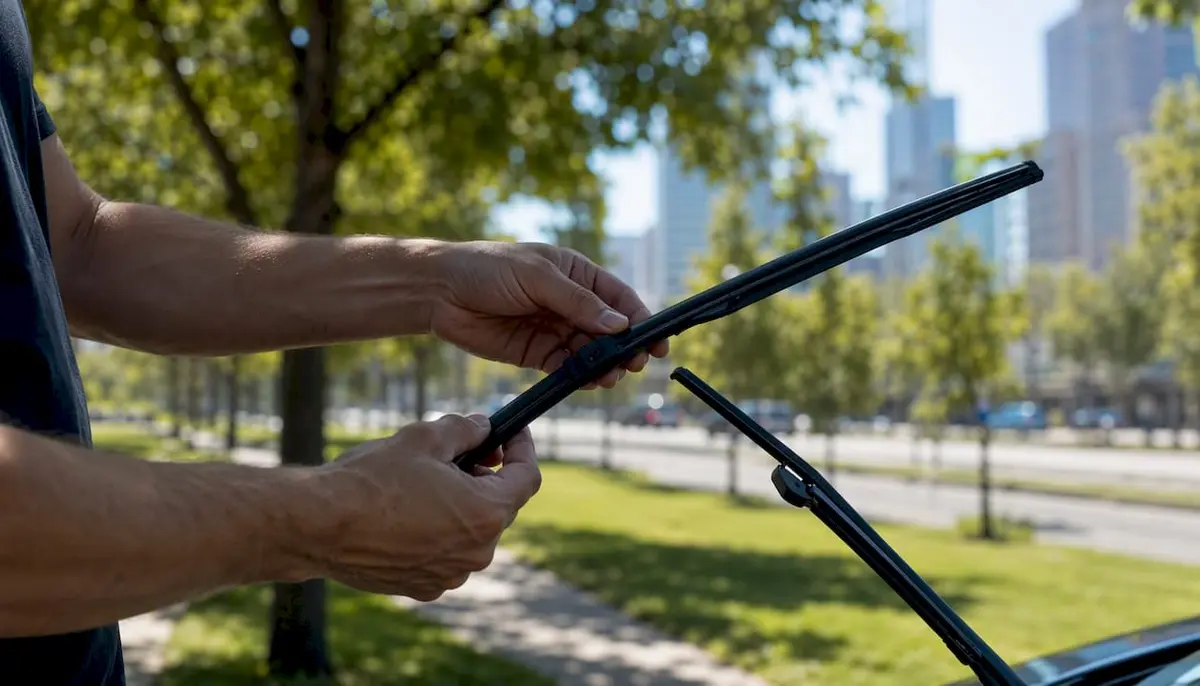
Noisy wipers almost always trace back to one of a handful of identifiable faults: contaminated glass or blade rubber, hardened or cracked rubber, incorrect arm tension or blade alignment, surface coatings on the windscreen, washer fluid problems, or a mechanical issue in the motor or linkage. The fix follows a simple sequence: clean first, inspect carefully, adjust if needed, then replace if the noise persists.
Quick triage — do these now:
- Lift the wiper arm away from the glass and wipe the rubber edge with a damp cloth.
- Clean the windscreen with an ammonia-free glass cleaner and a microfibre cloth.
- Top up the washer fluid reservoir with dedicated automotive fluid (not dishwashing liquid).
- Switch the wipers on at low speed and listen for the type of noise: squeak, chatter, or grinding.
If you see cracked or split rubber, missing sections, or the blade still judders after cleaning, stop and replace the blades. Continuing to run damaged rubber risks scratching the glass.
Pro Tip: A new blade that squeaks straight out of the box usually just needs the glass cleaned first. Conditioning a new blade with a few wipes on a clean screen is often all it takes.
Table of Contents
- What causes noisy wipers? A diagnostic breakdown
- How to fix noisy wipers: a step-by-step DIY guide
- Signs your blades need replacing, not just cleaning
- How to check and adjust wiper arm tension safely
- Products to avoid on wiper blades (and what to use instead)
- Your wiper troubleshooting checklist (10–20 minutes)
- Why GWC Wipers is the trusted replacement choice for Australian drivers
- Key takeaways
- Wipers are safety equipment — treat them that way
- Ready to replace? Find the right blade for your vehicle
- Useful sources and further reading
- FAQ
What causes noisy wipers? A diagnostic breakdown
Understanding wiper noise causes makes it much easier to choose the right fix rather than guessing. Each fault produces a recognisable sound or behaviour you can match to a remedy.
| Cause | Sound / behaviour | Quick diagnostic check | Likely fix |
|---|---|---|---|
| Contaminated blade or glass | Squeak or chatter on wet glass | Wipe blade edge; check for grime or film | Clean blade and windscreen |
| Dishwashing liquid in reservoir | Squeaking despite clean appearance | Smell reservoir; check for suds | Flush and refill with automotive fluid |
| Hardened or cracked rubber | Persistent chatter or skipping | Flex the rubber; look for cracks or stiffness | Replace blades |
| Incorrect blade flip / angle | Chatter at direction change | Watch blade pivot at each sweep end | Adjust arm or blade angle |
| Arm tension too high or too low | One edge digs in; other lifts off | Press blade flat; check even contact across glass | Adjust arm tension or replace arm |
| Trapped grit or debris | Scratching or grinding sound | Lift arm; inspect blade channel for particles | Remove debris with soft brush; inspect glass |
| Hydrophobic coating on glass | Intermittent squeak on dry or lightly wet glass | Check if coating was recently applied | Use compatible washer fluid; allow coating to cure |
| Windscreen scratches or pits | Irregular scraping sound | Inspect glass surface in raking light | Professional glass polish or replacement |
| Motor or linkage fault | Grinding, binding, or inconsistent sweep speed | Watch sweep pattern; listen under bonnet | Stop driving; see a mechanic |
| New blades, unconditioned glass | Squeak from first use | Check if glass was cleaned before fitting | Clean glass; condition blade with a few wipes |
Dishwashing detergents in the washer reservoir leave a film that increases friction and makes blades squeak despite looking clean. Grit and sand trapped in the blade channel are particularly risky: they cause noise and can scratch the windscreen if left unchecked. Removing debris with a soft brush and inspecting the glass afterwards is a priority step, not an afterthought.
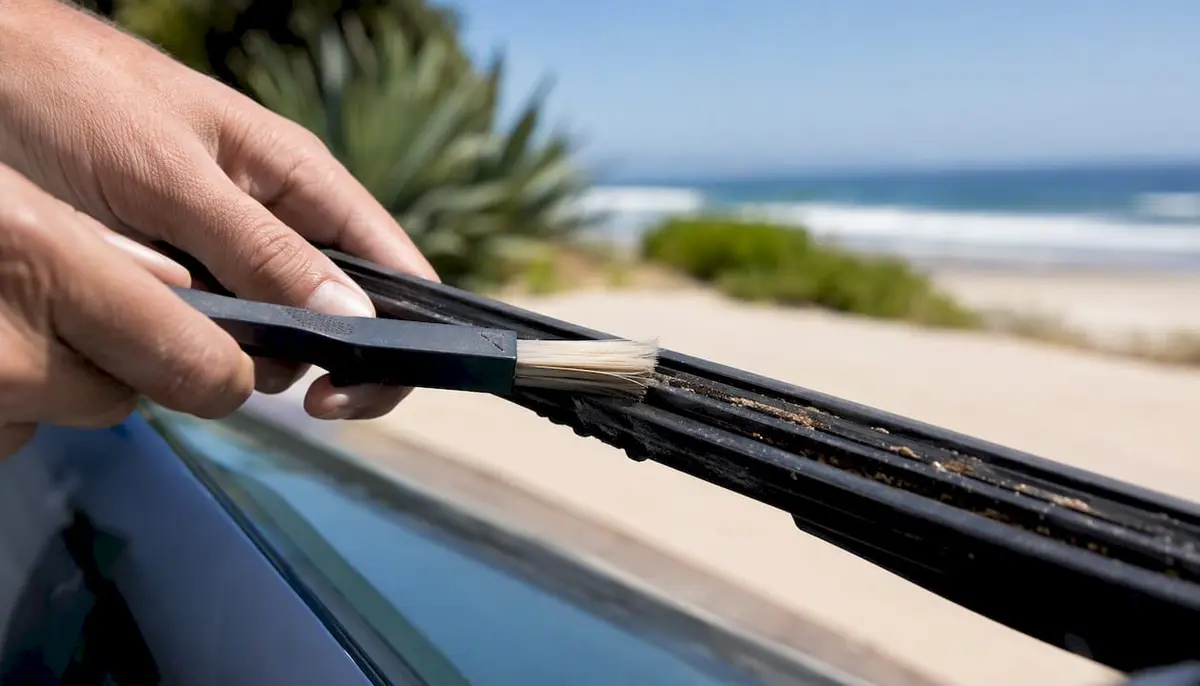
Motor or linkage faults produce a distinctly different sound from rubber problems. Grinding, binding, or an inconsistent sweep under load points to a mechanical issue no amount of blade cleaning will resolve.
How to fix noisy wipers: a step-by-step DIY guide
Work through these steps in order. Each one takes only a few minutes, and most drivers find the noise stops before they reach the end.
- Park on a flat surface and switch off the ignition. Never work on wiper arms with the ignition on — an accidental wipe cycle can snap a raised arm back onto the glass.
- Lift the wiper arm gently until it locks in the raised position. Support it so it does not spring back.
- Wipe the rubber blade edge with a cloth dampened in warm soapy water, then again with isopropyl alcohol. Work along the full length of the blade, paying attention to the hinge areas where grit collects.
- Inspect the blade backing for bent or missing pressure clips. A distorted backing prevents even contact across the glass.
- Remove stubborn deposits. For wax or polish film, use a dedicated glass polish applied with a soft cloth. For pollen or road grime, a second pass with isopropyl alcohol usually clears it.
- Clean the windscreen with an ammonia-free glass cleaner and a clean microfibre cloth. Ammonia damages tinted glass and hydrophobic coatings, so check the label before you spray.
- Check the washer nozzles. A blocked nozzle leaves the glass dry in patches, which causes squeaking even on clean blades. Clear any blockage with a fine pin.
- Top up washer fluid with a dedicated automotive product. Flush the reservoir if dishwashing liquid has been used previously.
- Check the blade flip. Lower the arm slowly and watch whether the blade pivots cleanly at each direction change. A blade that skids rather than flips is producing chatter through a contact-angle fault, not a dirty blade.
- Test at low speed on a lightly wetted screen. Listen for the type of noise and note whether it has changed.
Pro Tip: When cleaning the windscreen, use two microfibre cloths: one damp for cleaning, one dry for buffing. Single-cloth technique leaves streaks that increase friction and bring the squeak back within days.
If noise persists after all ten steps, the rubber has likely hardened beyond what cleaning can restore. Continuing to run worn blades risks glass abrasion. At that point, replacement is the right call.
When to escalate to a mechanic:
- Grinding or binding sounds that continue after blade replacement.
- A wiper arm that is visibly bent or corroded at the pivot.
- Inconsistent sweep speed or a wiper that stops mid-arc under load.
Signs your blades need replacing, not just cleaning
Some wiper problems cannot be cleaned away. Knowing when to stop troubleshooting and buy new blades protects both your visibility and your windscreen.
Replace your blades when you see or hear any of these:
- Cracked, split, or brittle rubber along the blade edge.
- Sections of rubber that are missing or have separated from the backing.
- Streaks or unwiped bands that remain after cleaning.
- A blade that skips or chatters even on a wet, clean screen.
- Scratching sounds — stop immediately and inspect the glass for damage.
- Persistent noise after a full clean-and-adjust cycle.
As a general rule in Australia’s hot climate, annual replacement is a sensible baseline. UV exposure and heat accelerate rubber hardening significantly faster than in cooler climates, so blades that look intact may already be too stiff to wipe cleanly. Silicone blades tend to resist UV degradation better than standard rubber and often last longer between replacements, though they carry a higher upfront cost. Natural rubber blades from quality manufacturers perform well in Australian conditions when replaced on schedule.
When choosing between materials, blade selection should account for your local climate, whether your windscreen has a hydrophobic coating, and how frequently you drive in heavy rain. A blade that suits a Melbourne winter may not hold up through a Queensland summer.
How to check and adjust wiper arm tension safely
Arm tension is one of the most overlooked reasons for wiper chatter. Too little pressure and the blade lifts off the glass at speed; too much and it digs in on one side, causing uneven wear and noise.
- Inspect the arm at rest. With the wipers off, check that both blades sit flat against the glass. A gap on either side indicates low tension or a bent arm.
- Check the retaining nut. A loose nut at the pivot allows the arm to shift during a sweep. Tighten it gently with the correct spanner — do not overtighten.
- Look for corrosion or cracks around the pivot and along the arm body. Rust weakens the metal and makes reliable adjustment impossible.
- Make small tension adjustments. If the arm has a tension spring, carefully bend the arm body a few millimetres toward the glass using both hands. Work in small increments and test the sweep after each adjustment.
- Test the sweep. Run the wipers at low speed and watch for even contact across the full arc. One lifted edge means the arm still needs attention.
Pro Tip: Always adjust arm tension with the blade fitted. Testing with a bare arm gives a false reading because the blade’s weight and contact resistance affect how the spring behaves.
Red flags — stop and see a mechanic:
- Excessive rust at the pivot point.
- A snapped or stripped retaining fastener.
- Motor strain noises when the arm is manually repositioned.
- An arm that springs back to a bent position after adjustment.
Correctly fitted, vehicle-specific replacement blades reduce alignment problems from the start. GWC Wipers’ fitment guarantee means the blade profile matches your vehicle’s arm geometry, which eliminates a common source of tension and angle issues.
Products to avoid on wiper blades (and what to use instead)
Using the wrong product is one of the fastest ways to turn a minor squeak into a blade replacement. A few common mistakes are worth knowing before you reach for whatever is in the garage.
Avoid these:
- Standard WD-40 (original formula). Petroleum distillates in the original formula can dry, swell, and crack rubber blades. The only safe use is a minimal application on metal pivot points, kept well away from the rubber and the glass.
- Dishwashing detergent in the washer reservoir. It creates a gummy or slippery film on the glass that increases friction and brings the squeak back quickly.
- Household cleaners containing wax or abrasive ingredients. Wax leaves a film that blades cannot clear; abrasives scratch both rubber and glass coatings.
- Petroleum-based sprays or engine degreasers. Same degradation risk as standard WD-40.
Safe alternatives:
- Silicone spray labelled safe for rubber. Apply it to a cloth first, then wipe along the blade edge. Applying via a cloth prevents overspray onto hydrophobic windscreen coatings, which silicone can affect.
- Isopropyl alcohol. Excellent for cleaning the blade edge and removing wax or polish residue from the glass.
- Dedicated automotive washer fluid. Formulated to clean without leaving a friction-increasing film.
- WD-40 Specialist Silicone. A rubber-safe formulation from the same brand — different chemistry from the original, and safe for blade rubber when applied correctly.
Always test any spray on a rag before applying it near the glass, and follow the manufacturer’s guidance on dwell time and wiping technique.
Your wiper troubleshooting checklist (10–20 minutes)
Run through this sequence end-to-end the next time your wipers squeak or judder. Each step has a clear pass or fail outcome.
- Visual check (1–2 min). Look at both blades from outside the car. Pass: rubber intact, no cracks, no missing sections. Fail: visible damage — replace blades.
- Lift and wipe (2–3 min). Raise each arm, wipe the rubber edge with a damp cloth. Pass: cloth comes away with dirt but rubber is supple. Fail: rubber is stiff or cloth picks up rubber fragments — replace blades.
- Clean the windscreen (3–5 min). Use an ammonia-free cleaner and a microfibre cloth. Pass: no streaks, no film. Fail: film remains after two passes — check washer fluid and repeat.
- Top up washer fluid (1 min). Use automotive fluid only. Pass: reservoir full, no soap smell. Fail: soap smell or suds — flush reservoir and refill.
- Test nozzle spray (1 min). Run the washers and check both nozzles hit the glass evenly. Pass: even spray pattern. Fail: blocked or misdirected nozzle — clear with a pin or adjust nozzle angle.
- Check arm tension (2–3 min). Press each blade flat and release. Pass: springs back firmly and sits flush. Fail: arm stays low or blade lifts at one edge — adjust tension or replace arm.
- Test at low speed (2 min). Run wipers on a lightly wetted screen. Pass: quiet, even sweep. Fail: noise persists — move to blade replacement.
- Listen for motor or linkage noise (1 min). With wipers running, listen for grinding or binding. Pass: smooth, consistent sweep. Fail: mechanical noise — stop and see a mechanic.
A scratched windscreen or motor noise should stop the checklist immediately. Both require professional inspection before you drive in rain.
Why GWC Wipers is the trusted replacement choice for Australian drivers
When cleaning and adjustment are not enough, the quality of the replacement blade determines whether the noise comes back. GWC Wipers designs and manufactures blades specifically for Australian weather conditions, from coastal humidity to outback heat and alpine cold.
What sets GWC Wipers apart:
- Vehicle-specific fitment across over 2,500 models. The vehicle selector tool matches your make, model, and year to the correct blade profile, eliminating the guesswork that causes alignment noise from day one.
- Natural rubber construction with segmented pressure distribution. Even contact across the full blade length reduces chatter and produces a cleaner, quieter wipe than blades with uneven spring tension.
- Aerodynamic design. At highway speeds, blade lift is a common cause of streaking and noise. GWC Wipers’ aerodynamic profile keeps the blade pressed against the glass across the full sweep arc.
- Corrosion-resistant materials. Australian coastal and tropical conditions accelerate metal corrosion in wiper arms and blade frames. Corrosion-resistant construction extends service life and maintains consistent arm-to-blade contact.
- Preassembled adapters for easy DIY installation. No specialist tools required — the step-by-step installation guide walks you through the process in minutes.
- Fitment guarantee, 30-day money-back promise, and 12-month warranty. If the blade does not fit or perform as expected, GWC Wipers backs it.
Selecting the right blade for your vehicle’s glass coating type and local climate is straightforward with the GWC Wipers vehicle selector. For Toyota owners or drivers of any other make, the fitment tool narrows the options to blades that are guaranteed to work with your specific arm geometry.
Key takeaways
Noisy wipers almost always have a fixable cause: clean the blade and glass first, adjust arm tension if needed, and replace blades when rubber shows visible wear or noise persists after cleaning.
| Point | Details |
|---|---|
| Clean before replacing | Wipe the blade edge and windscreen with appropriate cleaners before assuming the blade is worn. |
| Avoid dishwashing liquid | Household soaps leave a friction-increasing film; use dedicated automotive washer fluid instead. |
| Skip standard WD-40 | Petroleum distillates degrade rubber; use a silicone spray labelled safe for rubber, applied via a cloth. |
| Replace on visible damage | Cracked, split, or missing rubber cannot be restored by cleaning and risks scratching the glass. |
| GWC Wipers for fitment | Use the GWC Wipers vehicle selector for a guaranteed-fit blade with a 12-month warranty and free shipping. |
Wipers are safety equipment — treat them that way
Most drivers notice a squeak and turn up the radio. That response is understandable, but it misses what the noise is actually telling you: the blade is no longer making clean, consistent contact with the glass, and your forward visibility in rain is already compromised.
Squeaky wipers are an early warning for vision-safety decline. In Australia, where a dry road can turn into a downpour in minutes during storm season, that warning deserves a prompt response. A monthly visual check takes under two minutes and catches hardening, cracking, and debris build-up before they become a problem on the road. Seasonal checks before summer and before the wet season are a sensible minimum for most Australian drivers.
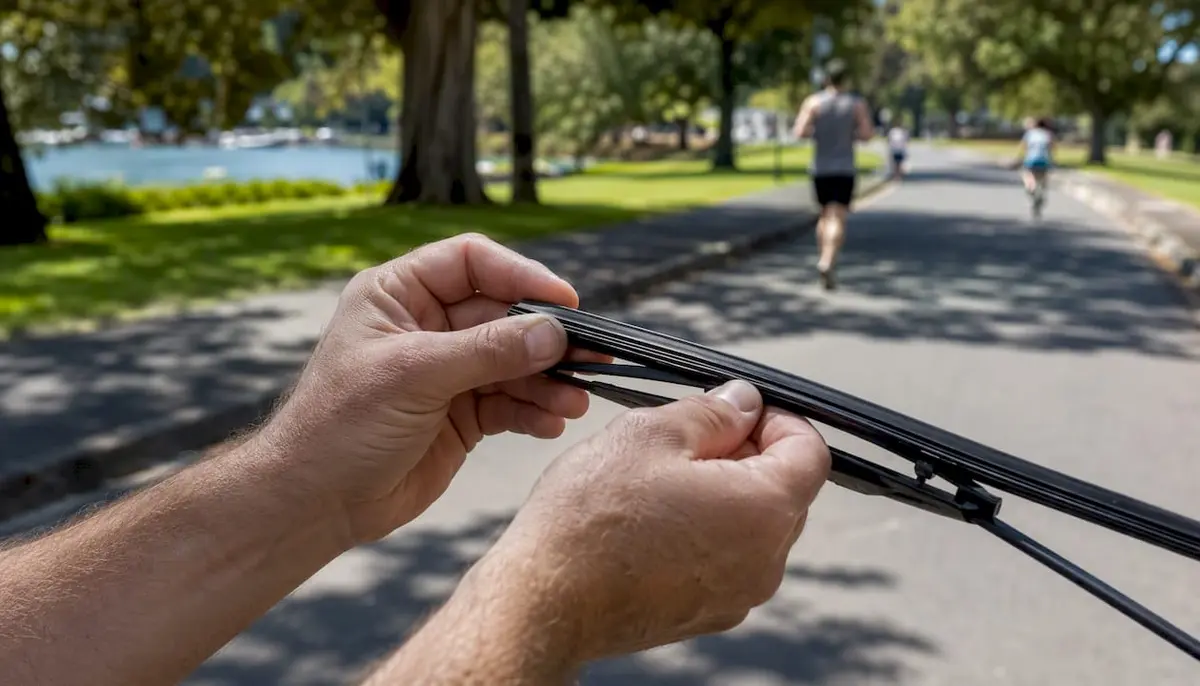
The 9 proven tips for protecting windshield wipers cover the full maintenance picture, but the core habit is simple: look at your blades regularly, clean them when they squeak, and replace them before they fail.
Ready to replace? Find the right blade for your vehicle
When cleaning and adjustment have done their job and replacement is the clear next step, GWC Wipers makes it straightforward. The vehicle selector tool at gwcwipers.com.au matches your make, model, and year to a blade that is guaranteed to fit, with no measuring or guesswork required.
Every order ships free across Australia and is backed by a 30-day money-back guarantee and a 12-month warranty. The blades arrive preassembled with adapters, so installation is a five-minute job you can do in the driveway. If you drive a Toyota, the Toyota wiper blade range is a good starting point — or use the selector to find the right match for any other make. Use the vehicle selector now and have the right blades on the way today.
Useful sources and further reading
The following sources informed this article and are worth bookmarking for ongoing wiper and glass maintenance:
- RAA Magazine (samove) — Why are my windscreen wipers squeaking? Covers cleaning steps, blade flip diagnosis, and when to replace — the most comprehensive Australian-market resource on wiper noise.
- AutoGuru — Stop wiper blades from squeaking Practical DIY advice on washer fluid, rubber condition, and when cleaning is no longer enough.
- Collision Auto Glass — Tips on caring for your car’s glass Glass-care guidance relevant to cleaning methods and avoiding coating damage.
- Collision Auto Glass — How to choose wiper blades Material comparison and selection guidance for rubber versus silicone blades.
- GWC Wipers — Windshield clarity checklist for Australian drivers A localised checklist covering glass condition and wiper performance for Australian conditions.
FAQ
Why are my wipers making so much noise?
The most common causes are a contaminated blade or windscreen, hardened rubber, incorrect arm tension, or dishwashing liquid in the washer reservoir. Cleaning the blade edge and glass with appropriate products resolves most cases.
How do you stop noisy wiper blades?
Wipe the rubber edge with isopropyl alcohol, clean the windscreen with an ammonia-free glass cleaner, and top up the washer fluid with a dedicated automotive product. If noise continues after cleaning, check arm tension and blade flip before replacing the blades.

Can I use WD-40 on my wiper blades?
No. Standard WD-40’s petroleum distillates can dry, swell, and crack rubber blades. Use WD-40 Specialist Silicone or another rubber-safe silicone spray applied via a cloth instead.
What can I use to lubricate my windscreen wipers?
A silicone spray labelled safe for rubber is the right choice. Apply it to a cloth first, then wipe along the blade edge to avoid overspray onto the glass or its coatings. Isopropyl alcohol works well for cleaning rather than lubricating.
When should I replace my wiper blades instead of cleaning them?
Replace blades when you see cracked, split, or missing rubber, when streaks or skipping persist after a full clean, or when a scratching sound suggests the rubber is no longer protecting the glass. In Australia’s hot climate, annual replacement is a practical baseline.