
6-Step Clean or Replace Test for Signs of Bad Wipers in Australia
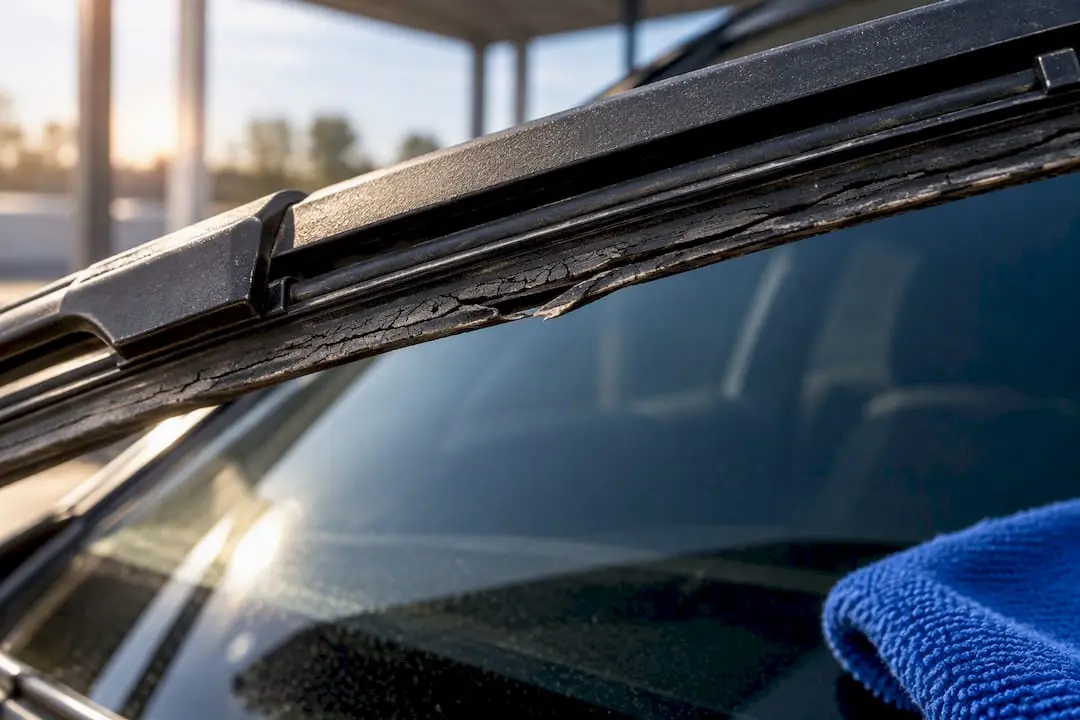
Streaks that won’t wipe away, chattering across the glass, a squeak that gets louder by the week, cracked or lifting rubber, or fresh scratches on the windscreen — these are the signs of bad wipers that mean action now. Clean the blade and windscreen first, then retest with washer fluid. If the fault persists, replace the blade before your next wet drive, because a damaged blade can scratch glass and cut your visibility in the rain.
TL;DR:
- Streaking caused by grime clears after cleaning, but persistent streaks indicate rubber fatigue and the need for replacement if cleaning doesn’t help.
- Chattering or bouncing blades often originate from bent arms, wrong fitment, or surface coatings, not just worn rubber, requiring inspection of fit and arm condition.
- Noisy operation that doesn’t improve after cleaning suggests stiff, cracked, or glazed rubber, making replacement necessary regardless of vehicle age or mileage.
- Visible damage such as cracks, tears, or lifted rubber confirms the blade can no longer seal properly and must be replaced to avoid glass scratches.
- Replacing blades with exact-fit, vehicle-specific models helps ensure performance and prevents issues caused by generic parts or improper fit.
Table of Contents
- Streaking and smear marks on the swept area
- Skipping, chatter or bouncing across the glass
- Squeaking and noisy operation: dirty or dying?
- Lifted, peeling, cracked or split rubber
- Scratches or glass damage after wiping
- Quick clean-versus-replace test and fitment checklist
- Why symptoms beat the calendar
- Get it right the first time with exact-fit blades
- Sources
- FAQ
Streaking and smear marks on the swept area
Streaking shows up as thin, repeated lines across the glass rather than the odd water island that beads and rolls off. It’s usually contamination or ageing rubber losing its clean edge, and the only way to know which is a proper test.
Try this before you write it off as a bad blade:
- Wipe the blade edge and the swept section of glass with an approved glass cleaner and a soft cloth (skip household detergents, they can degrade the rubber and cause more streaking).
- Run the washer fluid and watch the arc the blade leaves behind.
- If the streak is gone, you were dealing with grime, not a worn blade.
- If it returns straight away, the rubber has likely reached the end of its working life.
Pro Tip: If streaking has been getting worse over a few weeks rather than appearing overnight, it’s rubber fatigue, not a one off contamination event. Check out common causes and fixes for streaking wipers before you buy new blades. When it’s time to replace, the wiper blades range at GWC Wipers is built around exact-fit sizing rather than a generic “one size mostly fits” approach.
Skipping, chatter or bouncing across the glass
Chatter feels like the blade is stuttering or jumping rather than gliding, often with a visible bounce you can see from the driver’s seat. It’s one of the more misdiagnosed bad wiper blade symptoms because the blade itself isn’t always the culprit.
- Hardened rubber — sun and age stiffen the edge so it can’t flex evenly against the curve of the glass.
- Bent wiper frame or loose adapter — physical damage from ice scraping or a rough car wash can throw off contact pressure.
- Wrong blade length — an incorrect fit changes the pressure distribution across the arm, causing parts of the blade to lift.
- Windscreen coatings — ceramic coatings or aftermarket treatments can interact badly with the rubber edge, causing chatter even on a correctly fitted blade.
Check length and fitment against your vehicle’s specifications first. If a fresh, correctly sized blade still skips, the fault has probably moved from the blade to the arm, tension spring, or motor, and that’s a job for a mechanic rather than another blade purchase.
Squeaking and noisy operation: dirty or dying?
A wet squeak that fades after a few passes is usually just grime or a light film on the glass. A dry, high-pitched screech that doesn’t ease off is a different story.
- Wet squeak, fades quickly — clean the blade edge and glass, then retest with washer fluid running.
- Dry screech, constant — feel the rubber edge; if it’s hard, glazed or shows a fine crack line, it’s finished.
- Intermittent squawk on turns or at certain speeds — often uneven blade pressure from a bent arm rather than the rubber itself.
Don’t assume low kilometres protect you here. UV exposure and contamination age blades on their own timeline, regardless of how little the car has been driven. A blade parked in western Sydney sun for two years can be more brittle than one that’s covered twice the distance in a shaded garage. If the noise doesn’t clear after a clean and the rubber feels stiff, read through more on what causes wiper blade noise before assuming it’s terminal, then replace if the symptoms match.
Lifted, peeling, cracked or split rubber
Some damage doesn’t need a test at all. If you can see it, the decision is already made.
- Rubber lifting away from the metal spine along any section of the blade
- Visible splits or cracks running across the wiping edge
- Chunks of rubber missing or peeling in strips
- A blade that looks glazed, shiny or brittle rather than matte and supple
Any of these mean the blade can no longer form a consistent seal against the glass, which lets water and grit through in the exact spots you need clear vision. Continued use also raises the chance the exposed metal frame drags across the windscreen and scratches it.
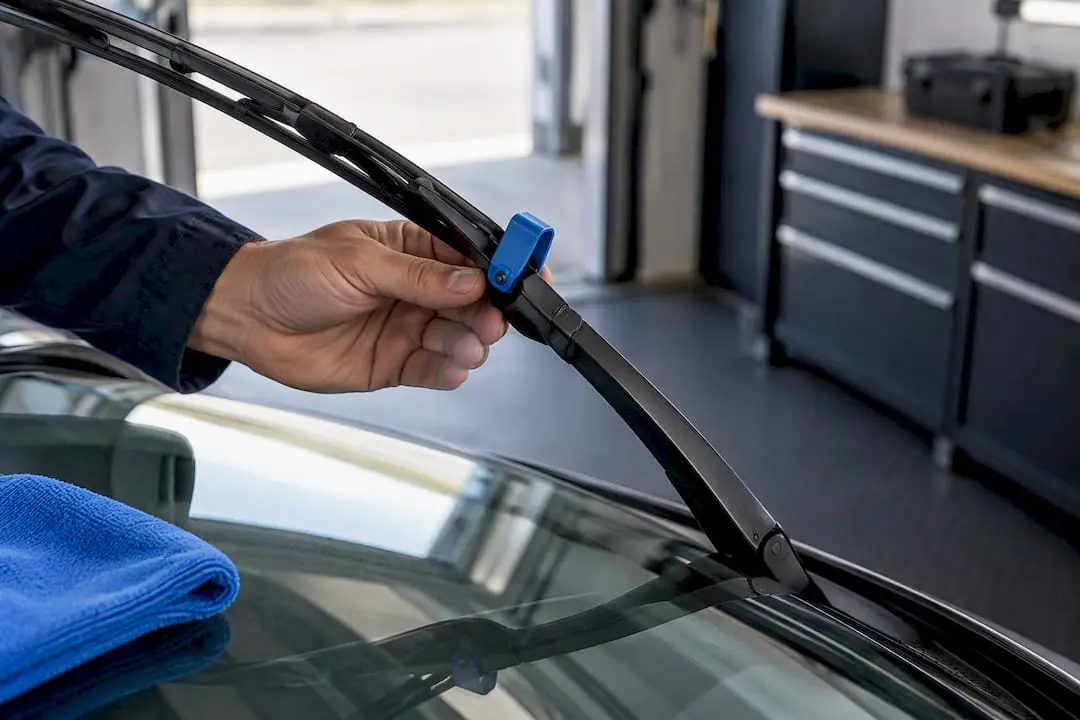
Pro Tip: Always support the wiper arm with your hand or a clip while the old blade is off. An unsupported arm can snap forward onto bare glass, and that’s how a simple blade swap turns into a chipped windscreen.
Scratches or glass damage after wiping
This is the sign that moves past maintenance and into safety territory. A blade with exposed metal, grit trapped in the rubber, or a hardened edge can scratch the glass it’s meant to protect.
- Look for fine, repeating scratch lines that follow the blade’s wiping arc, especially visible in low afternoon sun.
- Remove the blade immediately if you spot scratching, and stop driving with it fitted until it’s replaced.
- Check whether the scratches sit only in the swept zone (blade fault) or spread wider across the glass (possible windscreen issue).
- A windscreen that’s chipped, worn, badly scratched or discoloured needs professional assessment and may require replacement rather than another set of blades.
If haze or scratching persists after fitting brand new blades, the damage is very likely already in the glass, not the rubber.
Quick clean-versus-replace test and fitment checklist
Before spending money on new blades, run this short routine. It settles the streaking, chatter and squeak questions in one go.
- Clean the blade edge and the swept section of windscreen with an approved glass cleaner.
- Retest using washer fluid at normal speed, watching the full sweep for streaks, skips or noise.
- Replace the blade if any symptom returns after cleaning; if it clears, recheck weekly rather than assuming you’re in the clear.
- Fit correctly: confirm the exact blade length and connector type for your make, model and year before buying.
- Install carefully: lift the arm gently, slide the old blade free, engage every claw on the new adapter before lowering the arm back onto the glass.
- Test again on low speed with washer fluid before driving in traffic.
If a properly fitted new blade still chatters or won’t park correctly, the fault has likely shifted to the arm or motor rather than the blade, and it’s worth checking the vehicle recall register before buying a third set.
Replacement cadence is a guide, not a rule. RACQ suggests around every six months as a general timeframe, but that figure assumes average Australian sun and rain exposure. A car parked outdoors through a harsh summer can need new blades well before the six-month mark, while a garaged vehicle might run longer. Symptoms, not the calendar, should make the call.
For a broader once-over beyond the blades themselves, our visibility checklist for Aussie weather covers washer jets, reservoir levels and glass condition together.
Why symptoms beat the calendar
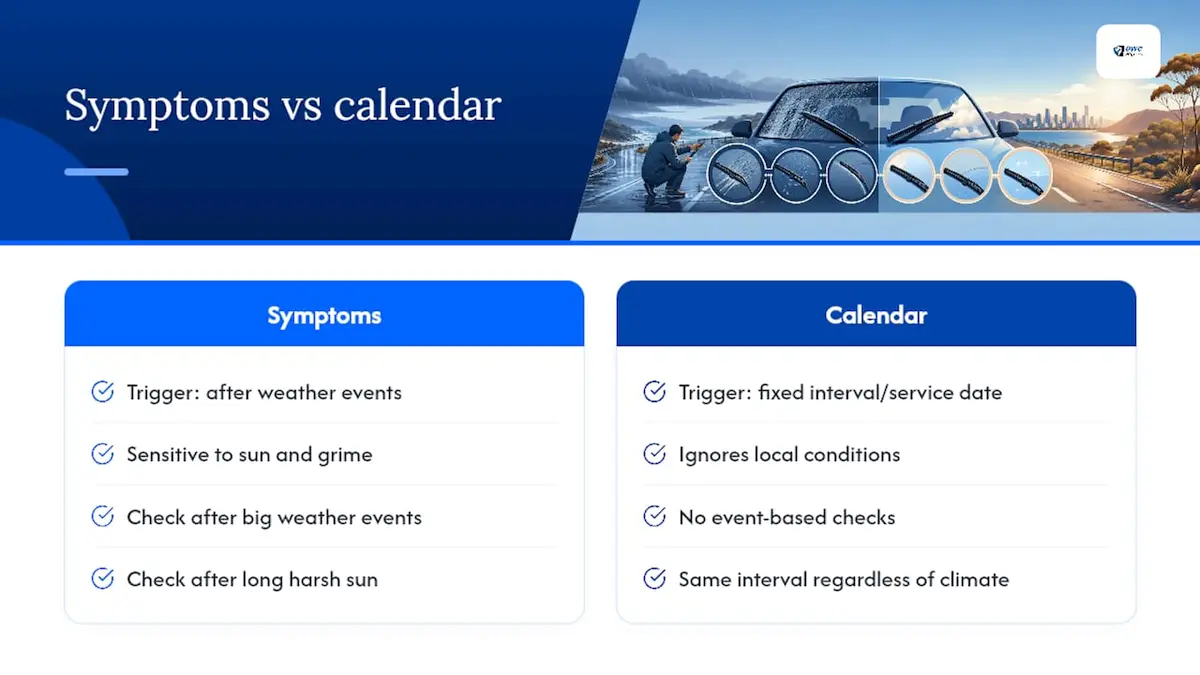
I’d back symptom checks over a fixed replacement date every time, and the reasoning is simple: sun and road grime don’t respect a six-month schedule. A blade sitting on a car parked outdoors through a Queensland summer will harden faster than one garaged through a mild Victorian winter, even if both cars have covered the same kilometres.
That’s why I’d rather see drivers run a quick check after any big weather event, a long stretch of harsh sun, or a run of unusually heavy rain, rather than waiting for a date on a service reminder. When a blade does need replacing, using a proper make, model and year selector removes the guesswork that leads people to buy the wrong length twice.
— Faisal
Get it right the first time with exact-fit blades
Replacing a bad blade with another generic one just resets the clock on the same problems. GWC Wipers builds every blade around vehicle-specific fitment for over 2,500 models, with natural rubber construction and a segmented pressure design engineered to keep even contact across the glass in Australian sun, rain and dust.
If you’ve worked through the checks above and landed on “replace,” start with the full wiper blades range and use the Perfect Fit selector by make, model and year rather than guessing from an old part number. Drive a Toyota or a Ford? The Toyota wiper blades and Ford wiper blades pages list exact fitment by model and year, with preassembled adapters that skip the fiddly bracket swaps. Every set comes with customer support and satisfaction guarantees. Once they’re fitted, run the washer fluid test from the checklist above before you head out in the rain.
Sources
- Easy DIY car maintenance tips and safety checks | RACV
- How to change wiper blades | RACQ
- Safety alert: Cracked windscreens | Point to Point
- REC-005788 - B M W AUSTRALIA LTD. - BMW G70 2022 | Vehicle Recalls
FAQ
How can I tell if my wiper blades are bad?
Look for streaking that survives a proper clean, visible chatter or bouncing, a persistent dry squeak, cracked or lifted rubber, and any scratching on the glass. If cleaning and a washer fluid retest don’t clear the symptom, the blade needs replacing.
What is the average lifespan of wiper blades?
RACQ suggests roughly six months as a general guide, though sun exposure and contamination can shorten that considerably. Judge by performance and visible condition rather than the calendar alone, and see our notes on replacement frequency for more detail.
How do I know if wiper blades need replacing?
Run the clean and retest routine first: wipe the blade edge and glass with an approved cleaner, then check performance with washer fluid running. If streaking, chatter or noise returns, or the rubber shows cracking or lifting, replace the blade.
What are the signs that it’s time to replace my windscreen wipers?
The clearest signs are streaks that won’t clean off, chattering or skipping across the glass, a persistent screech, split or peeling rubber, and scratches appearing on the windscreen itself. Any scratching means stop using the blade immediately and check the glass, since scratched windscreens can require professional assessment.