
Stop Wiper Lift at 80km/h: Tested Checklist for Australian Drivers
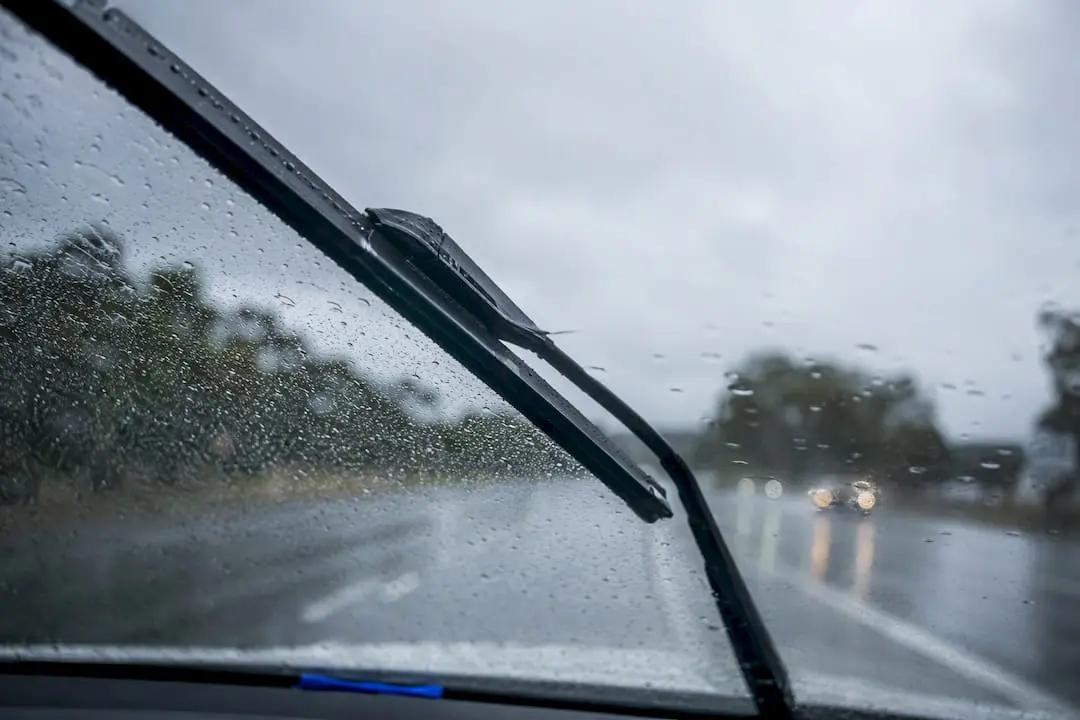
Aerodynamic wiper lift is preventable, and the fix comes down to two things working together: a blade with genuine aerodynamic compensation (an integrated spoiler or profile shaped to counter airflow) and correct arm downforce holding it to the glass. If your blades chatter or skip above 80km/h, check the fitment first, then look for a blade tested for chatter-onset velocity rather than one that’s just marketed as “aerodynamic.” Wind-tunnel and CFD research backs this approach directly.
TL;DR:
- Wiper lift increases with speed, especially near the 50-degree wipe angle, scaling quadratically to cause flutter at highway speeds without proper aerodynamic design.
- Spoiler shapes tested in wind tunnels and CFD studies significantly reduce lift, with swept-back profiles and correct connection shapes turning airflow into downward force.
- The arm’s spring tension and proper fitment are crucial; corroded springs or incorrect blade length can cause lift even with an aerodynamic blade.
- Confirming blade contact and stability through quick in-car tests at increasing speeds is essential before high-speed driving or purchase.
- Trusted brands use validated aerodynamic design, vehicle-specific fitment, suitable materials, and test evidence, reducing lift and flutter issues effectively.
Table of Contents
- Why wipers lift at speed
- Blade and spoiler features that prevent lift
- Arm, spring tension and fitment: the mechanical side that affects lift
- Quick in-car tests and checks to confirm a blade won’t lift
- How to choose replacement blades that resist lift
- Why GWC Wipers is a recommended option for anti-lift performance
- What actually stops wiper lift, and what doesn’t
- Ready to fit blades that hold at speed?
- Selected research and test reports
- Sources
- FAQ
Why wipers lift at speed
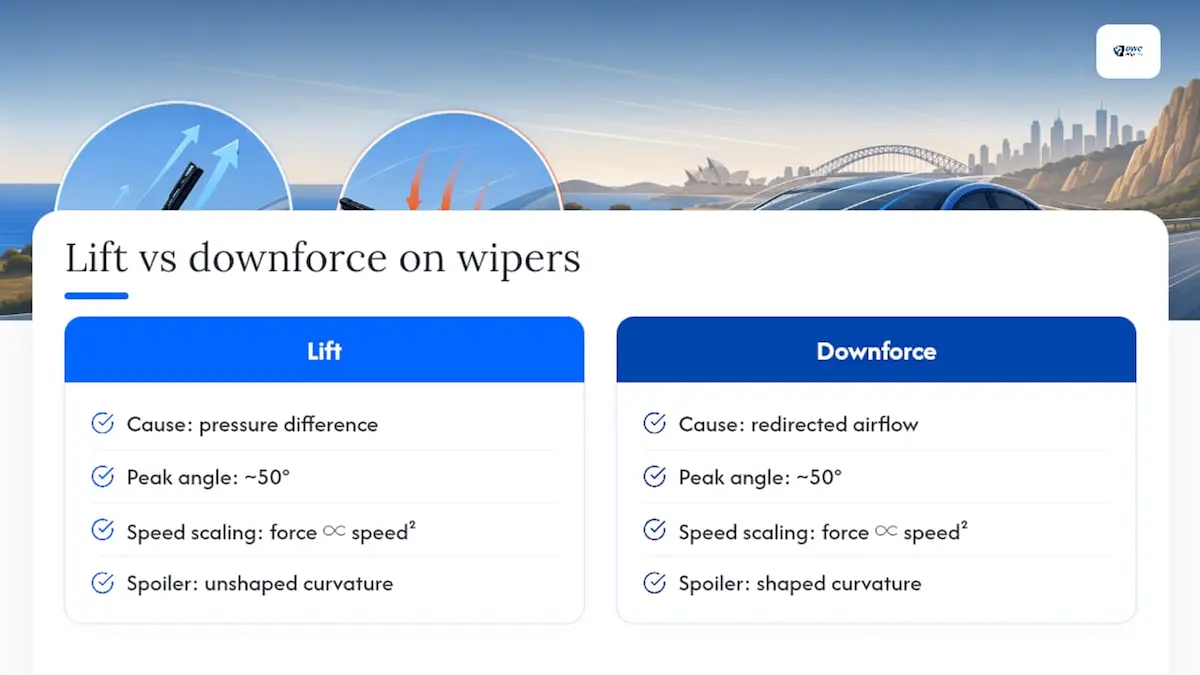
Wiper lift happens when air moving over your windscreen creates a pressure difference across the blade, and at certain angles that pressure pushes the blade away from the glass instead of holding it down. Research into wiper performance across multiple vehicle types found the maximum lift typically occurs near a 50-degree wiping angle, which is roughly where your blade sits mid-sweep on most windscreens. That’s precisely when you need contact the most, mid-wipe, in the rain, at speed.
Lift scales with the square of your speed, so increasing velocity leads to substantially greater aerodynamic force on the blade, which is why a blade that seems fine around town can flutter violently on the motorway. CFD simulations validated against wind-tunnel testing confirm that changing spoiler curvature, blade height, and the connection type between the metal spine and the rubber can shift this force from lift into downforce. That’s the key distinction buyers miss: a spoiler isn’t decoration. Shaped correctly, it converts the same airflow that used to lift the blade into a force that presses it harder against the glass.
Blade and spoiler features that prevent lift
Once you understand what causes lift, the features to look for on a product page become obvious. Manufacturers who’ve done the engineering work will usually tell you, directly or indirectly, how their blade handles airflow.
- Integrated spoilers with swept-back curvature. Geometric modification studies tested multiple spoiler shapes and found swept-back profiles reduce flow separation and cut lift coefficients without a heavy drag penalty.
- Profile geometry and cross-sectional depth. A deeper profile can help, but overdo it and you introduce drag and vibration instead of stability. The best designs balance depth against blade length.
- Blunt connection types between spine and spoiler. The same geometric research found that increased blade height combined with certain connection shapes can produce net negative lift, meaning the blade is actually pulled toward the glass at speed.
- Material choice for your driving conditions. Silicone tends to hold its shape better under UV exposure and highway heat, while natural rubber offers a supple, tight seal against glass that some drivers prefer in wetter, high-particulate conditions.
Pro Tip: Don’t judge a blade by how aggressive its spoiler looks in a product photo. Ask whether the manufacturer backs the design with wind-tunnel validation, a chatter-onset velocity figure, or a contact-force curve. Those three data points tell you more than any marketing image.
The manufacturers worth trusting are the ones who can point to tested design work behind their spoiler shape, not just a claim that it’s “aerodynamic.”
Arm, spring tension and fitment: the mechanical side that affects lift
A perfectly engineered blade still lifts if the arm behind it can’t hold it down. Spring downforce is what presses the blade against the glass in the first place, and that force weakens gradually as springs age and corrode, particularly on vehicles that sit outdoors through hot Australian summers.
- Check spring tension by hand. Lift the arm off the glass and let it fall. It should snap back with firm, even resistance, not drift down slowly.
- Look for visible corrosion or a bent pivot. Rust at the arm’s hinge point is a strong sign the spring has lost tension, even if it still moves.
- Confirm the blade length matches your vehicle spec. An oversized blade catches more airflow at the tip and lifts there first, even with a good spring behind it.
- Check the adapter is fully seated. A loose or partially clipped adapter lets the blade rock slightly at speed, which is often mistaken for a design fault when it’s really an installation one.
If you’re seeing streaking, uneven wear, or a blade that lifts even at moderate speed, it’s worth reading through the common signs of unsafe wiper hardware before you assume a new blade alone will fix it.
Quick in-car tests and checks to confirm a blade won’t lift
Before you trust a new blade to hold at highway speed, run through a short check in the driveway and then on the road.
- Inspect static contact following clean car glass best practices. With wipers off, press the blade gently along its length. It should touch the glass evenly, with no gap at either end.
- Confirm cowling clearance. Make sure the blade doesn’t catch on the cowl or A-pillar trim at full sweep, which can knock it off-angle.
- Test at increasing speed increments, ideally on a quiet stretch of road with no traffic nearby, watching (or having a passenger watch) for chatter, flutter, or a visible gap between blade and glass.
- Stop increasing speed the moment you see instability. There’s no reason to push past the point where the blade starts misbehaving.
Pro Tip: If you’re buying online, ask the seller directly for chatter-onset velocity, a contact-force distribution curve, or a summary of wind-tunnel results. Reputable suppliers can share this kind of test data, and if they can’t, that tells you something too.
How to choose replacement blades that resist lift
Turn everything above into a shopping checklist and you’ll cut through most of the marketing noise on a product page fast.
- Verified aerodynamic compensation, not just a spoiler shape in a photo, but a design tested in CFD or a wind tunnel.
- A vehicle-specific fitment tool or fitment guarantee, so you’re not guessing at blade length or adapter type.
- Material suited to your conditions, silicone for harsh UV and heat, natural rubber for a tight, supple seal in wetter climates.
- A warranty that reflects confidence in the design, typically 12 months on a quality blade.
- Some form of test evidence, even a summary of chatter-onset speed or contact-force data.
If you drive mostly on the motorway, weight your decision toward verified chatter-onset data. If you’re mostly in city traffic, a well-fitted standard aerodynamic blade is often enough, and there’s little point paying for performance you’ll never test. For deeper background on which blade types suit which driving pattern, it’s worth a read before you buy. And if the arm itself shows wear during your checks, get it looked at rather than pairing a good blade with a tired spring.
Why GWC Wipers is a recommended option for anti-lift performance
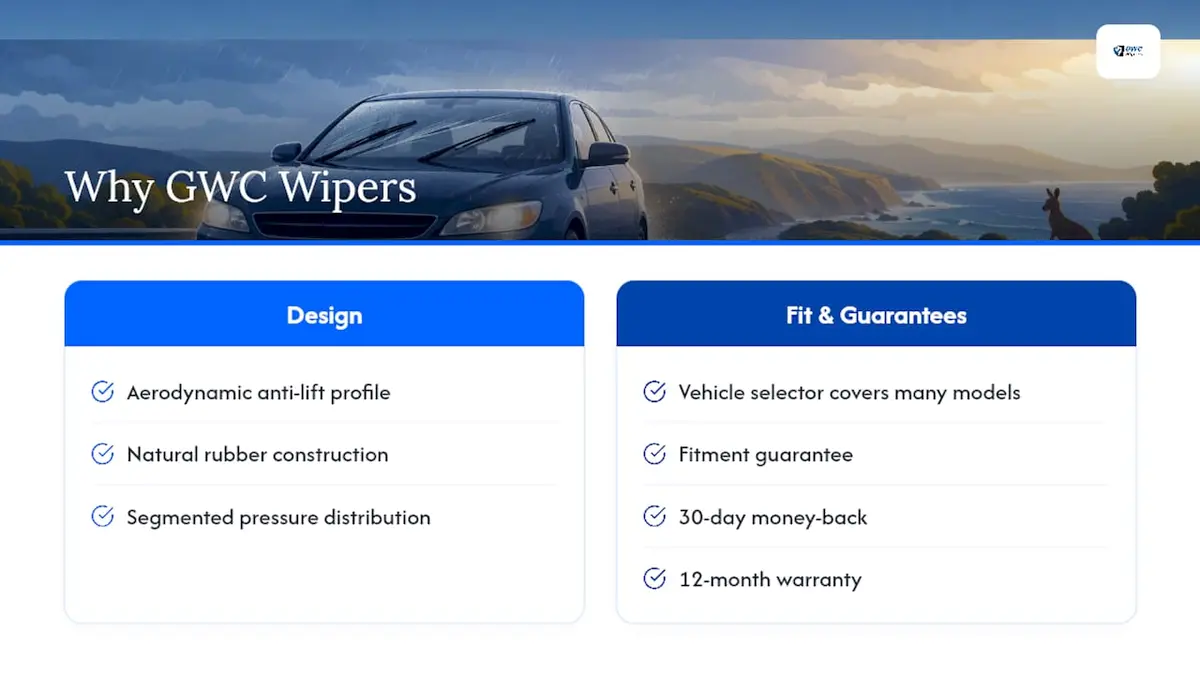
A high-quality blade range builds on principles pointed out by research: aerodynamic profiles designed to resist lift, natural rubber construction, and segmented pressure distribution that spreads contact force evenly along the blade rather than concentrating it at one point. That matters because uneven pressure is often where flutter starts.
The vehicle selector tool covers fitment for many models, which removes the guesswork that causes so many lift complaints in the first place, wrong length, wrong curvature, wrong adapter. Purchases come with a fitment guarantee, a 30-day money-back guarantee, and a 12-month warranty. Between the design work and the purchase reassurances, there’s little reason to gamble on an unverified fit.
What actually stops wiper lift, and what doesn’t
Here’s my honest read after going through the aerodynamic research: most drivers overrate the visual design of a spoiler and underrate the arm behind it. A blade with a beautifully swept spoiler profile is wasted on a weak, corroded spring, yet that’s exactly the mismatch I see recommended constantly. Prioritise verified aerodynamic testing first, correct fitment second, and only then start caring about how the blade looks on the shelf.
— Faisal
Ready to fit blades that hold at speed?
This brand offers an Australian-designed blade range built specifically to resist aerodynamic lift, with fitment matched to vehicles rather than a generic universal fit. Start with the vehicle selector to confirm the right blade for your make and model in under a minute.
Popular model pages are ready to go if you already know what you’re driving, including Toyota wiper blades, Mercedes-Benz GLE-Class blades, and Land Rover Discovery Sport blades. Every order ships free across Australia, comes with a 30-day money-back guarantee, and carries a 12-month warranty, so getting the fit and the aerodynamic performance right costs you nothing to try. Head to the selector, enter your vehicle details, and order the blade built for the conditions you actually drive in.
Selected research and test reports
The aerodynamic explanations above draw on peer-reviewed CFD and wind-tunnel work, including the wiper system performance study in the Journal of Applied Fluid Mechanics, geometric modification research on spoiler curvature and lift coefficients, and multi-vehicle lift angle measurements. Engineering commentary on chatter-onset testing and contact-force data rounds out the practical buying guidance.
Sources
- Geometric modifications to minimise lift acting on a simplified front windshield wiper blade
- Aerodynamic windshield wiper blade design: reducing lift and chatter for safer high-speed visibility
FAQ
What causes wiper blades to lift at high speed?
Airflow over the windscreen creates a pressure difference across the blade, and without a spoiler or profile shaped to counter it, that pressure pushes the blade away from the glass rather than pressing it down.
At what speed does wiper lift usually start?
It varies by vehicle and blade design, but lift force increases sharply with speed since it scales roughly with speed squared, and most standard blades without aerodynamic compensation start showing chatter well before typical motorway speeds.
Do aerodynamic spoilers on wiper blades actually work?
Yes. CFD and wind-tunnel testing on swept-back spoiler geometry shows it reduces flow separation and lift coefficients, and some configurations produce net downforce rather than lift.
Can a weak wiper arm cause lift even with a good blade?
Yes. Insufficient spring downforce means even a well-designed aerodynamic blade can’t maintain full contact, so check arm tension and condition alongside blade quality.
How do I know if my new blades will resist lift before buying?
Ask the seller for chatter-onset velocity, contact-force distribution data, or a wind-tunnel test summary. Some suppliers pair aerodynamic profile design with a vehicle-specific fitment guarantee to reduce that uncertainty.