
Selecting wipers for heatwaves: what Australian drivers need
TL;DR:
- Choosing UV-treated or silicone blades and replacing them proactively helps Australian drivers maintain visibility during heatwaves. Different blade types respond to high temperatures and UV exposure with beam and silicone blades lasting longer in extreme conditions. Regular inspection, cleaning, and using a vehicle selector ensure optimal safety and performance in Australia’s intense climate.
For Australian heatwaves, choose UV-treated beam blades or silicone blades and replace them periodically depending on your local conditions. That single decision protects your forward visibility when a summer storm rolls in after days of 40°C heat. If your blades show signs of aging such as cracking or streaking, replace them before the next heatwave arrives.
Three things to do right now:
- Inspect the rubber edge for cracks, fraying or a glazed surface. If you find any, replace immediately.
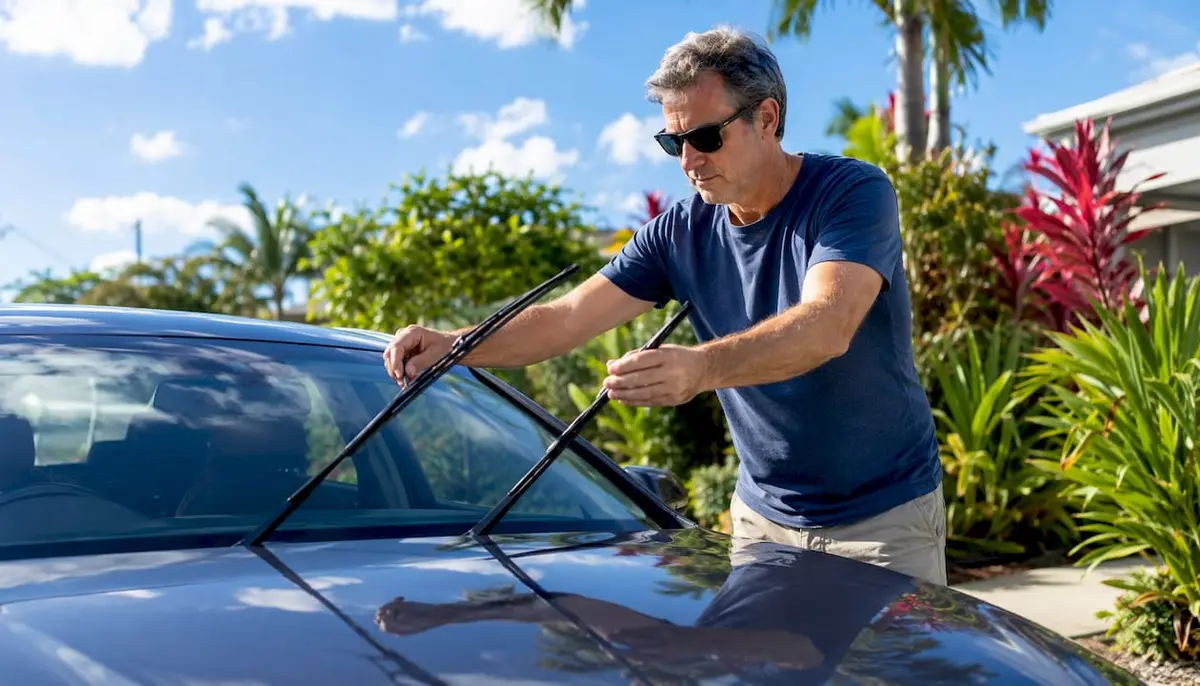
- Lift your wiper arms off the windscreen whenever the car is parked in direct sun for more than a few hours.
- Clean the rubber edge with warm soapy water and a wipe of rubbing alcohol to remove grit that acts like sandpaper against the blade.
Replacement timing matters more than most drivers realise. In high UV regions across northern and inland Australia, blades typically need earlier replacement than in temperate coastal cities. Use the GWC Wipers vehicle selector to confirm the correct fit for your make, model and year before you buy.
Pro Tip: Lift both wiper arms before you leave a car park during a heatwave. It takes five seconds and prevents the rubber from baking flat against the hot glass, which causes permanent edge deformation.
Table of Contents
- How do different wiper blade types perform in high heat?
- What does heat actually do to your wiper blades?
- What features should you look for when buying wipers for heat?
- How do you maintain wipers and know when to replace them?
- How do you pick the right wiper blade for your specific car?
- Why does an Australian supplier make a difference for heatwave-ready blades?
- Key takeaways
- The case for replacing before you need to
- Get the right blades for your vehicle today
- Useful sources
- FAQ
How do different wiper blade types perform in high heat?
Not all blades respond to heat the same way. Understanding the differences helps you choose the right summer driving wiper option for your vehicle and climate.
Conventional frame blades
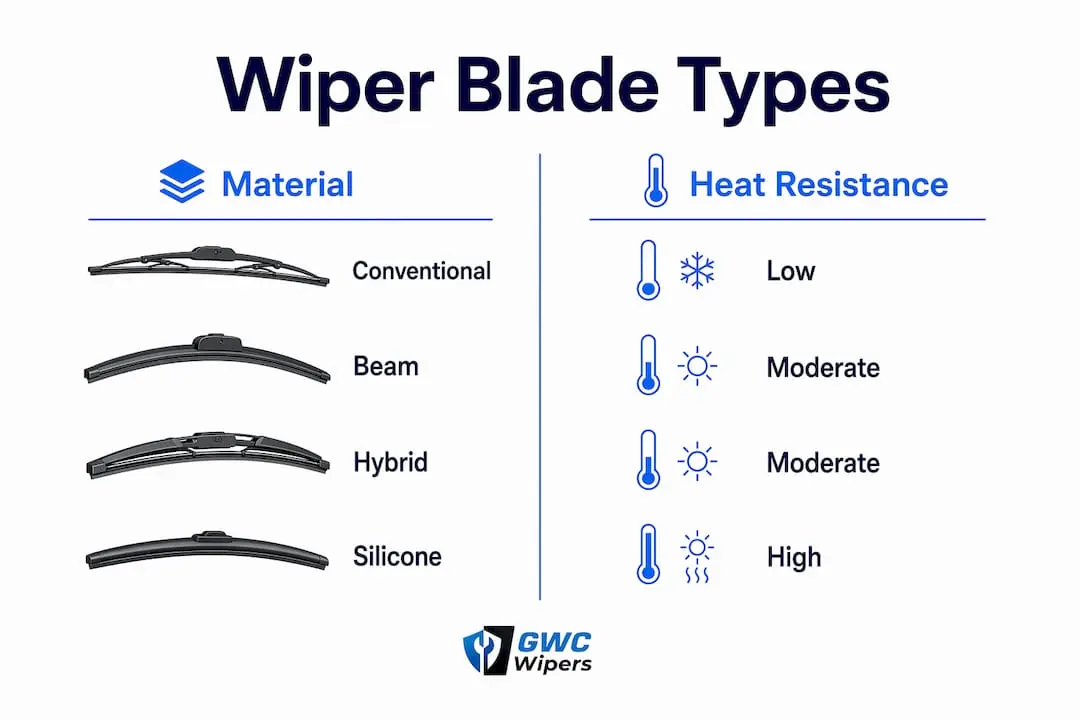
Conventional blades use a metal frame with multiple pressure points to hold the rubber against the glass. In extreme heat, the metal frame expands and contracts with thermal cycling, which gradually loosens the contact pressure at each pivot point. The exposed rubber edge is also vulnerable to direct UV radiation and ozone, which cause hardening and cracking faster than in cooler climates. These blades are the least suited to sustained heatwave conditions, though they remain the most common replacement type sold at service stations.
Beam blades
Beam blades are a single-piece unit with no external frame. The tension is built into the blade itself, which distributes pressure evenly across the full sweep arc. That even pressure is a real advantage in heat: there are no pivot points to loosen, and the sealed spine keeps grit and dust out of the mechanism. For Australian drivers in high UV regions, beam blades tend to outlast conventional blades under the same conditions. The trade-off is a higher upfront cost.
Hybrid blades
Hybrid blades combine a protective plastic shell with an internal frame, giving some of the dust and UV protection of a beam blade while keeping costs closer to conventional pricing. They suit drivers in mixed climates, such as south-eastern Australia, where heat is intense but not year-round. The plastic shell shields the rubber from direct sun better than an open frame, though the internal frame still has pivot points that can loosen over time.
Silicone blades
Silicone retains flexibility and resists ozone and UV degradation better than natural rubber. In sustained heat above 35°C, silicone blades maintain their edge profile where rubber blades begin to harden. They also deposit a thin hydrophobic layer on the glass over time, which improves water beading. The two common trade-offs are a slightly higher price and a brief squeaking period when new, which disappears after a few uses.

| Blade type | Heat resistance | UV resistance | Typical lifespan (high UV) | Best suited to |
|---|---|---|---|---|
| Conventional frame | Low | Low | shorter lifespan | Mild climates, budget replacement |
| Beam | High | Medium–High | longer lifespan | High UV, dusty regions |
| Hybrid | Medium | Medium | moderate lifespan | Mixed climates, south-east Australia |
| Silicone | Very high | Very high | longest lifespan | All Australian climates, extreme heat |
Pro Tip: If you drive regularly in Queensland, the Northern Territory or inland Western Australia, silicone or UV-treated beam blades are the practical minimum. Standard rubber blades in those regions often show visible cracking before the 8-month mark.
What does heat actually do to your wiper blades?
The damage starts well before you see streaking. UV exposure in Australia frequently exceeds index 8 in summer, which triggers photodegradation in rubber compounds. The polymer chains in the rubber break down at a molecular level, causing the material to lose elasticity and harden. Once hardened, the edge can no longer conform to the slight curvature of the windscreen, and gaps appear in the wipe path.
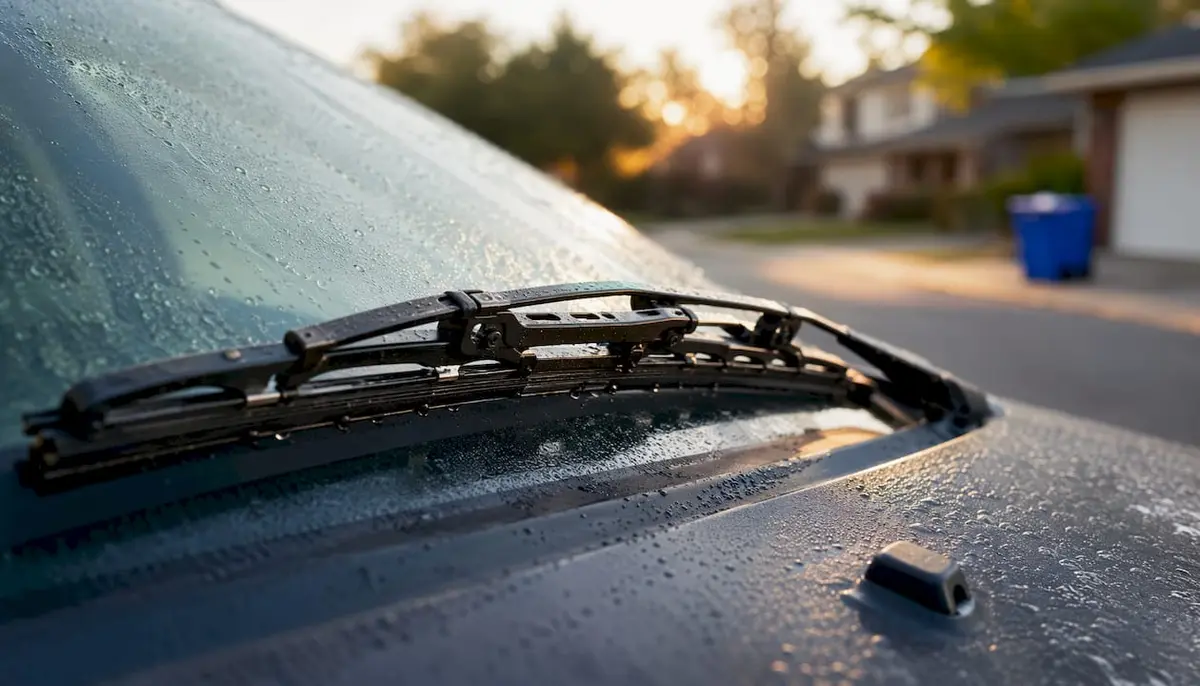
Thermal cycling compounds the problem. Each day, a blade sitting on a parked car in direct sun heats to temperatures well above the ambient air temperature, then cools overnight. That repeated expansion and contraction stresses the rubber and any metal components in the frame. Over weeks, the edge develops micro-cracks that trap grit and accelerate abrasive wear.
Ozone is the third factor. Australian cities with high traffic density have elevated ground-level ozone, which attacks rubber surfaces and causes surface crazing. The visible result is a blade that looks intact but leaves a hazy, uneven wipe pattern.
Typical failure windows in Australian conditions:
- High UV regions (northern QLD, NT, inland WA): visible degradation at 6–8 months, replacement needed by 8–10 months.
- Temperate coastal cities (Sydney, Melbourne, Perth coast): replacement needed at 12 months.
- Alpine and southern regions: up to 14–18 months, though winter freeze-thaw cycles introduce their own stresses.
By the time streaking appears, the blade has often been unsafe for weeks. Proactive replacement, not reactive replacement, is the correct approach.
Pro Tip: Run your finger along the rubber edge. If it feels stiff, waxy or has any visible ridging, the blade is already past its useful life regardless of how old it is.
What features should you look for when buying wipers for heat?
Selecting wipers for heatwaves means reading past the packaging and checking specific material and design details. Here is what to prioritise.
Materials:
- UV-treated rubber delays photodegradation by incorporating UV stabilisers into the compound. Look for this stated explicitly on the product page, not just implied by “all-weather” marketing language.
- Silicone rubber is the most heat-stable option and resists ozone without needing additional treatment. Worth the price premium in high UV regions.
Design and construction:
- Aerodynamic profile: a low-profile blade reduces wind lift at highway speeds, which matters in hot, turbulent conditions where conventional blades can chatter or lift off the glass.
- Corrosion-resistant fittings: metal components in the arm attachment and any internal frame should be treated or made from non-ferrous materials. Heat accelerates corrosion, and a corroded fitting causes uneven pressure.
- Sealed spine: keeps fine dust and grit out of the blade mechanism, which is particularly relevant for drivers in rural or outback areas.
Trust signals on the product page:
- AS/NZS compliance notation
- 12-month warranty
- Fitment guarantee with a vehicle selector tool
- Clear material specification (rubber type, UV treatment)
Quick buying checklist:
- [ ] Material stated as silicone or UV-treated rubber
- [ ] Aerodynamic or low-profile design
- [ ] Corrosion-resistant fittings confirmed
- [ ] Vehicle selector used to confirm correct length and attachment
- [ ] 12-month warranty and fitment guarantee present
- [ ] AS/NZS compliance noted
For guidance on wiper blade selection that covers both material and fitment considerations, the Collision Auto Glass resource is a useful reference alongside your vehicle selector.
How do you maintain wipers and know when to replace them?
A simple routine extends blade life significantly in hot, dusty conditions. The 30-second cleaning habit removes embedded grit that acts like sandpaper against the rubber edge during every wipe cycle.
Cleaning routine (once a week during summer):
- Lift the wiper arm away from the glass.
- Wipe the full length of the rubber edge with a cloth dampened in warm soapy water.
- Follow with a wipe using a cloth dampened in rubbing alcohol to remove any residue or contaminants.
- Lower the arm gently. Do not let it snap back onto a dry windscreen.
- Top up your washer fluid reservoir with a fluid rated for Australian summer conditions. In extreme heat, plain water evaporates quickly and leaves mineral deposits on the glass that increase abrasive wear.
Inspection checklist:
- Cracking or splitting along the rubber edge
- Fraying or torn sections
- Skipping or juddering during a wipe cycle
- Streaking or smearing that persists after cleaning
- Edge curl where the rubber has deformed away from the glass
- Squealing noise that does not stop after the first few wipes
Replacement timing for Australian conditions:
- High UV regions: every 8–10 months
- Temperate coastal cities: every 12 months
- Alpine and southern regions: up to 14–18 months
- Immediate replacement triggers: any cracking, persistent streaking, or blades older than 12 months heading into summer
Protecting blades when parked is as straightforward as using a windscreen sunshade and lifting the arms during extended daytime parking. Both steps cut the peak temperature the rubber reaches and slow the thermal cycling that degrades the material. Also check the wiper arms themselves when fitting new blades: a weak or corroded arm delivers uneven pressure and causes premature blade failure even when the rubber is new.
Pro Tip: Add wiper inspection to your monthly tyre pressure check. Both take under two minutes and both directly affect safety in wet conditions.
How do you pick the right wiper blade for your specific car?
The single most reliable rule: use a vehicle selector tool first. Measuring the blade yourself is a last resort, not a starting point. Driver and passenger blades are almost always different lengths, and the arm attachment type varies between manufacturers and model years. Guessing either dimension leads to sweep gaps and uneven pressure that no amount of blade quality can compensate for.
Action checklist for correct fitment:
- Enter your vehicle make, model and year into the vehicle selector tool.
- Confirm both driver-side and passenger-side lengths separately.
- Identify the arm attachment type (hook, pinch tab, pin, bayonet or side pin).
- Check whether your vehicle has ADAS cameras or sensors mounted near the wiper sweep zone, which may restrict blade profile height.
- Confirm the rear wiper length if applicable.
Preassembled adapters versus universal kits:
Preassembled adapters come fitted to the blade and are designed for specific attachment types. They are the faster, lower-error option for DIY installation. Universal kits include multiple adapter types and require you to identify and fit the correct one. For most drivers, preassembled is the better choice. Replace both blades at the same time: mismatched wear between driver and passenger sides creates uneven visibility.
When to replace both arms:
If the arm spring feels weak when you press it down, or if the arm has visible corrosion at the pivot, replace the arm along with the blade. A new blade on a faulty arm will streak from day one.
Pro Tip: Some newer vehicles with rain sensors require a specific blade profile to avoid triggering false wipe cycles. The vehicle selector at GWC Wipers accounts for specific model requirements across a large fitment database.
Why does an Australian supplier make a difference for heatwave-ready blades?
Blades designed and tested for Australian conditions perform differently from products calibrated for European or North American climates. The UV intensity, temperature range and dust load in Australia are outside the normal operating parameters those products are built around.
GWC Wipers designs, manufactures and tests its blades specifically for Australian weather conditions, covering many vehicle models with a fitment guarantee, warranty and money-back guarantee. Every order ships free across Australia, and each blade comes with a detailed DIY installation guide.
GWC Wipers proof points that directly address heatwave risks:
- Vehicle selector: confirms correct length and attachment type for over 2,500 models, eliminating fitment errors that cause streaking.
- Fitment guarantee: if the blade does not fit your vehicle as specified, GWC Wipers resolves it.
- 12-month warranty: covers manufacturing defects and performance failures within the replacement interval.
- 30-day money-back guarantee: removes purchase risk for first-time buyers.
- Free shipping Australia-wide: no minimum order, no regional surcharge.
- UV-treated rubber and silicone options: product specs address the specific degradation mechanisms that Australian heat causes.
- Corrosion-resistant fittings and aerodynamic profiles: designed for the dust, heat and wind conditions of Australian roads.
- DIY installation guides: step-by-step instructions included with every order, covering all common attachment types.
The trust signals to look for on any product page, including AS/NZS compliance notation and a fitment guarantee, indicate a supplier focused on Australian climate performance rather than generic global specifications.
Key takeaways
Silicone or UV-treated beam blades, with replacement timing depending on your region, are the most reliable choice for Australian heatwave conditions.
| Point | Details |
|---|---|
| Replace proactively | High UV regions need more frequent blade replacement than temperate cities. |
| Choose the right material | Silicone or UV-treated rubber resists photodegradation and ozone better than untreated natural rubber. |
| Maintain weekly in summer | A 30-second clean with soapy water and rubbing alcohol removes grit that accelerates wear. |
| Confirm fitment first | Use a vehicle selector to match blade length and attachment type before purchasing. |
| GWC Wipers for Australian fit | GWC Wipers covers thousands of models with a fitment guarantee, warranty and Australia-wide shipping. |
The case for replacing before you need to
Most drivers replace wipers reactively: they notice streaking during a downpour and pull over to deal with it. The problem with that approach in Australia is that the downpour often follows days of 40°C heat, which means the blade has already been degraded for weeks before the rain arrives. The rubber is hard, the edge is deformed, and no amount of washer fluid compensates for a blade that can no longer make clean contact with the glass.
The maintenance steps in this guide are not complicated. Lifting the arms, cleaning the rubber edge, and replacing on a calendar schedule rather than waiting for failure are habits that take minutes and genuinely affect safety outcomes. The materials matter too: a silicone blade in Darwin or Broken Hill will outlast a standard rubber blade by months under the same conditions, simply because the material is suited to the environment.
Choosing wipers for summer in Australia is not a premium purchase decision. It is a basic safety decision that most drivers delay until something goes wrong. The guidance here is designed to help you get ahead of that.
Get the right blades for your vehicle today
GWC Wipers takes the guesswork out of heatwave wiper selection. Rather than measuring blades yourself or hoping a generic replacement fits, you enter your vehicle make, model and year into the GWC Wipers selector and get the exact blade specified for your car, backed by a fitment guarantee.
Every order includes UV-treated rubber or silicone options tested for Australian conditions, corrosion-resistant fittings, and a detailed DIY installation guide. The purchase is protected by a 12-month warranty and a 30-day money-back guarantee, with free shipping to any address in Australia. Whether you drive a Toyota, a Mercedes-Benz GLE-Class, or anything in between, use the vehicle selector at GWC Wipers to find your fit and order before the next heatwave arrives.
Useful sources
The following resources were used in preparing this guide and are worth bookmarking for ongoing reference.
GWC Wipers resources:
- UV resistance in wiper blades: why it matters — explains photodegradation and UV index effects on rubber.
- Best windshield wiper blade types for Australian drivers — material comparison and climate-specific guidance.
- Climate-specific wiper tips for Australian drivers — parking, shade and sunshade advice.
- Ways to protect windshield wipers: 9 proven tips — arm inspection and protective measures.
- Why regular wiper blade replacement matters for drivers — replacement intervals and safety rationale.
- Australian weather impacts on wiper blades: 6-month guide — regional inspection and replacement intervals.
External references:
- Road Safety and Wiper Blades: Why Replacing Your Wipers Could Save Your Life — replacement intervals and safety context.
- 5 Tips on How To Make Windscreen Wipers Last Longer — cleaning routine and service life extension.
- How to Replace Windscreen Wipers in Australia: The 2026 Guide — fitment guidance and attachment types.
- Tips on Caring For and Maintaining Your Car’s Glass — glass care and contaminant reduction.
- How to Choose Wiper Blades — practical selection advice from an auto glass specialist.
In high UV regions of Australia, blades can degrade to an unsafe condition well before the typical 12-month replacement reminder most drivers follow.
FAQ
What are the best wiper blades for hot Australian weather?
Silicone blades or UV-treated beam blades are the best choice for hot weather. Both resist photodegradation and ozone better than standard rubber, and beam blades distribute pressure evenly without the pivot points that loosen in heat.
How do I choose the right wiper blades for my car?
Use a vehicle selector tool to match blade length and attachment type to your specific make, model and year. Guessing lengths or attachment types leads to sweep gaps and uneven pressure regardless of blade quality.
How often should I replace wipers in Australia?
In high UV regions such as northern Queensland, the Northern Territory and inland Western Australia, replace every 8–10 months. In temperate coastal cities, replacement is needed at 12 months. In alpine and southern regions, blades may last up to 14–18 months. Replace immediately if you see cracking, streaking or edge curl.
How do I protect wiper blades from sun damage?
Lift the wiper arms off the windscreen when parking in direct sun for extended periods, and use a windscreen sunshade. Both steps reduce peak rubber temperature and slow the thermal cycling that causes hardening and edge deformation.
Are silicone wiper blades worth the extra cost in Australia?
For drivers in high UV regions, silicone blades are worth the price premium. They outlast standard rubber blades by several months under sustained heat and UV exposure, and they deposit a hydrophobic layer on the glass that improves water beading in rain.