
Ways to enhance winter driving safety on wet and icy roads
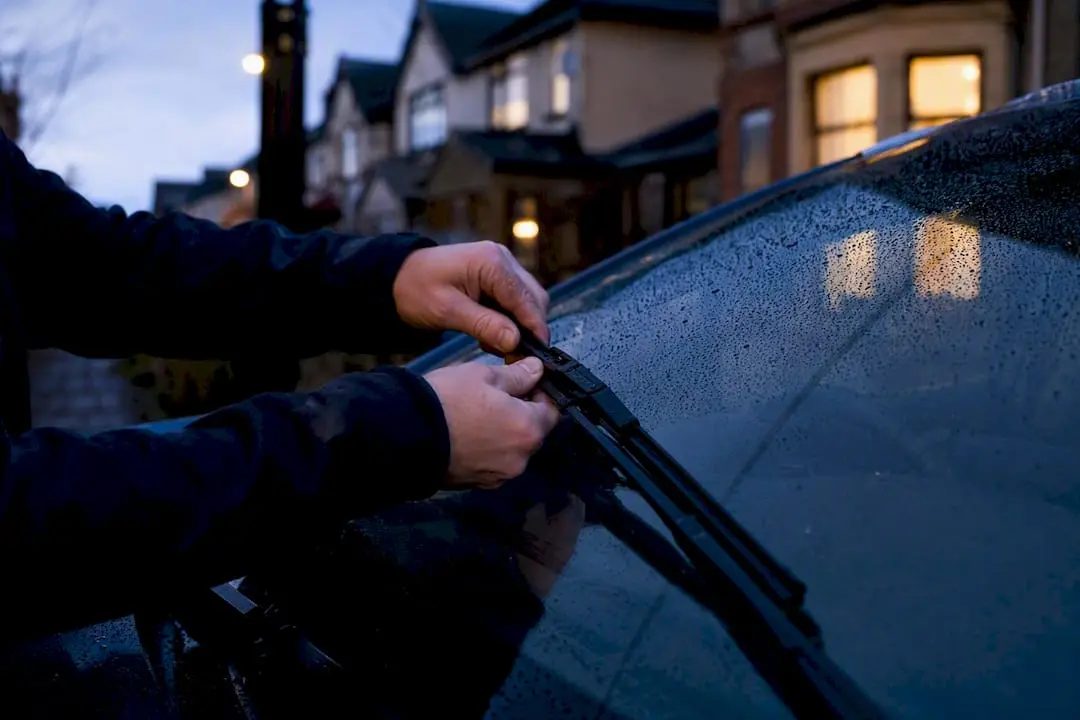
You can cut your winter crash risk substantially by tackling three things before you turn the key: vehicle preparation, visibility, and driving technique. Do these first:
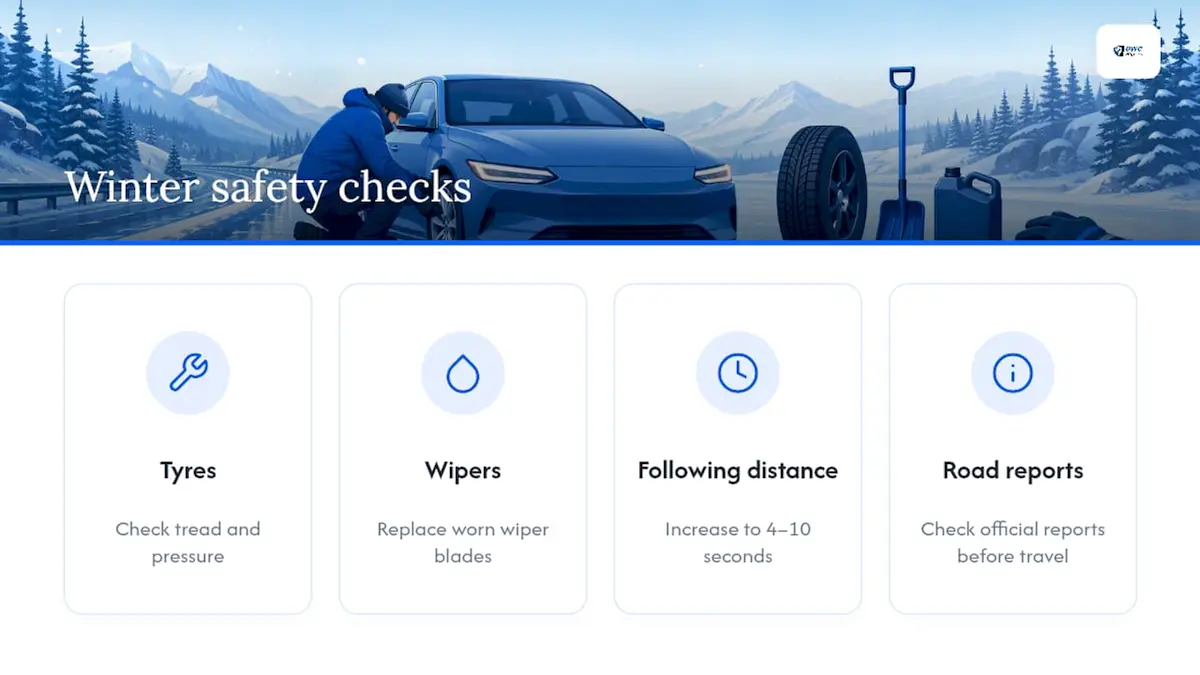
- Check tyre tread and pressure — winter demands more than the legal minimum.
- Replace worn wiper blades and top up winter-rated washer fluid.
- Increase your following distance to 4–10 seconds on wet or icy roads.
- Pack a basic emergency kit: torch, blanket, water, and a tow rope.
- Check official road and weather reports before you leave.
Pro Tip: If conditions look genuinely severe, from black ice warnings to heavy snowfall, the safest move is often to delay the trip. No checklist beats simply not driving into a storm.
Key Takeaways
Winter driving safety comes down to three controllable factors: vehicle preparation, visibility, and driving technique adjusted for reduced grip.
| Point | Details |
|---|---|
| Tyre tread and pressure | Keep tread above the 1.5mm legal minimum, with deeper tread strongly recommended for winter grip. |
| Following distance | Extend your gap to 4–10 seconds on wet or icy roads, up to 6–10 seconds on snow or ice per RACV. |
| Chain compliance | Carry and fit diamond-pattern chains when directed by authorised officers in alpine areas. |
| Emergency kit | Pack a torch, blanket, water, first-aid kit, tow rope, and high-vis vest before any winter trip. |
| Wiper condition | Replace streaking or judder-prone wiper blades before winter; Com offers vehicle-specific fitment guarantees for over 2,500 models. |
Where to find official winter driving guidance
- Safe Transport Victoria covers tyre and vehicle prep standards.
- Victoria Police and NSW Government detail chain-fitting rules and enforcement by region.
- Transport for Victoria lists current road condition and closure updates.
Table of Contents
- Why winter conditions are harder on drivers
- How do you prepare your vehicle for winter driving?
- What should you check before a winter road trip?
- How should you drive differently in snow, ice, rain, and fog?
- When are snow chains required and how do you fit them?
- What should be in a winter driving emergency kit?
- What should you do if you get stuck or break down in winter?
- Why wiper condition matters more than most drivers realise
- What should you wear when driving in winter conditions?
- Sources
- FAQ
Why winter conditions are harder on drivers
Wet roads roughly double the distance your car needs to stop compared with dry bitumen, and ice makes that gap far worse again. Reduced tyre grip is the main culprit. Once your tyres lose contact with the road surface, braking, steering, and acceleration all become less predictable.
Visibility drops too, and not just from falling rain or snow. Windscreens fog up faster in cold, humid cabins, headlight glare bounces off wet bitumen, and black ice often looks like nothing more than a damp patch on bridges, overpasses, and shaded corners, exactly the spots where you’d least expect a hazard, according to Transport for NSW.
This is why the following distance rule changes in winter. On dry roads, a two second gap is usually enough. On snow or ice, RACV recommends stretching that to 6 to 10 seconds, giving you time to react without slamming the brakes.
- Tread depth below 1.5mm is illegal, but winter grip really needs more margin than that minimum, per Safe Transport Victoria.
- Fog, mist, and windscreen streaking are just as dangerous as ice because they delay your reaction time before a hazard even appears.
How do you prepare your vehicle for winter driving?
A car that’s ready for winter starts with tyres, because they’re the only part of the vehicle actually touching the road. Check tread depth across the whole tyre, not just the centre, and look for cuts or bulges in the sidewall. If you’re heading to alpine areas regularly, winter or all-season tyres are worth the investment over a standard summer compound.
From there, work through the rest of the vehicle systematically:
- Wipers and washer fluid: replace blades that streak, judder, or leave patches, and switch to winter-rated washer fluid that won’t freeze in the reservoir or on the glass. Check the jets aren’t blocked and the arms have enough spring tension to hold the blade flat.
- Battery and charging: cold weather is brutal on ageing batteries, so get one over three years old tested before winter hits. Clean corroded terminals, and if you drive an EV, pre-warm the battery while it’s still plugged in to protect your range.
- Brakes and coolant: have brakes checked if you’ve noticed noise, pulling, or vibration, and confirm your coolant mix is strong enough to handle a hard frost.
- Lights and demisting: test every globe, including fog lights if fitted. To clear a fogged windscreen fast, run the air conditioning even when it’s cold outside. It dries the cabin air instead of just moving damp warm air around, which is why blasting the heater alone often takes longer.
Pro Tip: Test-fit your snow chains at home on level ground before you need them on an icy mountain shoulder. Keep a small folding spade and a high-vis vest somewhere you can reach them without unpacking the whole boot.
The RACV’s pre-winter checklist covers servicing, tyres, brakes, and battery health together, and it’s worth working through before any long alpine trip. Our own winter car care checklist walks through the same checks in more depth if you want a printable version.
What should you check before a winter road trip?
Preparation doesn’t stop at the vehicle. Where and when you drive matters just as much. Check official road and weather services before leaving, not a general forecast app, but the actual traffic authority pages that list closures, chain-fitting directions, and hazard alerts for the route you’re taking.
Build in extra time. Winter trips take longer than the GPS suggests once you account for slower speeds and possible detours. Plan your fuel stops in advance, and if you’re driving a diesel into sub-zero alpine country, use alpine-mix diesel or an approved additive. Standard diesel can gel in extreme cold and block the fuel system entirely.
- Check government road and traffic services for closures and chain directions before you commit to a route.
- Identify safe rest stops and pull-over points along the way, particularly on unfamiliar alpine roads.
- Tell someone your planned route and expected arrival time, and agree on a check-in if conditions turn bad.
Severe weather is the one scenario where the smartest plan is often no plan at all beyond staying home. Guidance from NSW on poor driving conditions is blunt about this: in storms, floods, or extreme hazards, delaying travel is the safest option.
How should you drive differently in snow, ice, rain, and fog?
Winter driving technique comes down to smoothness. Every input, steering, braking, and accelerating, needs to be gentler and more deliberate than you’d use on a dry summer road.
- Slow down and lengthen your gap. Reduce speed for the conditions and extend your following distance to 4 to 10 seconds depending on how bad the surface is.
- Turn off cruise control. It can’t feel the road losing grip the way you can, and it may keep applying power exactly when you need to ease off.
- Brake and accelerate gently. Sudden inputs are what break traction in the first place. Smooth, progressive pressure keeps the tyres working.
- Use low gear on descents. Engine braking reduces how much you rely on the brakes on long downhill stretches, which matters on icy alpine roads.
- Drop your speed further in fog or heavy rain. Use low beam headlights, and fog lights where fitted and legal. Only use hazard lights if you’ve had to stop or visibility is genuinely near zero.
If you hit black ice, the instinct to brake hard is exactly wrong. Stay calm, avoid sudden inputs, and steer gently while you let the car coast across the patch. Electronic stability control (ESC) and anti-lock braking systems (ABS) both help manage a skid once it starts, but neither can create grip that isn’t there. Excess speed and harsh inputs will overwhelm both systems regardless of how advanced your car is.
Pro Tip: On some alpine climbs, crawling is actually less safe than maintaining gentle, steady momentum, since going too slow with an underpowered input can get you stuck. The goal is smooth control, not always the lowest possible speed.
When are snow chains required and how do you fit them?
In many alpine regions, carrying snow chains isn’t optional during winter. Authorised officers, including Victoria Police, can direct drivers to fit chains, and resorts enforce carriage rules at entry points. NSW national parks apply similar requirements, with specific rules depending on the park and season.
Diamond-pattern chains are generally preferred for the grip pattern they provide, and should go on the drive wheels as specified in your vehicle handbook, never guessed.
- Practise fitting chains at home on flat, dry ground before you actually need them in the cold and dark.
- Use a groundsheet, gloves, and a torch, and follow your manufacturer’s exact fitting sequence.
- You don’t need to jack the car to fit chains, and you should never attempt to jack a vehicle on an icy slope.
- Stick to the speed limit specified for chained tyres, usually well under normal road speeds, and remove chains once you’re back on clear bitumen.
Pro Tip: Chain-fitting bays exist at the base of most alpine routes for a reason. Use them rather than fitting chains on the roadside in traffic.
What should be in a winter driving emergency kit?
A stranded car in winter is far more dangerous than the same breakdown in summer, so your kit needs to cover both mechanical problems and basic survival.
- Torch with spare batteries, a warm or thermal blanket, water, and non-perishable snacks.
- A first-aid kit, tow rope, folding shovel, ice scraper, and a high-vis vest.
- A roadworthy spare tyre, jumper leads, wheel chocks, and a tarpaulin or groundsheet.
Pro Tip: Store the full kit in a clearly marked container near the boot opening, and keep a scaled-down version, torch, water, blanket, in the cabin for short trips where you might not think to grab the boot kit at all.
What should you do if you get stuck or break down in winter?
- Move off the road to a safe spot if you can, then switch on your hazards immediately.
- Stay with the vehicle unless it’s unsafe to do so, and keep the exhaust clear of snow to avoid carbon monoxide build-up if you run the engine.
- Run the engine intermittently to conserve fuel and warmth, and rug up with blankets and high-vis clothing rather than over-exerting yourself trying to dig out, which raises hypothermia risk.
- Call road-side assistance or emergency services with your location, and if you must walk for help, leave a visible sign on the vehicle first.
Why wiper condition matters more than most drivers realise
Worn wiper blades are one of the cheapest, most overlooked winter hazards on the road. A blade that streaks or shudders across the glass delays how quickly you spot a hazard in heavy rain or sleet, and that delay is exactly what a longer following distance is meant to compensate for.
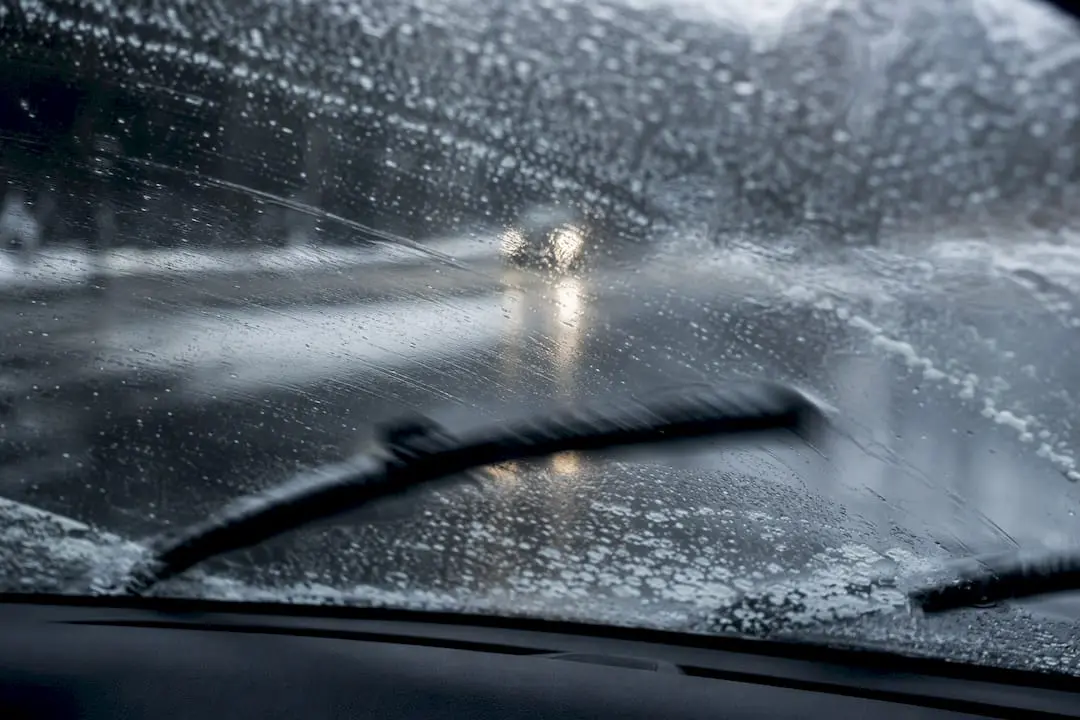
Check for streaking, skipping, or a visible chattering motion when the wipers are running. Any of those signs means it’s time to replace them, ideally before winter starts rather than mid-storm. Pair new blades with winter-rated washer fluid and confirm the nozzle jets aren’t blocked before a long trip.
Fitment matters as much as the blade itself. The wrong length or a poorly seated adapter can cause gaps, streaking, or the blade lifting off the glass at speed. Once fitted, test them on a wet section of road to confirm there’s no chatter or missed patches.
Pro Tip: Lift your wipers off the glass when frost is forecast overnight, so they don’t freeze to the windscreen and tear when you first switch them on. Clean the blade edge and windscreen together, and plan to replace blades annually, or sooner if you notice degradation.
Our guide to climate-specific wiper tips covers fitment by vehicle type in more detail, and if you’re unsure whether your current blades are still doing their job, our piece on spotting unsafe wiper blades walks through exactly what to look for.
What should you wear when driving in winter conditions?
What you’re wearing matters more than most drivers assume, particularly if you end up stuck on the roadside rather than comfortably behind the wheel. Bulky jackets and thick-soled boots feel sensible for the cold, but they can dull your feel for the pedals and reduce ankle mobility right when precise braking matters most.
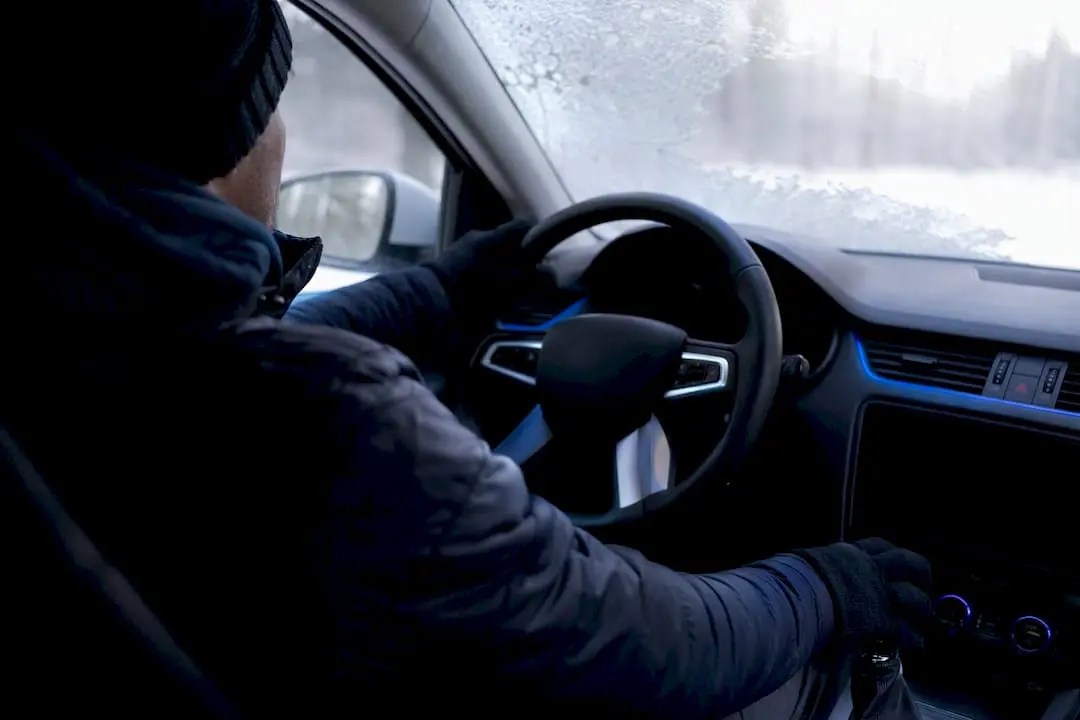
The better approach is layering. Wear a thinner, close-fitting base layer for driving, then keep a warm jacket, gloves, and a beanie in the cabin, not the boot, for the moment you actually step outside. Footwear should have a decent tread pattern and a firm sole; thongs, high heels, or slippery-soled boots are a genuinely bad idea if you need to walk on icy ground after a breakdown.
Pack a spare set of dry socks and a warm layer for every passenger, not just the driver, since children and older passengers lose body heat faster in cold, damp conditions. If you’re travelling to snow country, waterproof outer layers and sturdy, closed shoes make sense even if you never plan to leave the car, because plans change the moment a breakdown does.
Reflective or high-vis clothing deserves a place in the kit too, not just for standing beside a broken-down car but for anyone who has to walk along a roadside in low winter light or fog. It costs little, packs down small, and it’s genuinely one of the few things that makes you visible to another driver who’s already struggling to see through their own fogged windscreen.
A driver’s honest take on what actually keeps you safe
After years of writing about vehicle safety, the pattern is consistent: visibility failures and skipped basic checks cause more trouble than dramatic weather events. A five-minute wiper check or a practice run fitting chains at home does more for your safety than most people expect. My own habit is simple: fit the chains once in the driveway before the season starts, so the first real attempt isn’t happening in the dark on an icy shoulder.
See clearly this winter with the right wiper blades
Streaking or juddering wipers are one of the fastest ways to lose visibility exactly when you need it most, and swapping them out is one of the cheapest fixes on this entire list. Com designs and fits wiper blades for over 2,500 vehicle models, built with natural rubber and segmented pressure distribution for genuine all-weather performance, from heavy rain through to fog and frost.
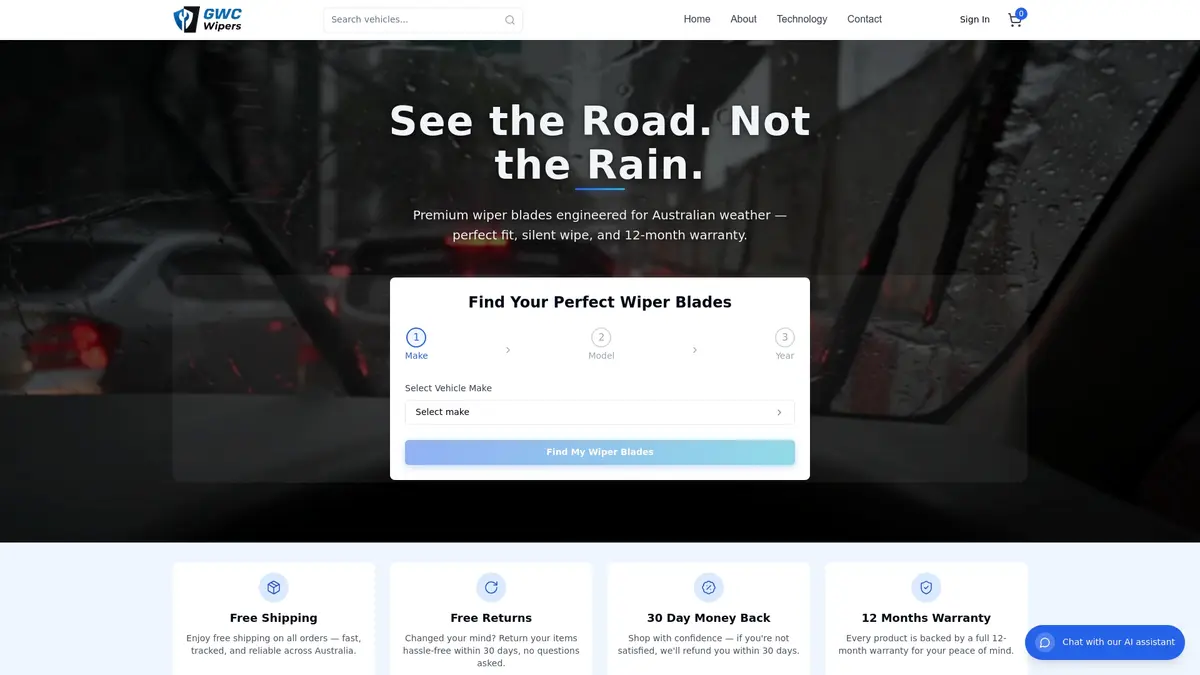
If you drive a Ford Laser, our Ford Laser wiper blades page shows the exact fitment for your model, and every order ships free across Australia with a 30-day money-back guarantee and a 12-month warranty behind it. Use the vehicle selector on the GWC Wipers homepage to find the right fit for your car, and check the detailed guides if you’d rather install them yourself in ten minutes than book a workshop visit.
Sources
- Drive safely this winter | Safe Transport Victoria
- Snow and winter driving safety | Victoria Police
- Snow driving tips: how to drive safely on icy roads | RACV
- Driving for the snow | NSW Government
- Snow and winter driving | Transport for Victoria
- Alpine diesel: what is it and when should you use it | CarsGuide
FAQ
What are the 5 C’s of safe driving?
Different sources define this slightly differently, but common versions include Concentration, Caution, Courtesy, Confidence, and Control, all skills that matter more once grip and visibility drop in winter.
What are some ways to improve road safety in winter?
Check tyre tread and pressure, replace worn wiper blades, increase your following distance to 4–10 seconds, and check official road reports before travelling in poor conditions.
What are three things you can do to improve safety in wet weather?
Slow down and extend your following gap, keep your wipers and washer fluid in good condition for clear visibility, and avoid using cruise control on wet or slippery roads.
Do I legally need snow chains for alpine driving?
In many Australian alpine areas, yes. Authorised officers can direct you to carry and fit chains, and resort or park entry points often enforce this rule directly.
How do I know if my wiper blades need replacing before winter?
If your blades streak, judder, or skip across the windscreen, replace them. Worn blades are a major hidden visibility hazard in heavy winter rain and sleet.