
10 Minute Fitment Test: Stop Wind Noise From Wiper Blades in Australia

Wind noise from wiper blades usually comes down to one of two things: friction from a dirty or worn blade, or aerodynamic lift caused by a poor fit or missing spoiler. The fastest test is to clean the windscreen and wipe the rubber, then check that the blade sits flush and the arm holds proper tension. If the whistle or roar persists, work through the causes, fixes and fitment guidance below.
TL;DR:
- Wind noise is mainly caused by aerodynamic lift or friction from contaminants and worn rubber, which are often fixable through cleaning and adjustments.
- Running a quick test by cleaning the windscreen and wiping the blade rubber can help differentiate between friction noise and aerodynamic lift.
- Proper fitment, including correct length, connector type, and spoiler profile, is crucial for preventing wind noise, especially at highway speeds.
- Replacing blades every 6 to 12 months is recommended, especially in harsh environments, to ensure safety and reduce noise caused by aging rubber.
- The best long-term solution involves choosing vehicle-specific, aerodynamic blades backed by guarantees, rather than relying solely on cleaning or coatings.
Table of Contents
- Common causes of wind noise from wiper blades
- Quick fixes to try now
- When to replace blades versus making adjustments
- How to choose wiper blades that resist wind noise
- Step-by-step replacement and fitment checklist
- Maintenance and prevention habits
- Author expertise and practical proof points
- Effect of vehicle speed and weather on wiper noise
- Impact of car aerodynamic design on wiper noise
- Comparing wiper blade types for wind noise
- Silicone and specialty coatings for quieter wipers
- Adjusting wiper blade position to cut noise
- What actually fixes wiper noise
- If you want a long-term fix, check GWC Wipers’ perfect-fit blades
- Sources
- FAQ
Common causes of wind noise from wiper blades
Most wiper noise traces back to one of a handful of mechanical or aerodynamic issues, and knowing which one you’re dealing with saves you time and money.
- Contaminants and glazing: road grime, wax and sap build up on the rubber edge, creating uneven drag as the blade sweeps the glass.
- Stick-slip friction: worn or hardened rubber grips and releases unevenly against the windscreen, producing a chattering or squeaking sound rather than a smooth wipe.
- Aerodynamic lift: at certain blade angles, airflow at highway speed lifts the edge away from the glass, and this effect intensifies with incorrect arm tension.
- Fitment errors: the wrong blade length, a poorly seated adaptor or a missing or damaged spoiler all let air get under the blade instead of over it.
Academic research into wiper systems backs this up. A Victoria University study on wiper noise and vibration found that stick-slip friction at the rubber-glass interface combines with aerodynamic and structural dynamics to cause chatter, and that fixing it often means correcting arm force and blade geometry, not just swapping the rubber.
Quick fixes to try now
Before you spend money on new blades, run through these steps. They take about ten minutes and often solve the problem outright.
- Clean the windscreen thoroughly with a microfibre cloth using this streak-free method for UK owners to strip away invisible films.
- Wipe the blade rubber with isopropyl alcohol or screen wash on a lint-free cloth to remove grime that causes drag.
- Turn on the washer fluid and run a test wipe to compare wet and dry behaviour. Noise that vanishes when wet points to friction, not aerodynamics.
- Check the arm tension and alignment, then gently reposition the blade to see whether the noise changes with angle.
- If the noise only appears at highway speed regardless of cleaning, treat it as an aerodynamic issue and look at the blade’s spoiler and fit.
Pro Tip: Keep a small bottle of isopropyl alcohol in the glovebox. A quick wipe before a long highway drive can stop a whistle before it starts.
When to replace blades versus making adjustments
Cleaning and adjusting sort out most friction problems, but some symptoms mean the blade itself has reached the end of its life. A squeak that returns straight after cleaning, visible skipping or chatter, cracking, fraying or a rubber edge that has lost its sharp line are all signs the blade needs replacing rather than adjusting.
Wiper blades typically need replacing every 6 to 12 months, according to RACQ’s guide to changing wiper blades, with heavy UV exposure or coastal salt air shortening that window further. Delaying replacement past that point does more than let noise persist. Reduced visibility in rain is a genuine safety risk, and a blade that drags unevenly puts extra strain on the wiper motor over time. Our guide on how long wipers last covers the environmental factors that shorten or extend that interval.
How to choose wiper blades that resist wind noise
Getting the right blade the first time avoids most noise problems before they start. Fit and geometry matter as much as rubber quality.
- Look for an integrated spoiler or aerodynamic profile, which presses the blade down against the glass at speed instead of letting air lift it.
- Match the exact length and connector type for your vehicle rather than rounding up or down to the nearest size on the shelf.
- Choose UV-resistant rubber with segmented pressure distribution, which keeps contact even along the full length of the blade rather than concentrated at one point.
- Avoid generic universal-fit blades where the connector doesn’t lock properly, since a loose adaptor is one of the more common causes of edge lift and rattle at speed.
A vehicle-specific selector, like the one on the wiper blades category page, removes the guesswork by matching blade length and connector to your make, model and year before you buy.
Step-by-step replacement and fitment checklist
Fitting a new blade correctly matters as much as choosing the right one. Rushing this step is how a brand new blade ends up whistling on the first highway drive.
- Lift the wiper arm away from the glass and release the old blade using the correct method for your connector type, whether that’s a side pin, hook or bayonet fitting.
- Test-fit the replacement blade before final seating to confirm the length and connector match your vehicle.
- If trimming a refill, leave at least 25 millimetres from the end claw, in line with RACQ’s guidance on blade refills, to preserve tension and avoid damaging the windscreen.
- Fit the adaptor and confirm it locks with an audible click or firm resistance.
- Test at low speed first, then take a short, safe drive to check for lift or chatter at higher speed.
- If noise persists despite a correct fit, check arm tension and spring strength before assuming the blade itself is faulty.
Maintenance and prevention habits
A little routine care keeps blades quiet for their full working life instead of degrading quietly until they start whistling.
- Clean the blades and windscreen monthly, and top up washer fluid with a quality formula rather than plain water.
- Inspect for glazing, cracking and correct arm pressure each time you clean, since early wear is easier to catch before it turns into noise.
- Lift the wipers off the glass during frost, following RACV’s cold-weather maintenance advice, to avoid straining the motor on a frozen blade.
- Replace blades before the wet season and use a proper glass cleaner when fitting new ones, since leftover residue on the screen causes even brand new rubber to squeak.
Pro Tip: Fit new blades on a dry day and clean the windscreen with a dedicated glass cleaner first. Fitting over old residue is a common reason new blades still make noise.
For more seasonal routines, our all-season wiper hacks guide runs through habits that suit variable weather.
Author expertise and practical proof points
This guide is written by Faisal, who specialises in wiper technology and fitment troubleshooting for road vehicles. The practical advice here draws on published engineering research and manufacturer guidance rather than guesswork.
A fitment-first approach with a vehicle selector, installation guides, and satisfaction guarantees can help reduce fitment errors that cause both friction and aerodynamic noise. Getting the length, connector and spoiler profile right the first time addresses most of the causes covered above in one step. You can check exact fitment on the wiper blades page.
Effect of vehicle speed and weather on wiper noise
Wind noise from wipers rarely shows up sitting still or crawling through traffic. It tends to appear once you reach highway speed, and that’s because aerodynamic forces on the blade scale with airflow, not with the wiper motor’s own movement. A blade that sits perfectly quiet at 60 kilometres an hour can start whistling at 100, because the air passing over the windscreen builds enough force at certain angles to lift the edge away from the glass.
Weather compounds this. Rain adds a layer of moisture that changes the friction between rubber and glass, often masking a mild aerodynamic issue until the screen dries out mid-drive. Strong crosswinds add turbulence that a blade’s profile wasn’t designed to handle, particularly on older or generic blades without any aerodynamic shaping. Dust and grit carried on wind before a storm also settle onto the rubber edge, so a noise that started as a light rain-related squeak can turn into a persistent scrape once the blade dries out.
The practical takeaway is that a quiet blade at low speed doesn’t guarantee a quiet blade on the motorway, so any test drive to diagnose noise should include a stretch at typical highway speed, not just a slow lap around the block.
Impact of car aerodynamic design on wiper noise
The shape of the vehicle itself changes how air moves across the windscreen, and that has a direct effect on how much lift a wiper blade experiences. A steeply raked windscreen, common on many modern sedans and SUVs, channels air faster across the glass surface than a more upright screen fitted to older vans or utes. Faster airflow means more lift potential at the same road speed, which is why some vehicle shapes are more prone to wiper whistle than others even with identical blades fitted.
Utes and dual-cab vehicles, popular across Australia, often have a more upright windscreen and a wider blade sweep, which changes the pressure pattern along the blade compared with a low, sloped sedan screen. That’s part of why a blade that performs quietly on one vehicle can whistle on another, even when the rubber itself is in good condition.
This is also why aftermarket universal blades sometimes underperform on specific models. A blade designed for a generic sweep pattern doesn’t account for the airflow quirks of your particular windscreen angle and vehicle shape. Matching a blade’s spoiler profile to the vehicle it was engineered for, rather than fitting whatever length happens to be closest on the shelf, is the more reliable way to avoid model-specific noise.
Comparing wiper blade types for wind noise
Traditional tandem blades, with an external metal frame and multiple pressure points, tend to be the noisiest option at speed. The frame itself catches wind, and pressure isn’t distributed evenly along the rubber, which lets sections of the blade lift independently and chatter.
Beam blades remove the external frame in favour of a single curved structure with an internal spring, spreading pressure more evenly across the full length of the rubber. This more even contact reduces the flutter that causes whistling, and the smoother profile presents less surface for crosswinds to catch.
Hybrid blades combine a beam-style body with an aerodynamic spoiler cover, aiming to get the even pressure of a beam blade with extra downforce at highway speed. Aerodynamic testing on wiper systems has found that certain blade angles create lift, and that spoiler geometry and blade height changes can convert that lift into downforce, according to research on wiper performance at high speeds. That’s the mechanism hybrid and spoilered blades rely on to stay quiet on the motorway where a bare beam blade might start to lift.
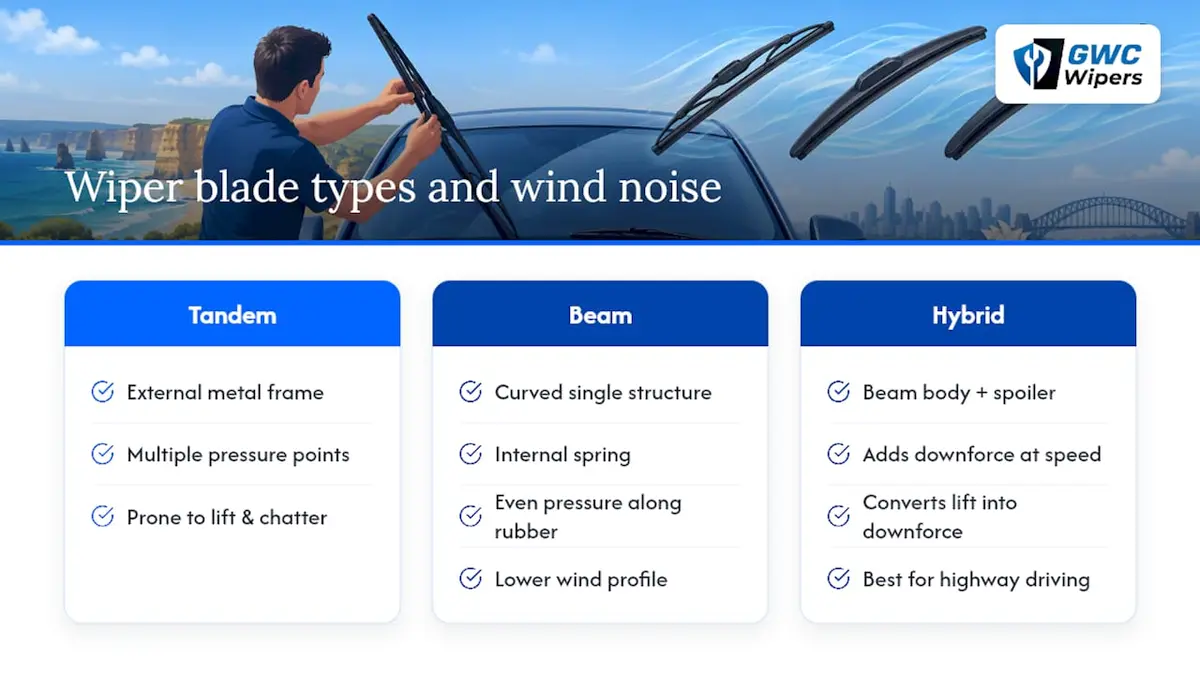
For drivers who do regular highway driving, a hybrid or aerodynamic beam blade is generally the safer bet against wind noise.
Silicone and specialty coatings for quieter wipers
Silicone-infused rubber and specialty coatings are marketed as a way to cut wiper noise, and there’s some genuine basis to the claim. Silicone rubber tends to glide more smoothly across glass than standard rubber compounds, which reduces the stick-slip friction that causes squeaking and chattering. It also tends to resist UV degradation and glazing for longer, which matters given how much Australian sun exposure accelerates rubber hardening.

Coatings applied to the blade edge work on the same principle: they reduce the coefficient of friction between rubber and glass, so the blade releases more smoothly instead of gripping and skipping. This helps with friction-based noise, but it’s worth being clear about what it can’t fix. A coating does nothing for aerodynamic lift caused by a missing spoiler or the wrong blade angle, since that’s a wind pressure issue, not a friction issue.
In practice, silicone rubber and specialty coatings are worth prioritising if your noise disappears when the blade is wet and reappears once it dries, since that pattern points to friction. If the noise is speed-dependent and shows up regardless of moisture, no coating will solve it. The fix there is fitment and blade geometry, not surface treatment.
Adjusting wiper blade position to cut noise
Small adjustments to how the blade sits on the glass can resolve noise without any new parts. Start by checking the wiper arm’s spring tension. A weak or bent spring lets the blade bounce slightly rather than sit flush, and that bounce is enough to trigger a rattle or squeak that no amount of cleaning will fix. Straightening a bent arm, or replacing a weak spring where the arm allows it, often solves a chatter that survives a full clean.
Next, check the angle at which the blade meets the glass. Most arms allow a small amount of adjustment at the pivot, and a blade sitting a few degrees off true can create uneven pressure along its length, encouraging noise at one end of the sweep more than the other. Gently repositioning the blade and running a test wipe at a few different angles can isolate whether angle is the culprit.
Finally, confirm the blade is seated fully in its adaptor. A blade that isn’t clicked in completely can flex slightly under airflow, creating a faint hum or whistle that’s easy to mistake for a deeper mechanical issue. This is one of the more common oversights after a quick DIY blade swap, and it costs nothing to double check.
What actually fixes wiper noise
The conventional advice on wiper noise leans hard on cleaning products and coatings, and while those help with friction, they get too much credit for solving noise that’s actually aerodynamic. If a blade whistles specifically at highway speed and stays quiet in traffic, no amount of alcohol wipes or silicone spray will fix it. That’s a fit and geometry problem, not a cleanliness problem.
What the evidence actually supports is a two-step diagnosis: rule out friction first with a clean and a wet-versus-dry test, then treat anything that survives that test as an arm tension, angle or fitment issue. Most guides skip straight to “clean your blades” and stop there, which leaves a good share of readers with a blade that’s spotless but still roaring on the motorway.
The reader’s real priority should be getting the blade length, connector and spoiler profile correct for their specific vehicle before spending time on coatings or repeated cleaning cycles. Fitment is the boring answer, but it’s the one that holds up once you’ve tested for friction and ruled it out.
— Faisal
If you want a long-term fix, check GWC Wipers’ perfect-fit blades

Cleaning and adjusting solve plenty of noise problems, but if yours keeps coming back, the blade itself is probably the wrong length, connector or profile for your vehicle. Vehicle-specific, aerodynamic blades designed to address both friction and lift causes are available, often backed by a perfect-fit guarantee, satisfaction return policy, and warranty.
If you drive a Toyota HiLux or Ford Ranger, two of the most common utes on Australian roads, check the dedicated fitment hubs for the Toyota HiLux and Ford Ranger to see exact-fit options by year. For any other make or model, start at the wiper blades selector to find your Perfect Fit by make, model and year.
Sources
- How to change wiper blades | RACQ
- Practical multi-objective controller for preventing noise and vibration in an automobile wiper system | Victoria University
- Numerical and Experimental Investigation of Wiper System Performance at High Speeds
- How to maintain your car in winter cold weather | RACV
FAQ
Why are my windshield wiper blades making noise?
Wiper noise is usually caused by either friction from dirty or worn rubber, or aerodynamic lift from a poor fit, missing spoiler or incorrect arm tension. Cleaning the glass and rubber first is the quickest way to tell which one you’re dealing with.
Does WD-40 really clean wiper blades?
No, WD-40 and similar oil-based products are not suitable for wiper rubber, since they can soften or degrade it over time. Using isopropyl alcohol on a lint-free cloth, or a dedicated glass cleaner, is the recommended approach for removing grime.
How do I stop my new wiper blades from making noise?
Squeaking on a fresh blade is often caused by leftover residue on the windscreen rather than a faulty blade, so clean the glass thoroughly with a proper glass cleaner before fitting. If the noise continues, check that the blade is fully seated in its adaptor and that the arm tension is correct.
How can I make my windshield wipers quieter?
Clean both the glass and the blade rubber regularly, check arm tension and angle, and choose a blade with an aerodynamic or spoilered profile matched to your vehicle. Replacing blades every 6 to 12 months also prevents the glazing and hardening that cause noise as rubber ages.