
Best Snow Wiper Blades for Australian Winters
The best snow wiper blades for most Australian drivers are not the heaviest, most armoured blades you can find. They are blades that fit your exact car, press evenly across the glass and keep flexing when the temperature drops. Dedicated winter blades suit regular trips to the Snowy Mountains, the Victorian High Country or Tasmania’s highlands. A quality all-weather blade is usually the smarter buy if frost is your main problem and snow is an occasional guest.
This guide compares the blade designs on offer, explains where each one earns its place, and shows how to check fit before you buy. It also covers the care habits that decide whether any blade survives a cold morning.
TL;DR
- Winter blades wrap the frame in a thick boot so snow and ice cannot jam the joints. They help in real snow country, but are overkill for year-round city driving.
- Beam and hybrid blades suit most Australian winters. Conventional exposed-frame blades are the ones most likely to clog with ice.
- Fit matters more than brand. A blade that does not match your arm type and length will streak and chatter in any weather.
- In alpine areas, lift the wipers off the glass when parked and never run them over frozen or snow-loaded glass.
- Check your exact car at gwcwipers.com.au/wiper-blades before you order.
Table of Contents
- What snow and frost do to a wiper blade
- Do winter wiper blades make a difference?
- Wiper blade designs compared for snow and ice
- The blades most drivers compare
- What to look for in a winter-ready blade
- How to check that a blade fits your car
- Our view on snow wipers
- Using and protecting your wipers in snow and frost
- Which blade suits which Australian driver
- Where GWC Wipers fits
- FAQ
- Find the right wipers for your car
- Sources
What snow and frost do to a wiper blade
Australian winters are not North American winters. You are far more likely to meet frost, sleet, sudden alpine snowfalls and long wet, cold drives than weeks of deep snow. That changes what you need from a blade.
Cold stiffens rubber, so a blade that sits flat and quiet in summer can skip and smear at minus two. Ice builds up on the arm joints and the frame, lifting the blade off the glass. And heavy snow loads the whole assembly with weight it was never designed to push.
The Victorian Government’s snow and winter driving guidance tells drivers heading into alpine areas to check their wipers, among other systems, before they travel. It also says to put the wiper blades up while parked so they do not freeze to the windscreen. Both points come up again below.
Sun matters too. Our own guide to how Australian weather affects wiper blades explains why a blade that spent summer baking on a dashboard-hot windscreen often arrives at winter already tired. If your blades are a couple of years old, replace them before the first cold snap, not after.
Do winter wiper blades make a difference?
Yes, in the right conditions. Motoring club advice from AAA Minneapolis describes winter blades as having the metal framework encased in a thick boot, which stops snow and ice from jamming the assembly. The same source calls them best for winter conditions but overkill for year-round use.
That is a fair summary for Australia too. If you live in Jindabyne, Falls Creek, Mount Hotham, Thredbo or Cradle Mountain country and drive in snow most weekends, a boot-covered blade makes sense. If you live in Canberra, Ballarat or Launceston and mostly face frost and rain, you will usually get more benefit from a well-fitted, flexible blade that you replace on schedule.
One caution: the research on winter blades comes largely from North America, where snow loads and road salt are harsher than almost anywhere in Australia. Treat the reasoning as sound, but do not assume you need the most extreme product on the shelf.
Wiper blade designs compared for snow and ice
There are three main designs. Each handles cold differently.
| Design | How it is built | Winter strengths | Winter weaknesses |
|---|---|---|---|
| Conventional (frame) | Metal frame with several pressure points holding a rubber blade | Cheap and widely available | Exposed joints collect ice and snow, so the blade lifts and streaks |
| Winter (boot) | A frame blade with a rubber or plastic cover over the joints | Keeps snow and ice out of the mechanism | Bulkier, can be noisier and less neat in dry, warm weather |
| Beam (flat) | One-piece spring steel strip with the rubber blade built in | Even pressure along the glass, no joints to freeze, low profile | Needs the correct connector and length for your arm |
| Hybrid | Aerodynamic cover over a frame structure | Combines sealed joints with a sleeker shape | Costs more than a basic frame blade |
For most Australian cold-weather driving, beam and hybrid designs are the practical middle ground. A beam blade has no exposed hinges for ice to lock up. A boot-style winter blade is the specialist option when you expect snow, not only frost.
If you want a deeper look at designs, we cover them in best windshield wiper blade types for Australian drivers.
The blades most drivers compare
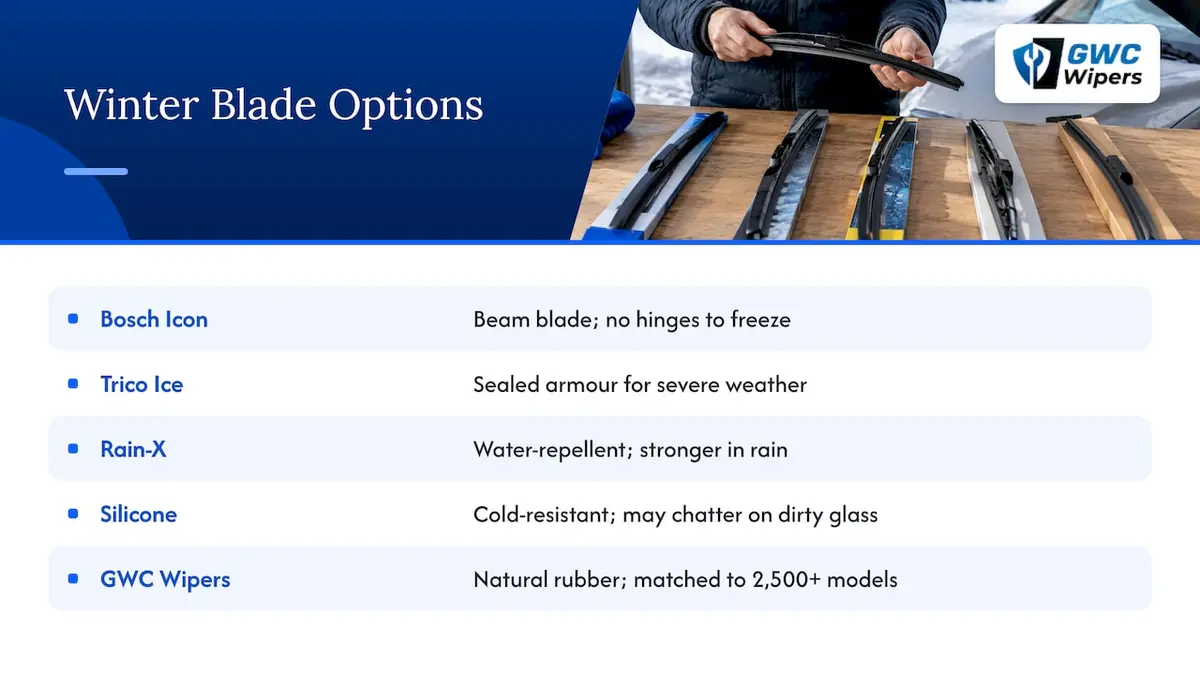
Search for winter blades and you will see the same names again and again. Here is how they sit, based on how the brands position their products. We have not tested them against each other and do not give prices for them, because retail prices change and vary between stockists.
Bosch. Bosch’s Icon range is a beam-style blade and is the one many reviewers and drivers mention first. Beam construction suits cold weather because there are no hinges to freeze. Bosch also sells conventional and hybrid blades, so check which type you are picking up.
Trico. Trico Ice is a dedicated winter blade. The maker describes it as a flexible curved-fit blade with a protective armour that seals the structure from severe weather. That makes it the closest match to the boot-style winter blade described earlier.
Rain-X. Rain-X is known for its water-repellent coating and its Latitude beam blade. Its strength is rain beading rather than snow clearing.
Silicone blades. Silicone resists cold and wear well, but it can chatter on a dirty windscreen. RevRated notes that silicone blades need glass free of oil film, old coating residue and road film to keep chatter down. If you choose silicone, clean the windscreen thoroughly first.
GWC Wipers. Our blades are designed and made for Australian conditions, from heavy rain and extreme heat through to snow. They use natural rubber, segmented pressure distribution and an aerodynamic profile, with corrosion resistance built in. They come preassembled with adapters for tool-free fitting, and are matched to more than 2,500 vehicle models. That combination suits drivers who want one reliable blade that handles a wet, cold, mixed Australian winter without paying for specialist snow armour they will rarely use.
No single brand wins every situation. The right pick depends on how often you see snow, what arm your car has, and whether the blade is available in the exact length your car needs.
What to look for in a winter-ready blade
When you compare blades for cold-weather driving, run through these points.
Sealed or joint-free construction
Ice collects wherever water can sit. Beam, hybrid and boot designs reduce the number of places it can form. If you are buying a frame blade, accept that it will need clearing more often.
Flexible rubber
A blade that stays supple in the cold keeps contact with the glass. Natural rubber is well regarded for flexibility, and it is the compound we use at GWC. Rubber of any type ages: manufacturers note it deteriorates with sun and weather exposure even when unused, so a blade that is two summers old is not a good winter bet.
Even pressure along the blade
Segmented pressure distribution spreads the force across the full length so the edges do not lift. This matters on curved modern windscreens, where an uneven blade leaves a bar of unwiped glass right in your line of sight.
An aerodynamic profile
At highway speed, wind can lift a poorly shaped blade. That is a concern on alpine highways such as the Alpine Way, the Great Alpine Road and the Snowy Mountains Highway, where you move quickly between wet, icy and dry stretches.
The correct connector and length
This is the most overlooked point. A top-rated winter blade that does not fit your arm, or is the wrong length, will perform worse than a basic blade that fits properly.
How to check that a blade fits your car
Blade length and connector type vary by make, model and year. Many cars use a different length on the driver and passenger sides, and some have a smaller rear blade. Guessing from a generic chart is the usual cause of returns.
- Note your make, model and build year. The year matters because some models change wiper arms between generations.
- Use the vehicle selector at gwcwipers.com.au/wiper-blades to find the blades matched to your car.
- Check the listed fit for the driver side, passenger side and rear separately.
- Read the installation guide included with your order. Our adapters come preassembled, so most drivers fit them in minutes without tools.
You can also go straight to your make. We have fitment pages for Toyota, Mercedes-Benz, Mitsubishi, Volvo and Infiniti, plus individual model pages such as the Land Rover Range Rover Sport, Mercedes-Benz GLE-Class and Volkswagen T-Cross. Each page lists the sizes for your model and year, so you read the exact length from the page rather than from a table in an article.
Heading to the snow with a different car? The same rule applies to a hire car or a second vehicle. Check it before you leave, not at the car park in Perisher.
Our view on snow wipers
We design wiper blades for Australian conditions, and we see the same mistake every winter: drivers pay extra for snow-specific gear and then fit it badly, or leave old blades in place because they still look fine.
Here is what we think. First, fit comes before features. A correctly sized blade with the right connector will outperform a premium blade that sits slightly short. That is why we built our vehicle selector and stand behind a perfect fit guarantee. Second, age matters as much as design. Rubber that has been through an Australian summer has often lost its edge, and cold exposes that quickly. Third, most of what keeps visibility clear in the cold is behaviour, not product: clearing the glass properly, lifting the arms off the screen, and using washer fluid.
We are also straight about limits. If you live in the snow and drive in it weekly, a boot-style winter blade may suit you better than a general all-weather blade. If you live where winter means frost, rain and the occasional trip to the snow, a well-fitted all-weather blade that you replace on time is a sensible, cost-effective choice, and that is the driver we build for.
— Faisal
Using and protecting your wipers in snow and frost
The best blade still fails if it is treated badly. These habits come from official and motoring-club guidance.
Lift the arms when parked in alpine areas
Transport for Victoria says drivers in alpine areas should put the wiper blades up while parked so they do not freeze to the windscreen. Lifting them is quick and avoids torn rubber the next morning. Our guide to handling frozen wipers covers what to do if they are already stuck.
Clear the glass before you switch the wipers on
Operating wipers to clear newly fallen snow can damage the arm and blade construction because of the weight, according to CAA-Quebec. Clear the bulk of it by hand first, and let the demister and heater do their work on a frosted screen.
Do not drag the blades over jagged ice
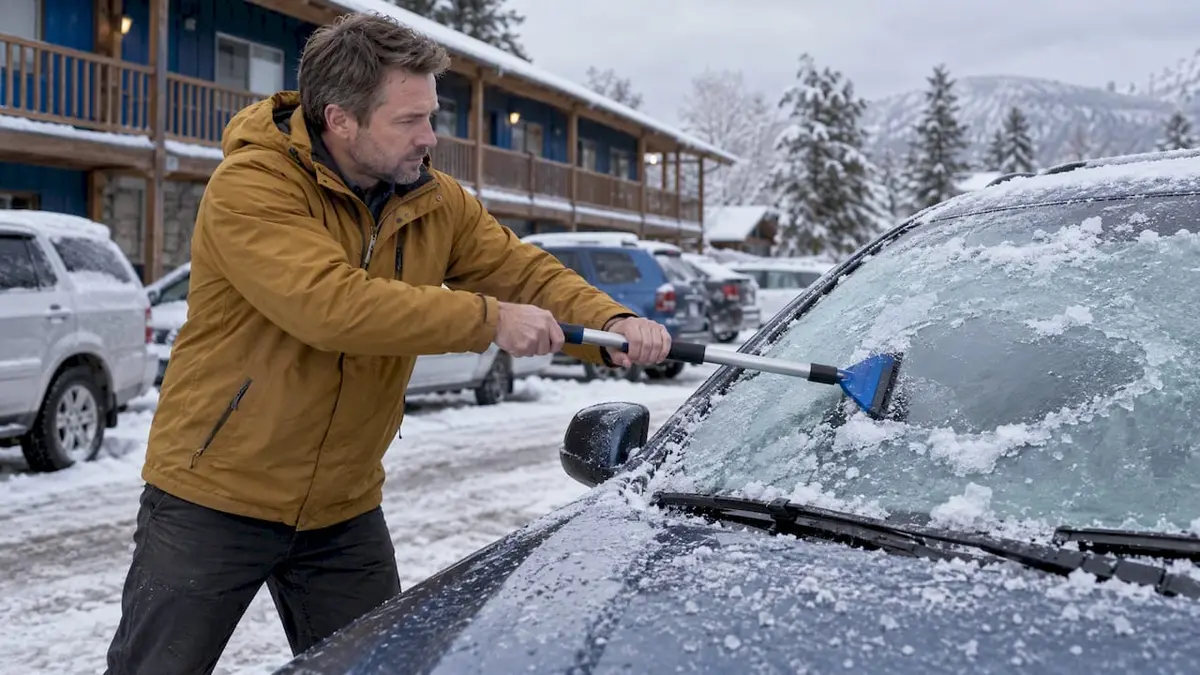
Running wipers across rough ice can chew up the blades and cause streaking, as a motoring troubleshooter column explains. Scraping is the answer, but it should be a scraper, not the wiper rubber. Dedicated tools are easy to find in Australia: a multifunction ice scraper is listed at $20.95, and a 62 cm long-handle scraper and snow brush is listed at $44.95. Those are tools for clearing the glass. They do not replace a wiper blade.
Keep the rubber clean
The CAA-Quebec advice also recommends cleaning blades regularly with a moist rag and washer fluid. Grit and road film on the edge are a common cause of smearing, and clean blades work noticeably better.
Test before you travel
Novus Glass suggests spraying the windscreen with water and watching how well the wipers clear it; poor clearing points to a worn blade. Do this a week before an alpine trip, while there is still time to replace them.
For more, see our guides to winter windshield protection, climate-specific wiper tips and snow-resistant wiper blades for Aussie drivers.
Which blade suits which Australian driver
| Your situation | What to prioritise |
|---|---|
| Weekly alpine driving, Snowy Mountains or High Country | Sealed boot-style winter blade or a sturdy hybrid, replaced each season |
| Occasional snow trips, frost at home | A flexible, correctly fitted all-weather blade, plus a scraper and parked-arms habit |
| Tasmanian highlands or Canberra winters | Beam or hybrid blade with even pressure and fresh rubber |
| Fleet vehicles on mixed routes | Standardise on exact-fit blades per model, and replace on a schedule |
| Mostly city and coastal driving | A quality all-weather blade, since winter-specific boots add little |
If you manage a fleet, the fitment pages make it simple to confirm each vehicle’s blades without trial and error.
Where GWC Wipers fits
We offer premium blades matched to your make, model and year, with free shipping across Australia, a 30-day money-back guarantee and a 12-month warranty. Express shipping is also available if you are leaving for the snow soon. You can browse the range at gwcwipers.com.au, or go to your make for an exact fit.
FAQ
Do I need special winter wiper blades in Australia?
Only if you drive in snow regularly. For frost, sleet and cold rain, a flexible, correctly fitted beam or hybrid blade in good condition does most of the job. Specialist boot-style winter blades are mainly worth it for frequent alpine trips.
Are beam blades better than conventional blades in the cold?
Often, yes. A beam blade has no exposed joints for ice to jam, and it presses more evenly across the glass. Conventional frame blades can still work, but they clog more easily and need clearing more often.
How do I stop my wipers freezing to the windscreen?
Lift the arms off the glass when parked in frosty or alpine areas, as Transport for Victoria advises. Then clear the screen before switching the wipers on. If they are already frozen, free them gently rather than pulling them.
How often should I replace wiper blades before winter?
Replace them when they smear, skip or chatter, or when they have been through a few hot summers. Rubber ages with sun and weather even when it is not used. Doing it before an alpine trip gives you time to fit and test them.
Find the right wipers for your car
Fit is what makes any winter blade work. Find wipers that fit your exact car at gwcwipers.com.au/wiper-blades, backed by our Perfect Fit guarantee.
Sources
- Snow and winter driving, Transport for Victoria
- Windshield Wiper Blades, AAA Minneapolis
- Windshield wipers: Everything you need to know, CAA-Quebec
- Best tips to get your car ready for winter driving, Driving.ca
- 7 Best Windshield Wipers of 2026, RevRated
- Multifunctional Winter Car Ice Scraper, Casami Australia
- Long Handle Ice Scraper, Skylark Outdoors