
Flexible wiper design: how it works and why it matters

TL;DR:
- Flexible wiper designs use internal spring elements to maintain uniform pressure across the windshield, resulting in cleaner, streak-free wipes. They offer advantages such as improved durability, noise reduction, better ice resistance, and enhanced aerodynamics, especially at high speeds. Proper maintenance and selecting the right fit for your vehicle maximize their performance and lifespan.
Flexible wiper design refers to windshield wiper systems engineered to maintain consistent rubber-to-glass contact by using adaptable structures and pressure-distributing elements that conform to the natural curvature of your windshield. Unlike traditional framed wipers that rely on multiple pivot points, flexible designs use leaf springs or elastic beam elements to apply uniform pressing force along the entire blade length. The result is cleaner, streak-free wiping, reduced noise, and a blade that stays firmly planted at highway speeds. For Australian drivers dealing with everything from tropical downpours in Queensland to dusty outback roads in South Australia, understanding this technology helps you make smarter choices about vehicle safety.
What is flexible wiper design and how does it work mechanically?
Flexible wiper design, also known in the industry as flat-blade or beam-blade wiper technology, is defined by one core engineering principle: the blade must maintain contact with the windshield at every point along its arc, regardless of the glass’s curvature or the speed of the vehicle.

Traditional framed wipers achieve contact through a series of metal yokes and pressure points. This approach works reasonably well at low speeds but creates uneven pressure distribution, leaving dry patches or streaks across the glass. Flexible designs solve this by replacing the external frame with an internal spring element that runs the full length of the blade.
Here is how the key mechanical components work together:
- Leaf spring or beam element: A divided leaf spring runs inside the blade body, actively bending to match the windshield’s curvature and distributing force evenly from tip to tip.
- Elastic mounting elements: These connect the blade rubber to the spring, allowing micro-adjustments in contact angle as the wiper travels across the glass.
- Integrated spoiler: Many flat-blade designs incorporate an aerodynamic spoiler moulded into the blade body, which uses airflow at speed to press the blade downward rather than allowing wind lift.
- Yokeless structure: Without external metal yokes, there are fewer points where ice, snow, or debris can accumulate and disrupt blade contact.
The floating blade problem is one of the most significant failures in conventional wiper design. At speeds above 100 km/h, aerodynamic lift can cause a traditional blade to lose contact with the glass entirely. Flexible beam structures address this directly by combining spring tension with aerodynamic downforce, keeping the blade stable under load.
Pro Tip: If your wipers leave a consistent dry strip along one edge of the wipe arc, that is a classic sign of uneven pressure distribution. A flat-beam blade will typically resolve this without any adjustment to the wiper arm.

What are the key benefits of flexible wipers over conventional designs?
The advantages of flexible wiper systems are measurable, not just theoretical. Both everyday drivers and fleet operators notice the difference in real-world conditions.
- Streak-free visibility. Because the blade applies consistent contact pressure across its full length, there are no dry patches or smear lines. This is particularly important during heavy rain on motorways where split-second visibility matters.
- Reduced noise and vibration. Flexible wipers reduce vibration and chatter by distributing pressure evenly and using aerodynamic profiles that minimise wind-lift. Drivers who commute daily notice a significant reduction in that familiar chattering sound on light rain settings.
- Improved durability. Even pressure distribution means the blade rubber wears at a consistent rate rather than degrading faster at high-pressure contact points. Advanced materials like graphene-infused composites can improve blade durability by 25 to 30%, meaning fewer replacements over the life of the vehicle.
- Better energy efficiency. Optimised wiper linkage geometries can reduce motor torque requirements by up to 18%, while aerodynamic refinements lower drag forces by 10 to 15%. For fleet operators running dozens of vehicles, this translates to measurable reductions in electrical load on the alternator.
- All-weather performance. The yokeless design resists ice and snow build-up, making flexible blades more reliable in alpine conditions around the Snowy Mountains or during winter in Victoria and Tasmania.
The durability improvement is worth emphasising. A blade that wears evenly does not just last longer. It maintains consistent wiping quality throughout its service life, rather than degrading gradually and silently until visibility is already compromised.
You can read more about how these designs contribute to quieter operation in this detailed breakdown of wiper noise reduction.
How do flat-beam, hybrid, and traditional framed wipers compare?
Understanding the differences between these three design categories helps you choose the right blade for your vehicle, your climate, and your budget.
| Feature | Flat-beam blade | Hybrid blade | Traditional framed blade |
|---|---|---|---|
| Pressure distribution | Uniform across full length | Mostly even, frame-assisted | Uneven, point-loaded |
| Aerodynamic performance | High, integrated spoiler | Moderate, enclosed frame | Low, exposed frame |
| Ice and snow resistance | Excellent, no external frame | Good, enclosed design | Poor, frame traps debris |
| Durability | High with quality materials | High | Moderate |
| Cost | Higher upfront | Mid-range | Lower upfront |
| Fit complexity | Vehicle-specific | Vehicle-specific | More universal |
Hybrid wiper blades combine the aerodynamic profile of a beam blade with the structural support of a traditional frame, providing versatility across varied weather conditions. They offer better contouring and durability than older framed blades while remaining slightly more affordable than premium flat-beam options.
Traditional framed wipers still have a place on older vehicles or in applications where cost is the primary constraint. However, their exposed metal frames collect grime and ice, and their uneven pressure distribution becomes more pronounced as the rubber ages.
One underappreciated advantage of flat-beam designs is their packaging efficiency. A divided leaf spring design allows the wiper components to be shipped disassembled and compactly, reducing storage and transport costs. For retailers and distributors, this is a practical logistical benefit that also reduces the environmental footprint of distribution.
Pro Tip: When replacing wipers on a vehicle with a steeply curved windshield, such as many modern European sedans, a flat-beam blade will conform far more effectively than a traditional framed blade. Check your vehicle’s windshield radius before purchasing.
What innovations are shaping flexible wiper technology in 2026?
Flexible wiper technology continues to advance on several fronts simultaneously, driven by engineering research, new materials science, and the growing complexity of modern vehicle designs.
- Advanced materials. Graphene-infused rubber compounds and polymer composites are entering production-grade wiper blades, offering improved UV resistance and longer service life. This matters in Australia, where intense UV exposure degrades standard rubber blades faster than in most other markets.
- Aerodynamic refinements. A 2025 systematic review of automotive wiper mechanisms highlights ongoing improvements in blade geometry that reduce drag forces and wind-lift noise, building on the aerodynamic principles already present in flat-beam designs.
- Vehicle-specific engineering. Manufacturers are moving away from universal fitment toward blades engineered for specific windshield curvatures. Products like Valeo’s Silencio range use integrated spoilers and flexible rubber blades tuned to reduce wind lift and streaking on specific vehicle profiles.
- Packaging and assembly innovation. Recent patents describe flat wiper designs where the leaf spring is divided into two frames for compact shipping, then assembled by the end user without specialist tools. This reduces retail costs and makes premium flexible blades more accessible.
- Smart wiper integration. Emerging systems are beginning to pair flexible blade technology with rain sensors and camera-based detection, allowing the wiper speed and pressure to adapt dynamically to rainfall intensity. While still developing, this integration points toward a future where the blade’s mechanical flexibility is matched by electronic intelligence.
The direction of travel is clear. Flexible wiper technology is not a mature, static category. It is an active area of engineering investment, and the blades available in 2026 are meaningfully better than those from five years ago.
How can you optimise the use and maintenance of flexible wipers?
Getting the most from flexible wiper blades requires more than just fitting the right product. Proper maintenance and inspection habits extend blade life and keep your visibility at its best.
- Inspect blades every six months. Check for cracking, splitting, or hardening of the rubber, particularly after Australian summer. UV exposure accelerates rubber degradation, and a blade that looks intact may already be leaving micro-streaks.
- Clean the blade rubber regularly. Wipe the rubber edge with a damp cloth and a small amount of isopropyl alcohol every few months. This removes road grime and wax build-up that causes smearing.
- Use the correct blade for your vehicle. Flat-beam blades are not universal. Fitting a blade with the wrong curvature profile will create uneven contact and defeat the purpose of the flexible design. Use a vehicle selector tool to confirm compatibility before purchasing.
- Replace in pairs. Both blades age at similar rates. Replacing only the driver’s side blade leaves the passenger side degraded, which affects visibility and creates uneven wiper arm loading.
- Lift blades away from the glass in extreme heat. Parking in direct sun with blades resting on the glass accelerates rubber hardening. This is a common issue in Australian summer and takes less than a minute to prevent.
For a detailed walkthrough of fitting new blades correctly, the step-by-step installation guide covers the process for most popular flexible blade connectors.
Pro Tip: If you notice your flexible blade chattering on light rain settings but wiping cleanly in heavy rain, the blade rubber has likely hardened. This is a replacement signal, not an installation issue.
Key takeaways
Flexible wiper design delivers reliable, streak-free visibility by using internal spring elements and aerodynamic profiles to maintain consistent blade-to-glass contact across all driving conditions.
| Point | Details |
|---|---|
| Core mechanism | Leaf springs and elastic elements distribute uniform pressure along the full blade length. |
| Performance advantage | Flexible blades prevent floating blade issues at high speed and reduce noise and vibration. |
| Durability gains | Advanced materials like graphene composites can extend blade life by 25 to 30%. |
| Design comparison | Flat-beam blades outperform traditional framed wipers in aerodynamics, ice resistance, and even wear. |
| Maintenance habit | Inspect blades every six months and replace in pairs to maintain consistent wiping quality. |
Why flexible wipers changed how I think about vehicle safety
I have spent years reviewing automotive components, and wiper blades are consistently the most underestimated safety item on any vehicle. Drivers will spend thousands on tyres and brake pads but replace wipers only when they fail completely. Flexible wiper technology has shifted that calculus for me personally.
The engineering insight that changed my perspective is this: flexibility in a wiper blade is not primarily about the rubber being soft. It is about the spring element actively applying force along the glass, compensating for curvature and speed simultaneously. That is a fundamentally different mechanical approach, and it produces a fundamentally different result on the road.
The misconception I encounter most often is that all modern wipers are essentially the same. They are not. A flat-beam blade on a vehicle with a steeply curved windshield will outperform a traditional framed blade in ways you notice immediately. The trade-offs in wiper design are real, but for most Australian drivers, the balance tips clearly toward flexible designs.
What I am watching closely in the next few years is the integration of flexible blade mechanics with sensor-driven wiper systems. The blade technology is ready. The electronics are catching up. When those two things converge fully, wiper performance will take another significant step forward.
— Faisal
Premium flexible wiper blades from GWC Wipers
GWC Wipers stocks a carefully selected range of flat-beam and hybrid wiper blades engineered for Australian conditions, from coastal humidity to alpine cold. Every blade is matched to your specific vehicle make, model, and year using GWC’s vehicle selector tool, so you get a confirmed fit rather than a guess.
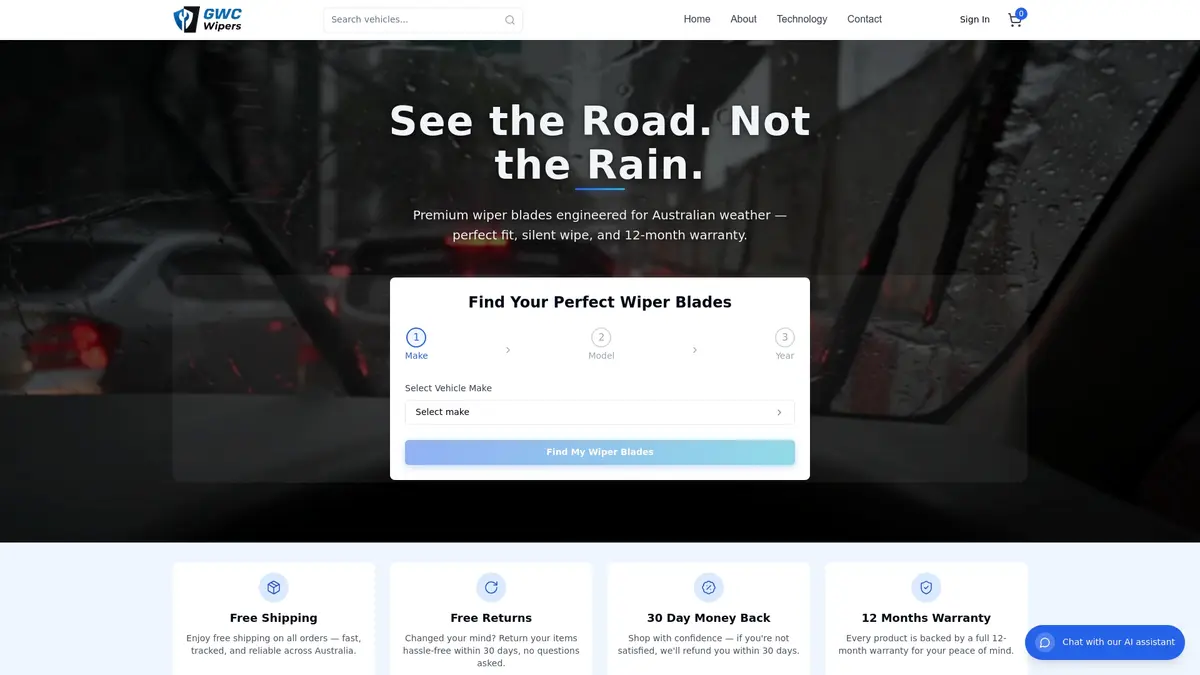
Whether you drive a Toyota, a Mercedes-Benz, or anything in between, GWC’s range covers the most popular vehicles on Australian roads. Explore Toyota wiper blades or Mercedes-Benz options to find blades that deliver the pressure distribution and noise reduction that flexible technology promises. Free shipping across Australia, a 12-month warranty, and a 30-day money-back guarantee mean you can upgrade with confidence.
FAQ
What is a flexible wiper blade?
A flexible wiper blade, also called a flat-beam or beam blade, uses an internal leaf spring or elastic element to apply consistent pressure across the full length of the blade, conforming to the windshield’s curvature without an external metal frame.
How do flexible wipers prevent streaking?
Flexible wipers maintain uniform contact pressure along the entire blade edge, eliminating the dry patches and uneven wiping that cause streaks on traditional framed blades.
Are flexible wipers better in Australian weather conditions?
Yes. The yokeless design resists ice and debris build-up in cold conditions, while UV-resistant materials and even pressure distribution make flexible blades more durable under the intense Australian sun compared to standard rubber blades.
How often should flexible wiper blades be replaced?
Flexible wiper blades should be inspected every six months and replaced annually or sooner if you notice chattering, smearing, or visible rubber degradation. Australian UV exposure can accelerate wear beyond typical replacement intervals.
Do flexible wipers fit all vehicles?
Flexible blades are vehicle-specific and must match the windshield curvature and arm connector type of your vehicle. Using a vehicle selector tool before purchasing confirms the correct fit and avoids contact issues.