
Keep Spare Wipers Ready in Australia: Wiper Blade Storage Under 25°C
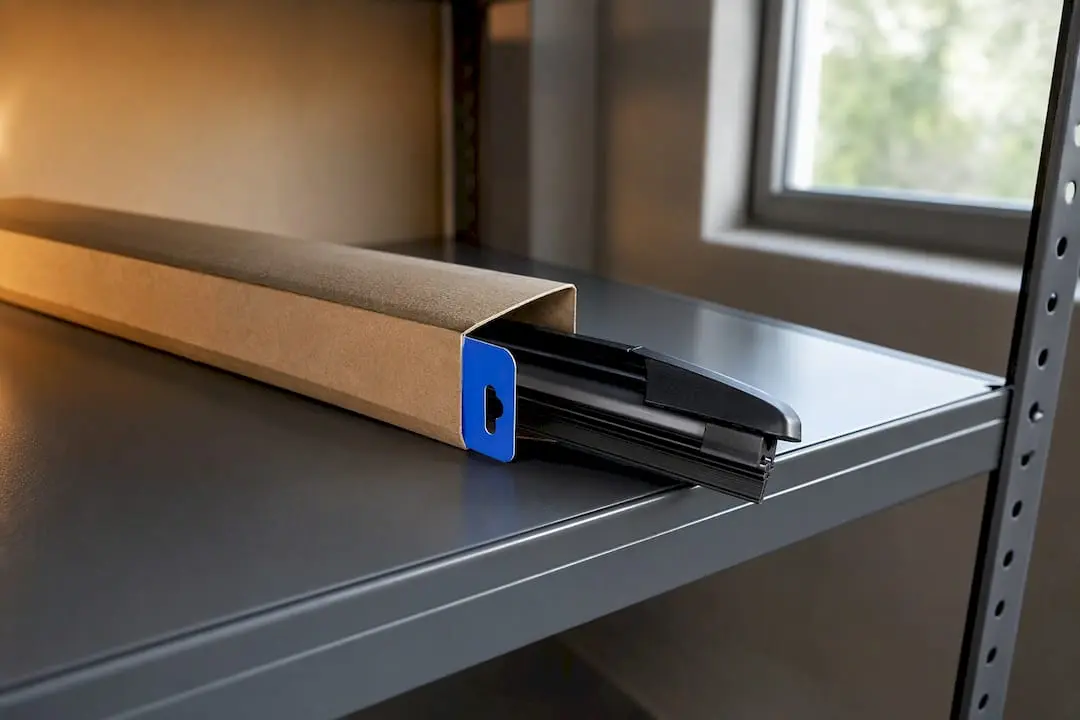
The single most important rule for wiper blade storage is simple: keep blades cool, dry, shielded from light and completely free of physical stress. A sealed bag in the glovebox works fine for a few days, but months of storage need proper packaging and a stable indoor spot. Get this right and your spare blades will perform exactly as well as the day you bought them.
TL;DR:
- Proper storage requires keeping wiper blades cool, dry, shielded from light, and free of stress, with stability and minimal ozone exposure extending their lifespan.
- Short-term storage can be as simple as sealing blades in a plastic bag in the glovebox, but long-term storage demands original packaging, desiccants, and a stable indoor environment below 25°C.
- Cleaning blades before storage with mild soap and thorough drying prevents grime buildup and moisture damage, ensuring they perform well when reused.
- Storing blades in a hot vehicle or exposed to heat cycles accelerates rubber hardening and cracking, so they should be kept in shaded, temperature-controlled indoor spaces.
- Check stored blades regularly for cracks or deformations, and replace any that show signs of deterioration rather than risking poor windshield contact or streaking.
Table of Contents
- Why wiper blade storage matters more than you’d think
- Best wiper blade storage methods for short-term and long-term needs
- How to prepare wiper blades before you store them
- Storing blades inside a vehicle: what’s safe and what to avoid
- Long-term storage: keeping spares for months or years
- Quick checks before reinstalling stored blades
- Common mistakes that ruin stored wiper blades
- Where this storage advice comes from
- Storage advice that’s actually worth following
- Ready-fit replacement blades when storage isn’t the answer
- Sources
- FAQ
Why wiper blade storage matters more than you’d think
Rubber doesn’t fail because time passes. It fails because of what happens to it while that time passes. Heat, UV exposure and ozone are the three main enemies of the rubber compound in your wiper blades, and each one attacks in a different way.
Heat and ultraviolet light accelerate oxidation, which hardens the rubber and strips away the flexibility that lets a blade hug your windscreen properly. Ozone, meanwhile, attacks the surface directly, causing the fine surface cracking you’ll recognise as “chattering” or a rough, patchy wipe once the blade is back on your car.
Mechanical stress is the other silent killer. A blade left bent, folded, or pressed against glass for weeks will often develop what’s called a “permanent set”, a lasting curve that no amount of fitting will straighten out again.
None of this is guesswork. ISO 2230 sets out the international benchmark for storing elastomer components, calling for cool, dry, low-light, low-ozone conditions and original packaging wherever possible. That standard sits behind most of the practical advice in this article, including:
- Rubber hardens and cracks faster under heat and UV exposure than most owners expect.
- Ozone from nearby electrical equipment degrades the surface even without direct sunlight.
- A blade stored under stress can lose its correct sealing profile permanently.
Best wiper blade storage methods for short-term and long-term needs
Not every storage scenario is the same, and treating a two-week wait like a two-year one (or vice versa) is where most owners go wrong. Sort your situation into one of these buckets first.
- Short-term (days to a few weeks): A sealed plastic bag inside the glovebox or a rigid storage box in the boot is fine. Keep the blade flat, never resting against the windscreen glass, and never hanging from a hook or peg.
- Medium-term (a few weeks to a couple of months): Move blades indoors. A cupboard, drawer or garage shelf away from direct sunlight and any ozone-producing appliances (think old fridges, air purifiers, electric motors) is ideal.
- Long-term (months to a year or more): Store in original packaging if you still have it, inside a sealed box with a silica desiccant sachet, at a stable indoor temperature below 25°C and relative humidity under roughly 65%, according to elastomer component storage guidelines. Label the box with the storage date and use a first-in, first-out approach if you keep multiple sets.
Whichever timeframe applies, the golden rule doesn’t change: keep the rubber flat, unstressed, and away from anything that produces heat, ozone or ultraviolet light.
Pro Tip: If you’ve bought a spare set through a vehicle selector tool for a future replacement, store it in the box it arrived in. Manufacturers design that packaging specifically to meet elastomer storage conditions, so you’re not reinventing the wheel.
How to prepare wiper blades before you store them
A dirty blade stored is a contaminated blade next time you fit it; for tips on cleaning your vehicle before storage, see this clean car glass guide. Road grime, sap and brake dust trapped against the rubber edge during storage can bake in over time, so a proper clean beforehand isn’t optional if you want the blade to perform when you need it.
- Wash the blade gently with mild soap and water, then rinse thoroughly to remove all residue.
- Avoid solvent-based cleaners or anything containing alcohol or petroleum distillates, which can dry out and degrade the rubber compound.
- Dry the blade completely before packaging. Trapped moisture invites mould and corrosion on any metal spring components.
- Handle the blade flat, never bending or creasing the rubber edge, and avoid coiling it tightly to fit a smaller container.
- Package it in the original box, a sealed polyethylene bag, or a small rigid box with a desiccant sachet for anything beyond a few weeks.
This routine follows the same principle behind regular wiper blade cleaning: gentle, residue-free maintenance extends rubber life whether the blade is on your car or sitting in a drawer. For a broader look at keeping blades performing well between replacements, our guide on protecting your wiper blades covers routine care too.
Storing blades inside a vehicle: what’s safe and what to avoid
Keeping a spare blade in the car makes sense if you’re travelling or want a backup for an unexpected split. It’s just not a long-term solution.
- A sealed bag inside the glovebox, centre console, or a rigid storage box in the boot is safe for short stretches.
- Parked cars can hit extreme cabin temperatures in direct sun, which speeds up rubber hardening even inside a bag, so shaded parking helps.
- A rigid or insulated container adds a buffer against heat cycling compared with a loose bag on a hot dashboard.
- Multi-month storage inside a vehicle isn’t acceptable. Cabin temperature swings, especially through an Australian summer, do real damage over that timeframe.
If you’re dealing with genuinely high ambient heat, it’s worth reading our notes on choosing wipers for heatwave conditions, since the same thermal risks that affect fitted blades apply doubly to blades baking in a hot glovebox.
Long-term storage: keeping spares for months or years
If you’re holding spare blades for a future season or a car you’re not currently driving, treat storage as a small project rather than an afterthought.
- Target a stable temperature below 25°C and humidity under roughly 65%, out of direct light and away from ozone-generating equipment.
- Store blades flat and strain-free in their original packaging where you still have it, per ISO 2230 guidance.
- Separate rubber from bare metal contact. Copper, brass and iron can accelerate rubber degradation, so use inner packaging as a barrier.
- Check stored blades every three to six months and set a personal rule: any doubt about condition means replacement, not reinstallation.
Quick checks before reinstalling stored blades
- Look closely at the rubber edge. Cracking, stickiness, discolouration or a permanent bend are all reasons to replace rather than refit.
- Do a gentle flex and stretch test. Healthy rubber flexes smoothly and springs back; stiff or brittle rubber that resists bending has likely hardened past useful life.
- Check the contact edge sits flush against a flat surface with no visible gap or wave along its length.
- When in doubt, fit it and test at low wiper speed before relying on it in heavy rain, or replace it outright if the test run shows streaking or chatter.
If a blade has been in cool storage, gently warm it toward room temperature before fitting. Cold, stiff rubber is more prone to distortion during installation than rubber that’s had a chance to settle at ambient temperature.
Common mistakes that ruin stored wiper blades
Most blade damage during storage traces back to a handful of avoidable habits.
- Leaving a spare blade pressed flat against the windscreen for weeks creates a permanent curve in the wrong direction.
- Storing rubber near ozone sources like old fridge motors, air purifiers or workshop equipment accelerates surface cracking.
- Hanging blades on a hook or pegboard, or folding them to fit a drawer, both introduce lasting deformation.
- Leaving blades in a hot attic or shed exposes them to exactly the heat cycling that ISO 2230 storage guidance warns against.
Pro Tip: If you’ve already made one of these mistakes, don’t assume the blade is ruined. Repack it correctly, relocate it to a cooler spot, and run the flex test above before writing it off entirely.
Where this storage advice comes from
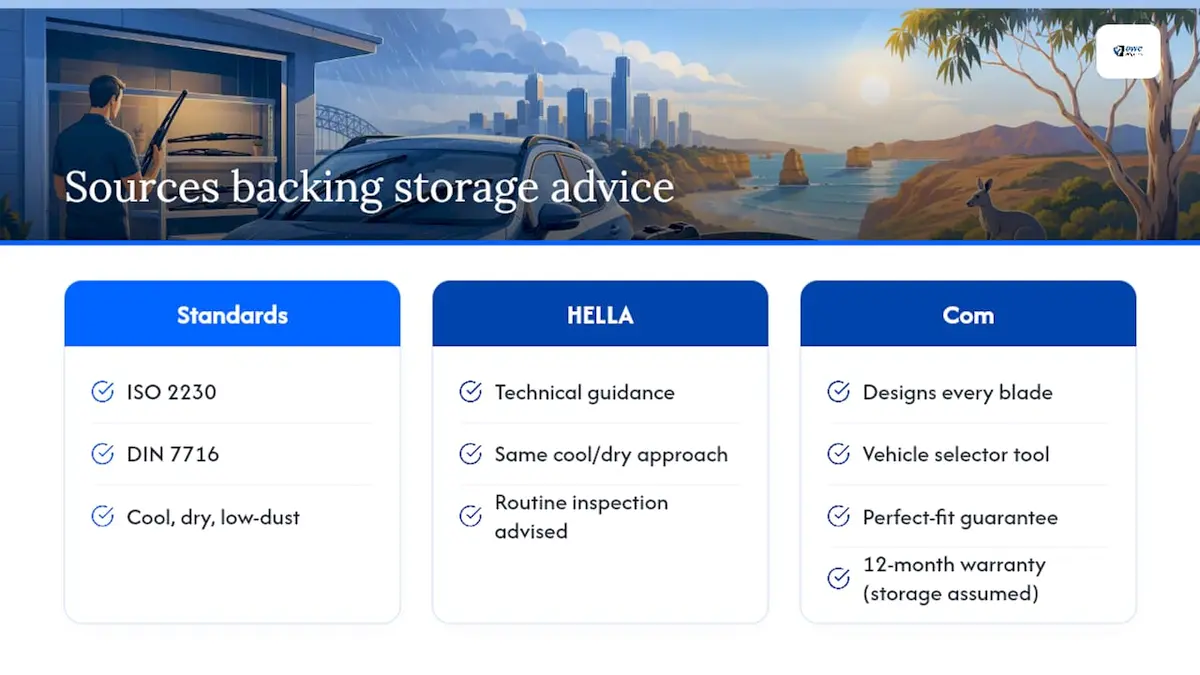
The temperature, humidity and packaging figures throughout this guide track directly with ISO 2230 and the DIN 7716 principles referenced across the elastomer storage industry, not opinion. HELLA’s technical guidance for rubber spare parts backs the same cool, dry, low-dust approach and stresses routine inspection before parts go back into service, which lines up with the checks covered above.
Com applies the same thinking to every blade it designs, backed by a vehicle selector tool covering thousands of model fitments, a perfect-fit guarantee, and a 12-month warranty that assumes correct storage and handling on your end. Faisal, who covers automotive maintenance and parts performance for Com, draws on manufacturer storage specifications and elastomer industry standards to keep this kind of guidance grounded in how rubber actually behaves, not just how it’s marketed.
Storage advice that’s actually worth following
The conventional advice on this topic tends to stop at “keep it somewhere cool and dry,” which is true but incomplete. What gets missed is the strain factor. A blade sitting in a beautifully climate-controlled cupboard, folded over a small radius or hung on a hook, still ends up with a permanent set that no storage temperature will fix.
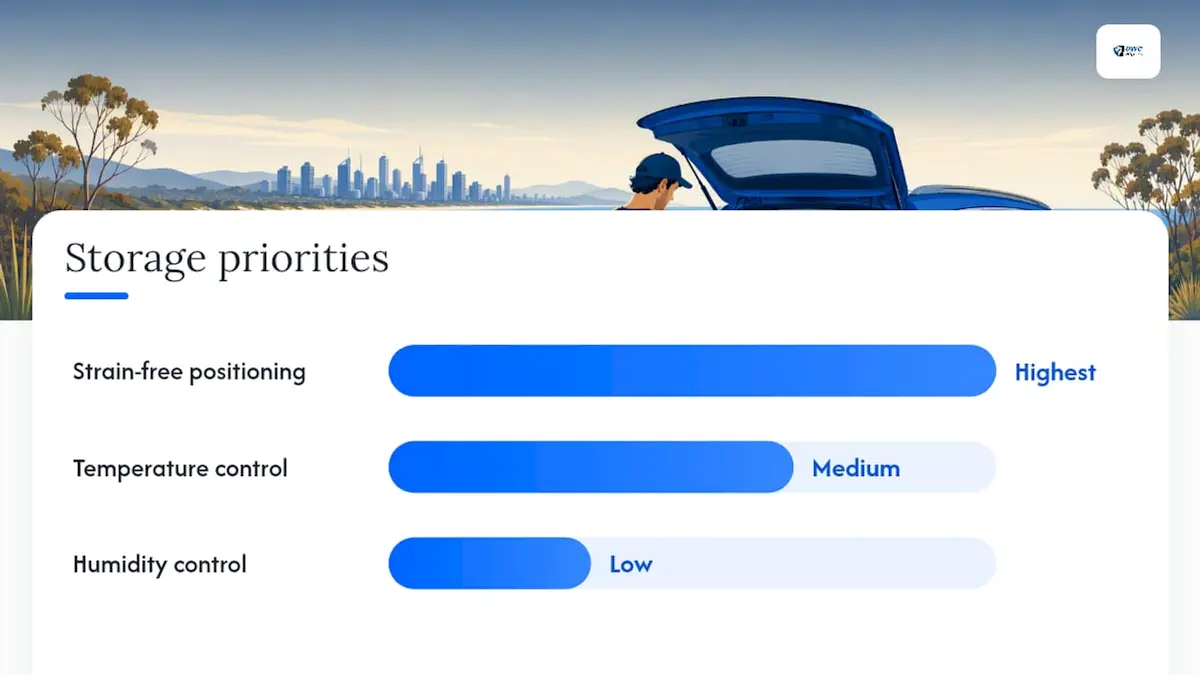
If I had to rank the priorities, strain-free positioning beats temperature control, and temperature control beats humidity control. Most home garages in Australia sit within a reasonable range on heat and humidity most of the year. Very few people think twice about tossing a spare blade into a drawer bent to fit.
The other overrated piece of advice is obsessing over exact storage duration. Time alone doesn’t degrade rubber anywhere near as much as poor conditions do. A blade stored properly for eighteen months will often outperform one stored badly for six weeks. Prioritise the conditions, not the calendar.
— Faisal
Ready-fit replacement blades when storage isn’t the answer
Sometimes the smartest storage decision is knowing when to stop storing and start replacing. If a blade fails the flex test or shows cracking after time in storage, reusing degraded rubber on your windscreen isn’t worth the risk to visibility in wet weather.

A vehicle selector tool simplifies ordering wiper blades by helping identify model-specific fitments. Most offerings include money-back guarantees, warranties, and delivery options across Australia. Browse wiper blades by make to find your model, or head straight to a popular fitment page like Toyota wiper blades or BMW wiper blades to check compatibility and get your replacement set ordered today.
Sources
- ISO 2230
- Guidelines for the storage of elastomer components (Angst+Pfister)
- Brake spare parts with rubber components | HELLA
FAQ
How long can wiper blades be stored before they degrade?
Storage life depends far more on conditions than time. Blades kept cool, dry, dark and strain-free can last well over a year, while poorly stored blades can degrade within weeks.
Can I store wiper blades in a hot garage or shed?
Not for anything beyond a short period. Hot sheds and attics expose rubber to exactly the heat cycling that accelerates hardening and cracking, so a stable indoor spot below 25°C is a better choice.
Is it okay to leave a spare wiper blade in the car?
Yes, for short-term storage of days to a few weeks in a sealed bag or rigid box, ideally in shade. Multi-month in-car storage isn’t recommended because of cabin temperature extremes.
Do I need to clean wiper blades before storing them?
Yes. A gentle soap-and-water wash and thorough drying prevents grime and moisture from being sealed into the packaging, which can degrade the rubber or corrode metal components.
How do I know if a stored blade is still safe to use?
Check for cracking, stickiness, discolouration or permanent bends, then do a gentle flex test to confirm the rubber still springs back cleanly. If you’re unsure, ordering a correctly fitted replacement through a vehicle selector tool is the safer call.