
Conventional Wiper Blades in Australia: How the Options Compare
Conventional wiper blades are a sound choice in Australia when you drive mostly in dry weather, want a lower upfront cost, and your car was fitted with framed blades from the factory. Beam and hybrid blades suit drivers who cover more kilometres or face heavy rain. Whichever you choose, the right size and connector for your exact car matter more than the brand name on the box. This guide compares the three blade types, explains how to judge a conventional blade, and shows how to find the correct fit for your vehicle.
TL;DR
- Conventional (framed) blades use a metal frame with several pressure points. They are economical and standard on many cars, but they tend to lose contact and skip as they age.
- Beam and hybrid blades suit frequent drivers and heavy rain. Conventional blades suit light use and dry climates.
- Sun and heat wear out rubber faster than wiping does, so plan to replace blades about every 6 to 12 months, whatever the type.
- Match driver side length, passenger side length and arm connector to your car. A wrong size can damage the arms, the motor or the windscreen trim.
- Use the GWC Wipers vehicle selector to find your car by make, model and year for a Perfect Fit set.
Table of Contents
- What a conventional wiper blade actually is
- Conventional vs beam vs hybrid blades
- Which brands you will meet in Australia
- How Australian conditions change the answer
- Getting the size and connector right
- Fitting conventional blades at home
- Our perspective on conventional blades
- Find your Perfect Fit set
- Signs it is time to replace, whatever the type
- How to choose: a short decision guide
- FAQ
- Sources
What a conventional wiper blade actually is
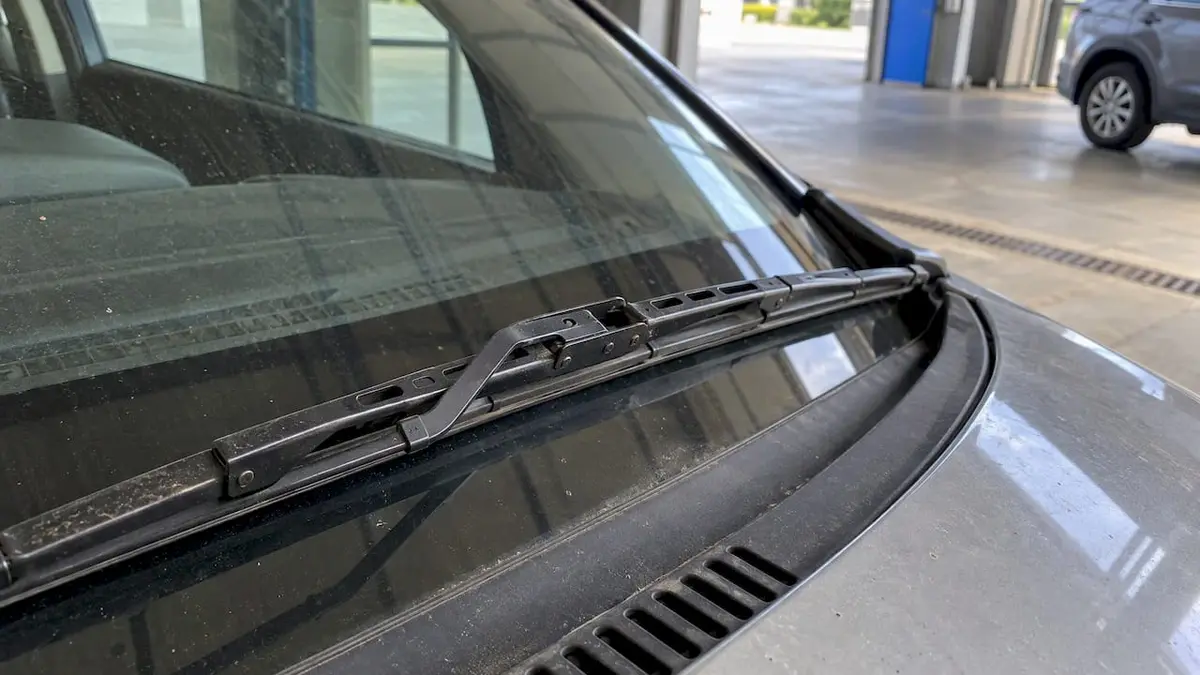
A conventional blade has an articulated metal frame that holds a strip of rubber against the glass at set pressure points. Haynes Australia notes that this frame style has been standard issue on many cars for decades. NOVUS Glass Australia says most cars still leave the factory with conventional or frame style blades, while flat blades are increasingly used on newer models.
The design was originally made for the flatter windscreens of older vehicles, and a typical framed blade has 6 to 8 contact points. Each point is a spot where the frame presses the rubber onto the glass. Between those points, the rubber relies on its own flexibility.
You will hear conventional blades called framed, bracket or traditional blades. They are all the same thing. If you can see a skeleton of metal arms and clips above the rubber, you are looking at a conventional blade.
Conventional vs beam vs hybrid blades
The three designs differ in how they spread pressure across the windscreen. The trade-offs below draw on the OWI white paper and the Haynes guide.
| Feature | Conventional (framed) | Beam (flat) | Hybrid |
|---|---|---|---|
| Construction | Articulated metal frame | One curved piece, no external frame | Frame combined with a beam style cover or spoiler |
| Pressure on the glass | Set contact points, typically 6 to 8 | Continuous contact along the blade | Pressure points plus an aerodynamic shape |
| Cost | Economical | Usually higher | Usually in between |
| Suits | Dry climates, occasional driving, older windscreens | Frequent drivers, varied or heavy rain | Drivers who want a frame’s sturdiness with better high speed hold |
| Main weakness | Can lift at speed and skip as it ages | Costs more up front | Costs more than a plain framed blade |
Haynes says hybrid spoilers are intended to push the blade onto the screen so it does not lift at speed. That is the problem conventional blades are known for on a freeway, where air flow can get under the frame.
Where conventional blades make sense
OWI’s guidance is that conventional blades are suitable for drivers in dry climates or those who use their vehicles infrequently, while beam blades are recommended for frequent drivers or those who meet varied, heavy rain. That is a US company’s view, but the logic carries over. A weekend car in Perth or Adelaide that sees a handful of showers a year does not need the same blade as a daily commuter on the Pacific Motorway.
Conventional blades also make sense when:
- your car’s windscreen is fairly flat and the wiper arms are designed for framed blades,
- you want to replace blades on a tight budget,
- you run an older family car, a work ute or a fleet vehicle where blades are a routine maintenance item.
Where they fall short
A Home Muse buying guide for Australia reports that new framed blades perform much like beam blades, but they lose contact and begin skipping as they age. This matches what many owners notice: the first months are fine, then chatter and missed patches appear.
Consumer Reports adds a useful caution from US testing: a higher price does not always mean higher quality, and initial performance is often very good for most brands, with degradation after a few months of regular use. In other words, a blade’s age and condition often tell you more than its price tag.
Which brands you will meet in Australia
Wiper blades in Australia come from auto parts chains, tyre and parts wholesalers, and online specialists. Names you will see include Bosch, Trico, Tridon and Repco’s own range, plus dedicated online sellers like us. Most of these brands sell conventional, beam and hybrid designs, so the brand alone does not tell you the type.
The Home Muse guide lists Repco’s Premium Conventional range as a budget framed option, and Tridon publishes a catalogue of metal conventional blades. Tridon’s catalogue describes a galvanised zinc steel frame with a powder coat for corrosion resistance, a feature that matters on coastal roads where salt air attacks metal. Trico, in the same guide, puts the replacement interval at six to twelve months.
Rather than crowning a winner, here are the criteria that separate a good conventional blade from a poor one:
- Frame corrosion resistance. Look for a coated or galvanised frame. A rusted joint stops the frame flexing and leaves unwiped strips.
- Rubber quality. Natural rubber gives a smooth wipe. Cheap compound hardens quickly in UV.
- Connector and size coverage. A blade is useless if it does not fit your arm. Vehicle specific listings reduce the risk.
- Pressure distribution. More evenly spread pressure means fewer streaks as the blade ages.
- Warranty and returns. A return window lets you correct a sizing mistake without losing money.
We publish a longer look at wiper blade brands in Australia if you want to compare more names, and a guide to wiper blade cost in Australia for what to expect before you buy.
How Australian conditions change the answer
Sunlight does more damage to wiper rubber than wiping does, according to the Home Muse guide, and Australian summer heat can deform a blade’s tension strip. Haynes also says sunlight and cold gradually perish wiper rubber, and recommends replacing blades annually.
This changes how you should think about a conventional blade. Framed blades are cheap to replace, so replacing them yearly is realistic. A beam blade may cost more, but if it sits in 40 degree heat for a summer, the rubber ages just the same. Parking in shade or a garage helps any blade.
Two local situations are worth planning for:
- Tropical and sub-tropical regions. Intense downpours demand even contact along the whole blade. If your car has been wiping poorly in storms, consider a hybrid or beam design. Our guide to rain wiper blades in Australia covers this in more detail.
- Alpine areas. NOVUS Glass reserves winter blades for extremely cold conditions involving ice and snow. Most drivers do not need them, but if you head to the snowfields regularly, see our page on snow wiper blades for Australian winters.
Getting the size and connector right
Most bad wiper purchases are sizing mistakes. According to the Home Muse guide, you need to match three things: the driver side length, the passenger side length, and the arm connector, usually a hook or a clip. Many Australian retailers offer registration or make and model lookups to do this for you.
NOVUS Glass warns that blade choice is vehicle specific. A wrong size can cause early wear, contact with the windscreen trim, blades colliding with each other, or damage to the arms, motor and transmission. Its advice is to confirm size and fit using the owner’s manual or a qualified expert.
A quick checklist:
- Read the sizes from your owner’s manual, or measure your current blades in millimetres.
- Note that driver and passenger blades are often different lengths.
- Check whether your rear window has its own wiper, which needs a separate blade. Our guide to rear wiper blades explains how.
- Identify the arm end: hook, side pin, push button or something specific to your make.
- Confirm the fit by make, model and year, not by make alone. A model can change windscreen and arm design between generations.
For example, a Toyota Prado 120 and a Ford Everest have different blade lengths and different arm fittings, even though both are large four wheel drives. Sizing by vehicle name alone is not enough, so always use a year specific lookup.
Fitting conventional blades at home
The Home Muse guide says fitting is usually a two minute job once you have seen it done. Our own blades come with preassembled adapters so the job is tool free. Before fitting anything:
- Lift the wiper arm away from the glass until it locks upright.
- Release the old blade at the connector and slide it off.
- Clean the glass first. New rubber cannot cut through road film and wax, so a dedicated glass cleaner makes a visible difference. A streak free glass cleaning method is a good starting point for a glass surface that blades can grip.
- Slide the new blade on until it clicks, then lower the arm gently. Never let the arm snap back onto the glass.
- Test with the washers on a wet screen and look for streaks, chatter or missed bands.
If you have trouble spotting a worn set, our six step signs of bad wipers test walks you through it.
Wipers and roadworthiness
Wipers are a safety item, not just a comfort feature. Tasmania’s vehicle inspection fact sheet says wipers and washers must be complete and operational, and wipers must be free from cracks, frays, tears and curls. The ACT’s light vehicle inspection manual lists missing, unsecured, non operating, cracked, curled, frayed or torn blades as reasons for rejection. Requirements differ by state and territory, so check your own road authority for local rules.
Our perspective on conventional blades
We design our blades for Australian conditions, and we see the same pattern in the questions customers ask. People rarely need a lecture on blade types. They want to stop streaking, stop chatter, and know the blades will fit the first time.
Here is our honest view. A conventional blade is a reasonable choice when the driving is light and the budget is tight, but the frame is only as good as its corrosion protection and its rubber. If you do a lot of highway driving or face heavy tropical rain, a blade with aerodynamic design and segmented pressure distribution is worth a close look. The deciding factor in nearly every case is fit. We cover more than 2,500 vehicle models, and every set is sold with a fit guarantee because a blade that does not match your arm is no use to anyone.
So start with your car, not the blade type. Check the product page for your vehicle to see the blade style we list for it, and replace blades about once a year or when the wipe starts to deteriorate.
— Faisal
Find your Perfect Fit set
We sell premium wiper blades designed for Australian weather, with vehicle specific fitment, preassembled adapters for tool free installation, free shipping across Australia, a 30 day money back guarantee and a 12 month warranty. Express shipping is also available; the current terms are on our site.
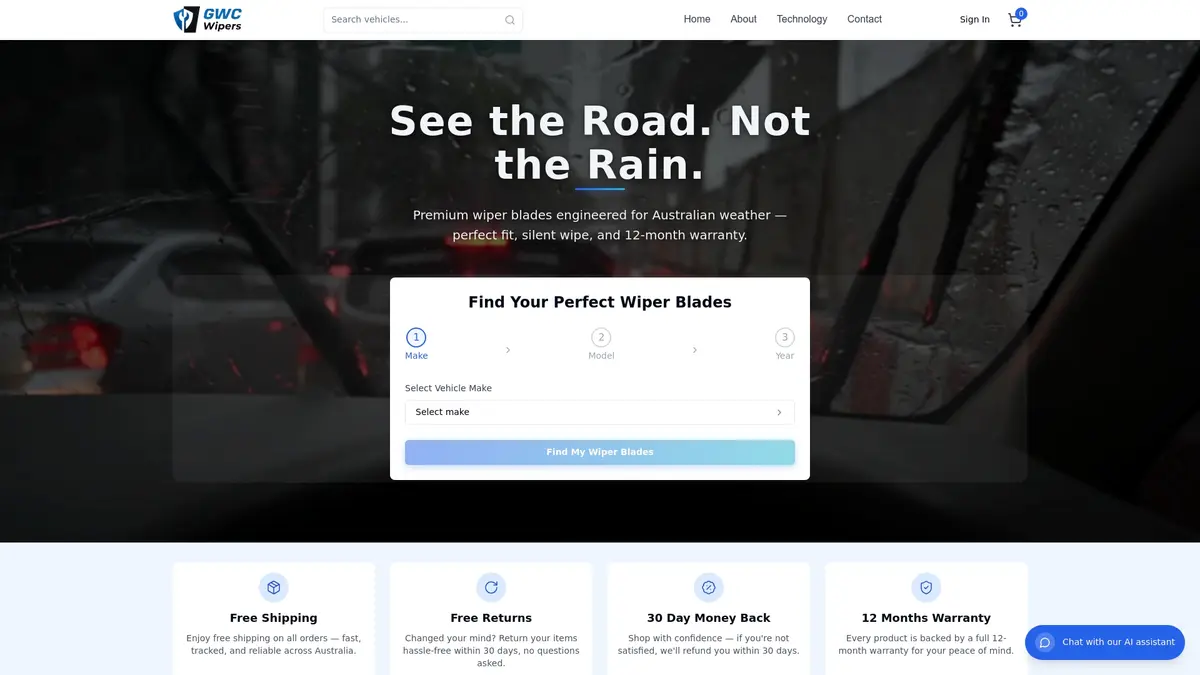
To get started, go to the GWC Wipers blade selector and choose your car by make, model and year. If you drive a Mercedes-Benz, you can go straight to our Mercedes-Benz wiper blades range, and Toyota owners can browse Toyota wiper blades. Our guide to finding the right auto wiper blades explains the process step by step.
Signs it is time to replace, whatever the type
You do not need to wait for the rubber to tear. Replace blades when you notice any of these:
- streaks or hazy smears that do not clear after cleaning the glass and the blade edge,
- chattering, skipping or juddering across the screen,
- a squeak that stays after you clean the blade,
- visible cracks, splits or curled rubber,
- a bent or rusted frame that no longer sits flat on the glass,
- blades that are more than a year old, especially after a hot summer.
Between replacements, wipe the rubber with a damp cloth when you wash the car, and lift the arms off the glass when parked in direct sun for long periods. Haynes also recommends cleaning blades whenever you wash the car, which helps keep road grime off the edge.
How to choose: a short decision guide
Choose conventional if you drive occasionally, live in a drier area, want to keep costs low and your car came with framed blades. Plan on a yearly swap.
Choose hybrid if you want a framed blade that holds better at highway speed, or if your arms were designed for a frame but you want better wind resistance.
Choose beam if you drive often, face heavy or varied rain, or own a car with a curved windscreen designed for flat blades.
For every option, confirm length, connector and year before you pay. If a seller cannot show you the fit for your exact car, look elsewhere.
FAQ
Are conventional wiper blades still worth buying?
Yes, for light use and dry climates. They are economical and many cars are built to take them. They do lose contact and begin skipping as they age, so expect to replace them about once a year.
How often should I replace conventional blades in Australia?
Trico puts the interval at six to twelve months, and Haynes recommends annual replacement. Heat and UV are the main causes of wear, so a car parked outdoors in a hot region may need replacing sooner. Replace earlier if you see streaking or chatter.
Can I fit beam blades where conventional blades came from the factory?
Often you can, but only if the blade has the right connector for your arm and the right length. A mismatch can damage the arms or trim, as NOVUS Glass warns. Check fit by make, model and year before you swap styles.
Do you offer free delivery across Australia?
Yes, we offer free shipping across Australia, with express shipping available as an option. Check the current terms at checkout, and you are covered by our 30 day money back guarantee if the order is not right.
Sources
- Best Wiper Blades Australia: What Fits and What Lasts (Home Muse)
- Wiper blade replacement (Haynes Manuals Australia)
- Which Windscreen Wipers are Best for Your Car? (NOVUS Glass)
- The Important (and Overlooked) Components for Vehicle Visibility and Safety (OWI)
- Best Wiper Blade Buying Guide (Consumer Reports)
- Are you checking your light vehicle regularly? (Transport Tasmania)
- Light vehicle inspection manual (Access Canberra)
- Clean car glass: streak free method (Diamondbrite)