
Best Heavy Duty Wiper Blades in Australia: 2026 Guide
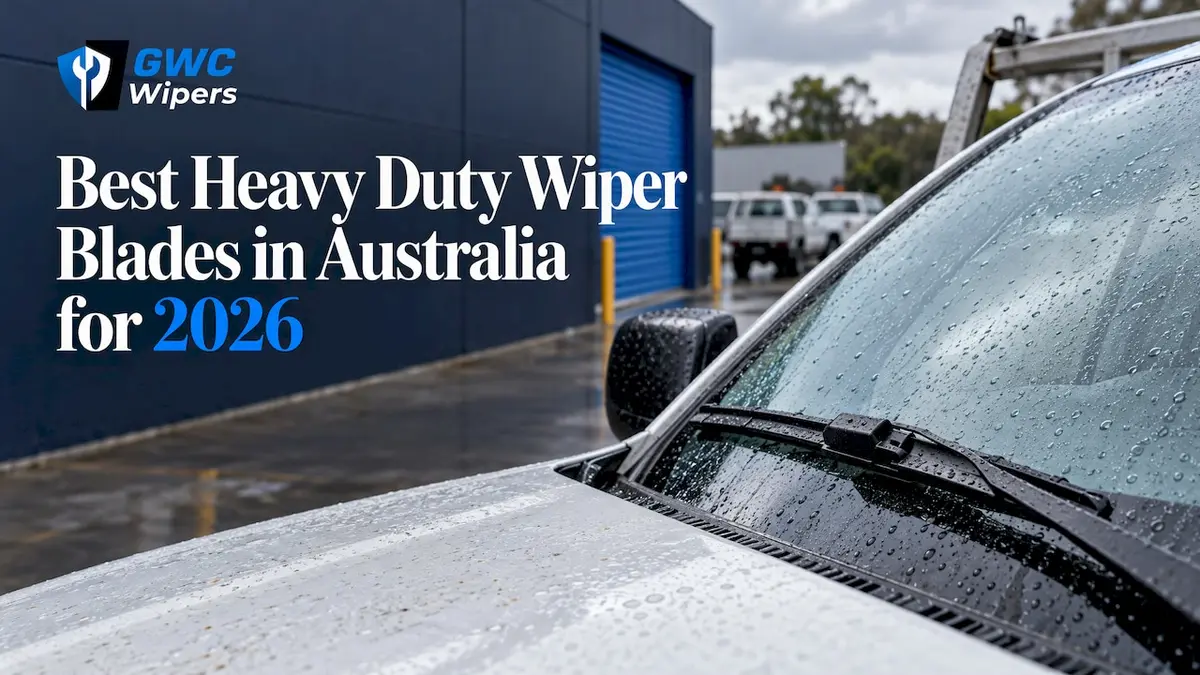
The best heavy duty wiper blade for an Australian car, ute or 4WD is a beam-style blade that presses evenly along the whole glass, resists heat and UV, and fits your exact make, model and year. Fit decides more than any brand name. A strong blade that sits wrong on the arm still streaks and chatters. That is why our GWC Wipers blades start with a vehicle selector and a fitment guarantee, and why this guide compares the main options on the things that matter on Australian roads.
TL;DR
- Heavy duty in Australia means three things: even pressure across the glass, rubber and hardware that cope with heat, UV, dust and salt, and a correct fit for your vehicle.
- Beam-style blades hold their wipe quality longer than framed blades, which start to skip as the pressure points spread with wear, according to Home Muse’s 2026 review.
- Plan to replace blades every 6 to 12 months, and nearer 6 if the car lives outdoors in strong sun or near the coast.
- GWC blades are made for Australian weather, with natural rubber, segmented pressure distribution, preassembled adapters, free shipping Australia-wide, a 30-day money-back guarantee and a 12-month warranty.
- Check your size and fitment by make, model and year before you buy, whatever brand you choose.
Table of Contents
- What heavy duty actually means for a wiper blade
- Beam, framed and hybrid: which construction lasts
- Heavy duty wiper blades compared
- Heavy duty for 4WDs, utes and work vehicles
- How to find the right size and fit by make, model and year
- When to replace heavy duty blades
- Are dearer wiper blades worth it?
- Our view on heavy duty wipers
- Get blades fitted to your vehicle
- FAQ
- Sources
What heavy duty actually means for a wiper blade
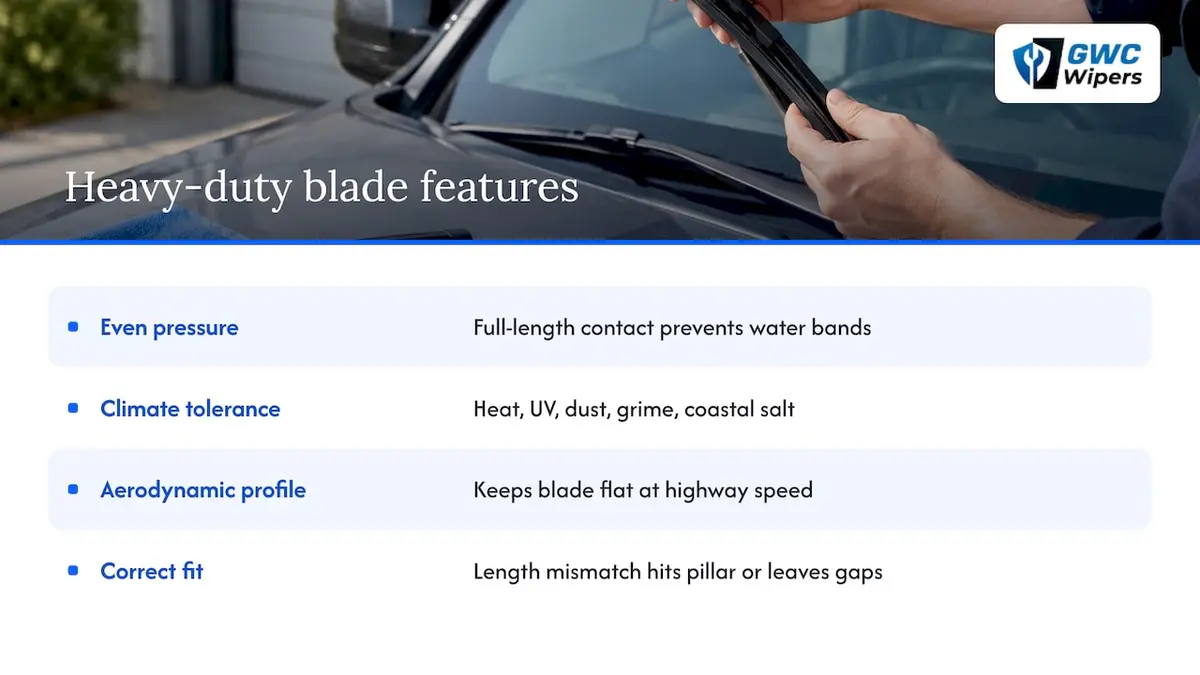
“Heavy duty” is not a regulated term. Brands use it loosely, so it helps to know what you are really asking a blade to do. In Australia that is usually one of these jobs: clearing a flood of rain at 100 km/h on a highway, surviving a summer on a ute that sits in a worksite car park, or coping with red dust, bore water spray and coastal salt on a 4WD.
Four features separate a blade that copes from one that gives up in a season.
Even pressure along the blade. The rubber has to touch the glass along its full length. A blade that presses hard in a few spots and lightly in others leaves bands of water, which is the most common complaint in heavy rain. Our blades use advanced segmented pressure distribution to spread that load along the blade.
Rubber and hardware that tolerate the climate. Sunlight wears wiper rubber out faster than use does, according to Home Muse, and the same review notes that Australian summer heat can deform the tension strip in a blade. A guide from Australian windscreen specialists published on 23 April 2026 names heat and UV, dust and road grime, and coastal salt as the main factors that shorten a blade’s life. We build our blades with natural rubber and corrosion-resistant construction for exactly this reason.
A profile that stays on the glass at speed. Wind can lift a poorly shaped blade at highway speeds. Aerodynamic designs keep the blade flat to the screen, which matters on a tall 4WD windscreen as much as on a sedan.
The right size and connector. A blade that is a few centimetres too long can hit the pillar. One that is too short leaves a wide unwiped area in your line of sight. A wrong adapter can also sit loose on the arm and rattle.
If you want the longer version of this definition, we cover it in what defines heavy-duty wipers for Australian vehicles.
Beam, framed and hybrid: which construction lasts
Most buying decisions come down to construction. There are two main families.
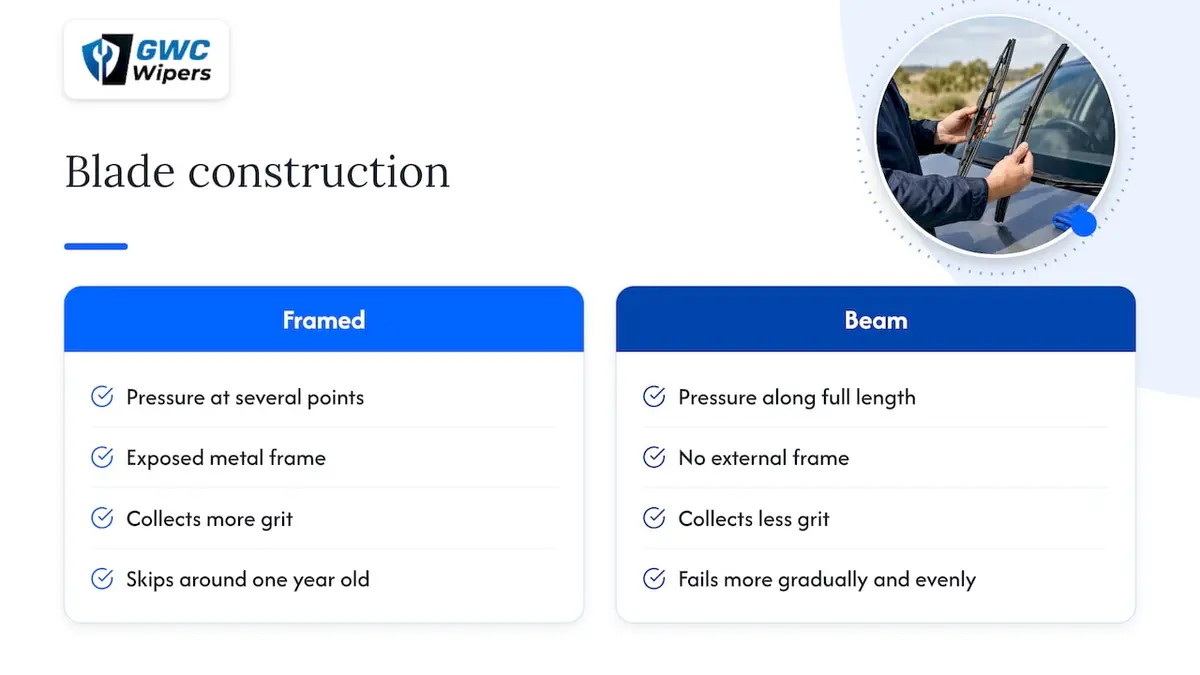
Framed (conventional) blades use a metal frame with several pressure points that hold the rubber against the glass. They are inexpensive and widely available. As Home Muse’s review team explains, those pressure points spread out as the blade wears, and the blade starts to skip once it is around a year old.
Beam blades have no external frame. A tensioned spine inside the blade presses the rubber along its whole length. The same review says a beam blade fails more gradually and evenly, and that this is why beam construction is preferred for demanding Australian conditions. Because there is no exposed metalwork, beam blades also collect less grit.
For heavy rain, beam-style blades with a smooth, quiet action are what most reviewers point to. The principle is simple: more of the blade stays in contact with the glass, so there are fewer missed patches when the water is coming down hard.
If you want a closer look at the types, our guide to windscreen wiper blade types for Australian drivers walks through each one, and best rain wiper blades in Australia covers wet-weather choices in more detail.
Heavy duty wiper blades compared
The table below compares the options Australian drivers most often weigh up. Rival prices are the Repco prices reported by Home Muse when it checked them on 21 September 2026. Retail prices move, so check the seller’s page for today’s figure.
| Blade | Construction | What it is built for | Reported price |
|---|---|---|---|
| GWC Wipers | Natural rubber, segmented pressure distribution, aerodynamic design | Australian heat, UV, rain and corrosion, with fitment by make, model and year | See the GWC site |
| Bosch Aerotwin | Beam, tensioned steel spine | Even pressure and quiet wiping, factory fitment on many European cars | $65 to $75 per matched pair |
| Trico Force | Beam, higher spring tension | Highway speeds, where a flatter profile resists wind lift | $45 to $50 per blade |
| Bosch SmartFit Pro | Beam with spoiler profile | Noise reduction | $45 to $55 |
| Repco Premium Conventional | Framed | Everyday budget replacement | $20 to $25 |
Why we put GWC first for most Australian owners
What sets our blades apart is the combination in the first row. They are designed, made and tested for Australian conditions, and every pair comes with a perfect fit guarantee tied to a vehicle selector that covers over 2,500 models. Free shipping Australia-wide, a 30-day money-back guarantee and a 12-month warranty sit on top of that, so the whole purchase is covered, not just the rubber.
If your car came from the factory with a particular beam blade, matching the fitment matters more than chasing a brand. Our selector looks up the blades by make, model and year so you are not measuring arms or guessing at connectors.
Bosch Aerotwin
Home Muse rates the Aerotwin best overall in its review. It is a beam blade with a tensioned steel spine that presses evenly on the glass to prevent chattering, and many European cars leave the factory with it. If you drive a European vehicle and want a like-for-like match, it is a recognised option. For a side-by-side look at how it compares with ours, see Bosch wiper blades vs GWC and our Bosch wiper blades review.
Trico Force
Trico is one of the longest-running names in the Australian market. The Force is its beam blade with a higher spring tension than the standard range, aimed at highway driving. Because it is sold per blade, a full set costs about the same as a matched pair of Aerotwins, so the saving only appears when you replace a single blade.
Bosch SmartFit Pro and framed blades
The SmartFit Pro uses a spoiler profile to cut wind noise. A framed blade such as the Repco Premium Conventional costs the least but holds the rubber at separate pressure points, which is the design that tends to skip once it ages.
Heavy duty for 4WDs, utes and work vehicles
Utes and 4WDs ask more of a wiper than a small hatch does. The screen is larger and more upright, the vehicle gets more dust and bug splatter, and it often sits outside all day on a worksite or farm.
For fleets and tradespeople the practical points are:
- Match the size exactly. Sizes are listed per vehicle, and the driver and passenger sides are often different lengths. Do not copy the size off the old blade if it was a previous owner’s guess.
- Choose by model and year. Utes and 4WDs often change windscreen and wiper arm design between generations. Our hub pages sort this by make, model and year, for example Toyota, Mitsubishi and Holden Colorado 7 2012 to 2016 (RG).
- Set a replacement schedule for the fleet. Vehicles parked outdoors every day sit at the short end of the 6 to 12 month interval, so schedule blade changes with each service rather than waiting for streaks.
- Keep the arms in good order. A worn arm that no longer presses evenly will make even a good blade chatter.
For mechanics and workshops, a vehicle-specific catalogue saves the time of checking connectors on the bench. Our blades ship with preassembled adapters, so fitting is a tool-free job for the customer.
How to find the right size and fit by make, model and year
This is the step that most often goes wrong, and it is simple to get right.
- Start with the make, model and year. A 2012 and a 2018 version of the same model can take different blades.
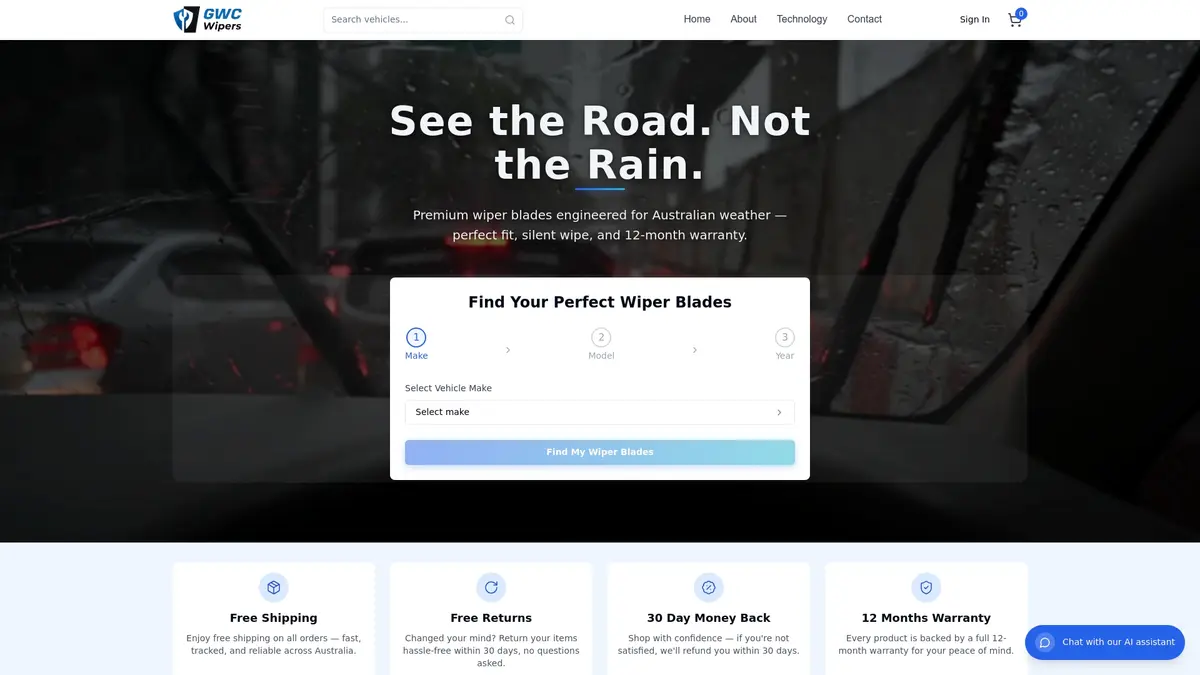
- Use the vehicle selector. Enter the details on the GWC site and it shows the blades matched to your car. Our wiper blades catalogue is the place to begin.
- Go to your make’s hub page if you want to browse. Examples include BMW, Mercedes-Benz, Volvo and Suzuki Vitara 2015 to 2023 (LY).
- Check that you need both sides and the rear. Some vehicles also have a rear wiper that is bought separately.
- Fit and test. The blade arrives with adapters already assembled, and the guide supplied shows how to clip it on. Then run the wipers over a wet screen to check the wipe is clean.
The size and fitment shown on each page is what we have in our catalogue for that vehicle, so use it rather than a size from a generic chart.
When to replace heavy duty blades
Trico rates the replacement interval at six to twelve months, as Home Muse notes, and the Australian windscreen guide gives the same range, adding that harsh conditions often bring replacement closer to six months.
Replace sooner if you notice:
- Streaks or smears that do not clear with a wipe
- Chattering or juddering across the screen
- Rubber that looks cracked, split or hardened
- Patches that the blade misses in rain
Our guides on replacing wipers every 6 to 12 months in summer, how Australian weather affects wiper blades and climate-specific wiper tips go deeper on keeping blades working through the seasons.
Are dearer wiper blades worth it?
Price alone does not tell you much. A cheap framed blade can be fine on a car that is garaged and driven in the city, and a premium blade fitted wrongly still performs badly. What a higher-priced blade usually buys is better construction (beam rather than framed), more durable materials and a closer fit. Compare these before you pay:
- Is the construction beam or framed, and does it keep even pressure along the blade?
- Is the rubber suited to Australian heat and UV?
- Is the fitment confirmed for your make, model and year?
- What is the warranty and the return period?
Our blades answer each of those: segmented pressure distribution, natural rubber, a perfect fit guarantee, a 12-month warranty and a 30-day money-back guarantee.
Our view on heavy duty wipers
We build wiper blades for the conditions Australian drivers actually face: hard summer sun, sudden downpours, dust on country roads and salt near the coast. In our experience of designing and selling them, a wiper blade has to do two things well. It has to be made from materials that hold up in this climate, and it has to fit the vehicle properly.
That is why we put so much into the vehicle selector and the fitment guarantee. A blade that clips on securely and sits correctly on the windscreen does its job from the first wipe. That is also why we include preassembled adapters and detailed guides, so you can fit your blades yourself without tools.
Visibility is a safety matter, and your wipers play a crucial role in keeping your line of sight clear. Whether you drive a ute for work, a 4WD on weekends or a family car through the school run, choose the blade that matches your vehicle and replace it before it fails.
Faisal
Get blades fitted to your vehicle
Our premium wiper blades are made for Australian weather and matched to your vehicle, with free shipping across Australia, a 30-day money-back guarantee and a 12-month warranty. Pick your make, model and year on the GWC Wipers site and the selector shows the blades that fit.
If you drive a Mercedes-Benz, hub pages are also available by model, such as the B class and M class.
FAQ
What is the best brand of wiper blades?
There is no single best brand for every car. The right answer is a beam-style blade built for Australian heat and rain that fits your exact make, model and year. GWC blades are designed for those conditions and come with a perfect fit guarantee, which is why we suggest starting with our vehicle selector.
Are more expensive wiper blades actually better?
Often the extra money goes into construction and materials, such as a beam design in place of a framed one, which keeps even pressure for longer. Check the construction, the rubber, the fitment and the warranty rather than the price alone. Our blades come with a 12-month warranty and a 30-day money-back guarantee.
Do wiper blade refills work?
A refill replaces only the rubber and keeps the old frame. On a framed blade that can work, but the frame wears too and the pressure points loosen with age. A complete blade gives you fresh rubber and a fresh structure together, and ours arrive with the adapters preassembled.
How often should I replace heavy duty wiper blades?
Plan on every 6 to 12 months. Cars parked outdoors in strong sun, or driven in dusty or coastal areas, are usually at the shorter end. Replace them sooner if you see streaking, chatter or cracked rubber.
Sources
- Best Wiper Blades Australia: What Fits and What Lasts, Home Muse
- How Long Do Car Wiper Blades Last? Replacement Guide, Instant Windscreens
Ready to fit the right blades? Find the exact wipers for your car at GWC and get a Perfect Fit: browse GWC wiper blades.