
Why wipers fail prematurely in Australia: prevent it
TL;DR:
- Australian climate accelerates wiper blade degradation due to UV radiation, heat, and dry conditions.
- Signs of failure include streaking, chattering, skipping, and smearing, compromising safety.
- Using climate-appropriate materials like silicone and proper maintenance extends blade lifespan.
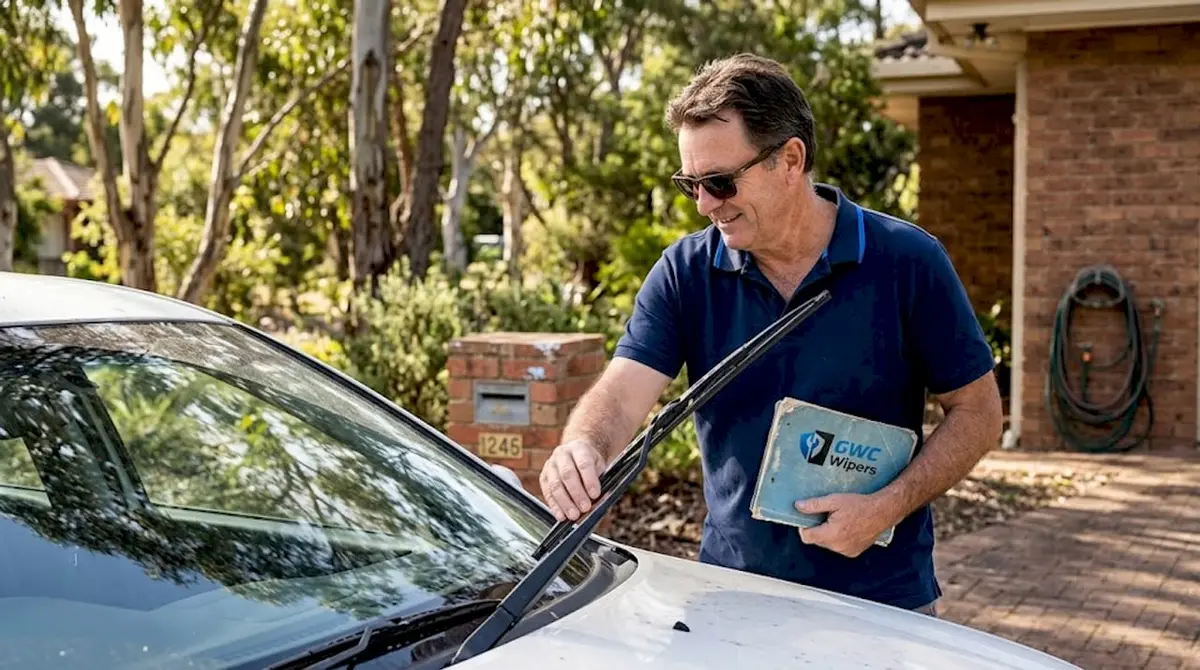
Most Australian drivers assume their wiper blades will last at least a year or two. In reality, UV radiation and extreme heat cause photodegradation and desiccation of rubber wiper blades, leading to hardening, cracking, and loss of flexibility far sooner than expected. Australia’s climate is genuinely unlike anywhere else in the world, and standard wiper blades designed for milder conditions simply cannot keep up. This article uncovers the hidden causes behind premature wiper failure, the warning signs you need to watch for, and practical steps you can take to extend the life of your blades and keep your vision clear on every drive.
Table of Contents
- Why premature failure happens: Key causes in Australian conditions
- Early warning signs: Symptoms your wipers are failing
- Factors accelerating failure: Maintenance and usage mistakes
- Choosing the right replacement: Materials and fit for Australian weather
- What most wiper guides miss: The hidden impact of climate and mechanics
- Find the right wiper blades and extend their life
- Frequently asked questions
Key Takeaways
| Point | Details |
|---|---|
| Australian climate wears blades | UV and extreme heat are the top reasons wipers degrade faster here. |
| Look for early warning signs | Streaks, noise, and skipping signal your blades need replacing soon. |
| Maintenance slows failure | Regular cleaning and correct use help extend blade lifespan. |
| Choose climate-ready materials | Silicone and UV-resistant blades last longer in harsh conditions. |
| Perfect fit is essential | A well-fitted wiper outperforms and outlasts the wrong size or type. |
Why premature failure happens: Key causes in Australian conditions
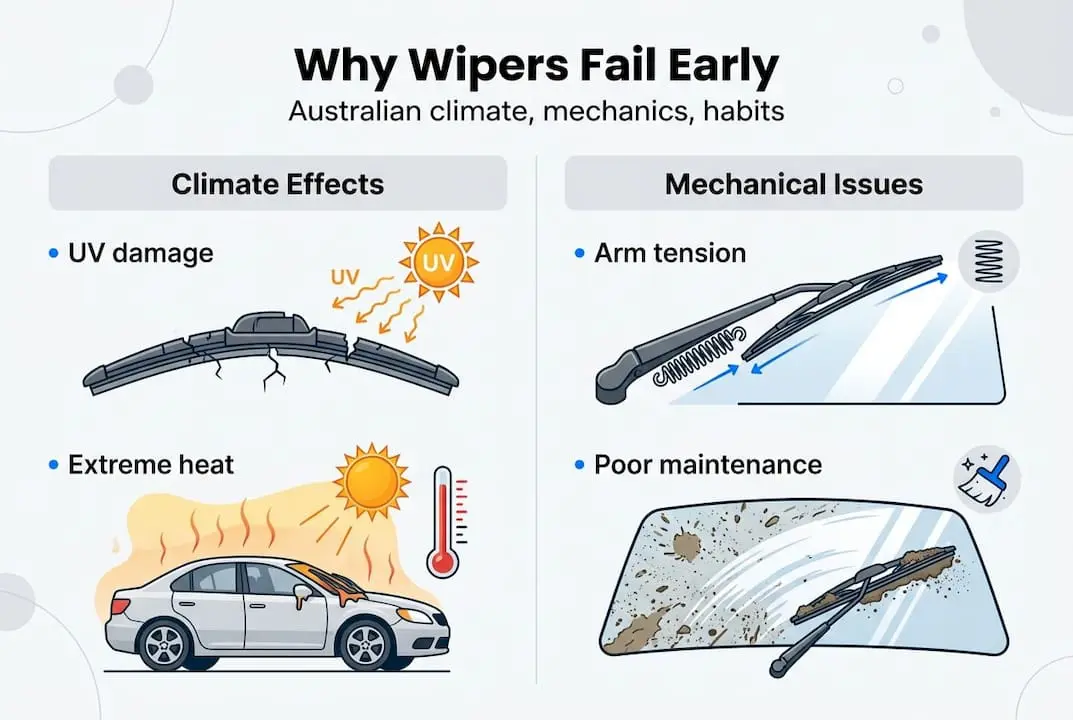
Australia’s environment is uniquely demanding on vehicle components, and wiper blades bear the brunt of it more than most drivers realise. The combination of intense UV radiation, prolonged dry spells, and sudden torrential downpours creates a cycle that deteriorates blade rubber at an accelerated rate. When you park in direct sunlight for hours at a time, the rubber compound in your blades is quietly breaking down, losing the elasticity it needs to maintain firm, even contact with your windscreen.
Mechanical factors also play a significant role. If your wiper arm tension is off, either too tight or too loose, the blade cannot sweep effectively across the glass. Over time, this creates uneven wear patterns that cause one section of the blade to degrade faster than another. It is a problem that often goes unnoticed until the blade starts leaving streaks or lifting away from the windscreen at highway speeds.
Not all blade materials are created equal, and this matters enormously in Australian weather impacts. Natural rubber is the most common and most affordable option, but it is also the least resistant to UV and heat. Silicone blades offer superior durability because silicone does not harden or crack under UV exposure in the way natural rubber does. Hybrid blades combine a rubber compound with an aerodynamic outer shell, providing decent UV resistance at a mid-range price point.
Matching your blade material to your local climate is not optional in Australia. It is the single most effective way to avoid buying new wipers every few months.
| Cause | Effect on blade | Risk level |
|---|---|---|
| UV radiation | Hardening and cracking of rubber | Very high |
| Extreme heat | Loss of flexibility and shape | High |
| Dry wiping | Accelerated edge wear | High |
| Incorrect arm tension | Uneven contact and patchy clearing | Medium |
| Infrequent cleaning | Grit buildup causing abrasion | Medium |
Pro Tip: If you live in Queensland, the Northern Territory, or inland Western Australia, opt for silicone or UV-resistant blades from the outset. The upfront cost is higher, but you will replace them far less often.
Early warning signs: Symptoms your wipers are failing
Knowing why blades fail, you need to spot the symptoms before your vision is at risk. The good news is that deteriorating wiper blades give you plenty of warning before they stop working altogether. The bad news is that most drivers ignore these signals until they are caught in a downpour with barely any forward visibility.
The most common symptoms of premature wiper failure include streaking, chattering, skipping, and smearing, often caused by hardened rubber that can no longer conform to the curve of your windscreen. Each symptom points to a specific underlying problem.
- Streaking appears when sections of the blade have dried out and lost contact with the glass, leaving bands of water behind.
- Chattering is the stuttering, juddering sound you hear when the blade rubber has become stiff and cannot glide smoothly.
- Skipping happens when the blade bounces across the screen instead of sweeping in a clean arc, often linked to a bent wiper arm.
- Smearing leaves a thin film across your view rather than clearing it, usually caused by rubber that has degraded or collected road grime.
Each of these symptoms directly compromises your ability to see the road ahead. In heavy rain, even minor smearing can reduce visibility to the point where reaction times are dangerously slowed. Understanding the different wiper blade types available can help you match the right blade to your driving environment before problems emerge.
It is also worth checking your car visibility checklist regularly, particularly heading into storm season. Research indicates that in harsh Australian conditions, most wiper blades degrade significantly in under 12 months, which is well below the replacement intervals many drivers follow. If your blades are showing any of the symptoms above, do not wait. The risk simply is not worth it.
Factors accelerating failure: Maintenance and usage mistakes
Spotting problems early is vital, but effective care routines can slow down blade degradation dramatically. Many drivers unknowingly make simple mistakes that cut the lifespan of their blades in half. The most damaging habit is dry wiping, which means using your wipers on a dry windscreen to brush away dust or pollen. Without water as a lubricant, the rubber edge scrapes directly against the glass and wears down almost instantly.
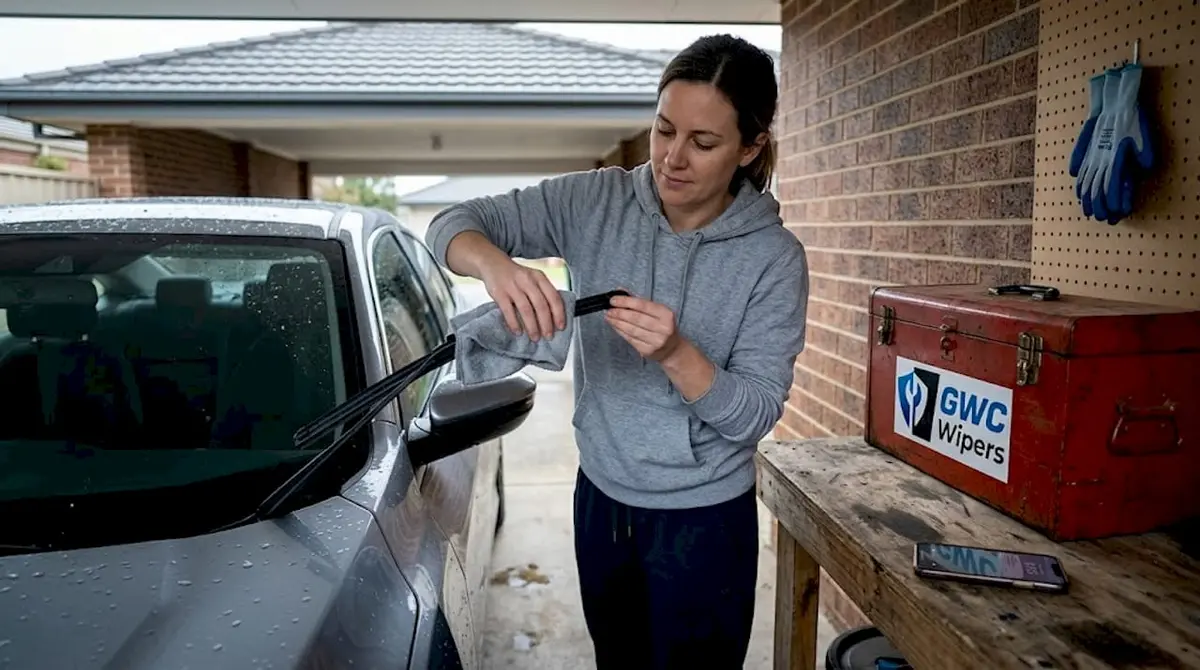
Dirt accumulation on both the blade and the windscreen is another major culprit. Dirt on blades or windshield, bent arms, and dry wiping exacerbate failure significantly, while regular cleaning and proper parking extend blade life. Even a fine layer of grit trapped between the blade and glass acts like sandpaper every time the wiper cycles.
Here is a straightforward routine to get meaningful extra life from your blades:
- Clean blades monthly using a soft cloth dampened with windscreen washer fluid. Wipe along the full length of the rubber edge to remove dirt and oxidised rubber residue.
- Inspect arm tension every time you clean your blades. The arm should hold the blade firmly against the glass without excessive pressure.
- Park wisely in hot weather. Wherever possible, use a garage, carport, or at least a windscreen shade. Sustained direct sun is the primary enemy of blade rubber.
- Use your washer fluid before activating your wipers, even in light drizzle. This reduces friction and prevents grit from scoring the glass.
- Check for damage after heavy storms or dusty outback drives. Debris carried by wind can nick the blade edge and create immediate streaking.
Pro Tip: Set a reminder on your phone every six months to check and replace your blades, especially if you live in a high UV region. You can read more about the ideal wiper replacement frequency for Australian conditions and understand why regular wiper blade replacement directly improves your road safety.
Choosing the right replacement: Materials and fit for Australian weather
Even the best care cannot rescue a mismatched or low-quality blade, so choosing wisely makes all the difference. When it comes time to replace your wipers, the material you select will determine how long they last and how well they perform across Australia’s variable conditions.
| Material | UV resistance | Durability | Best suited to |
|---|---|---|---|
| Natural rubber | Low | 6 to 12 months | Mild, temperate climates |
| Silicone | Very high | 12 to 24 months | High UV, hot, arid regions |
| Hybrid | Medium to high | 12 to 18 months | Mixed conditions |
Silicone blades stand out for Australian drivers because they maintain flexibility across a wide temperature range. They also condition the windscreen glass over time, depositing a thin hydrophobic layer that causes water to bead and roll off even between wiper strokes. Australian owners should inspect blades monthly, replace every 6 months in high UV areas like Sydney or the outback, and opt for silicone or UV-resistant blades to counter local weather.
Fit is equally important. A blade that is even slightly too long or too short for your vehicle will leave uncleaned patches on the windscreen. You can find guidance on measuring wiper blades to ensure you get the correct size for your make and model. Poor fit also places uneven stress on the wiper arm, which can accelerate the mechanical wear we discussed earlier. Always confirm compatibility before purchasing.
When shopping for replacement blades, run through this quick checklist:
- Does the blade material suit your local climate (silicone for high UV regions)?
- Is the blade length correct for the driver and passenger sides of your vehicle?
- Does the blade connector type match your wiper arm fitting?
- Has the product been tested for wiper blade performance testing under Australian conditions?
- Does the brand offer a warranty or replacement guarantee?
What most wiper guides miss: The hidden impact of climate and mechanics
Most articles about wiper blade failure focus on rubber degradation and leave it at that. What they rarely address is how environmental factors and mechanical causes work together to shorten blade life in ways that no single fix can resolve. Australia’s climate does not just damage rubber. It also warps wiper arm geometry through repeated heat and cool cycles, shifting the angle at which the blade meets the glass.
Arm tension is one of the most overlooked contributors to premature wear. Mechanical mismatches like wiper arm tension can cause premature wear even on new blades, as seen in some vehicle models. A brand-new, high-quality silicone blade fitted to a vehicle with excessive arm pressure will still wear unevenly and fail early. This is a scenario we hear about from frustrated drivers who have done everything right and still end up replacing blades too soon.
The solution is to treat blade selection and vehicle-specific maintenance as connected, not separate. Local wiper brands that are engineered with Australian conditions in mind tend to account for these combined pressures better than generic imported options. A targeted, climate-specific approach beats a one-size-fits-all strategy every time.
Find the right wiper blades and extend their life
Understanding all the causes of wiper failure, it is essential to act and find blades that are genuinely built for Australia’s conditions. At GWC Wipers, we make it straightforward to find a precise fit for your vehicle, whether you drive a common commuter car or a commercial fleet vehicle.
You can browse climate-optimised options like Alfa Romeo Giulietta blades or Mercedes-Benz GLA-Class blades using our vehicle selector tool, which matches you to the correct size and connector type instantly. If you drive a Toyota, you can explore our full range of Toyota replacement blades tailored to Australian weather. Every purchase includes free shipping across Australia, a 12-month warranty, and a 30-day money-back guarantee so you can replace with confidence.
Frequently asked questions
How often should I replace my wiper blades in Australia?
It is best to replace every 6 months in high UV or harsh climate regions, which covers much of Australia. Inspect blades monthly so you catch deterioration early.
What are the main signs my wipers need changing?
Streaking, chattering, skipping, and smearing are the clearest signs of hardened or damaged blades. Replace them promptly to maintain safe visibility in wet conditions.
Does choosing silicone or UV-resistant wipers really make a difference?
Yes. Silicone or UV-resistant blades last significantly longer and outperform natural rubber blades in Australian heat and sun exposure, making them well worth the extra investment.
How can I extend the life of my wipers?
Regular cleaning and proper parking away from direct sun are the two most effective habits. Always use washer fluid before activating wipers, and never wipe a dry windscreen.
Can worn-out wipers affect driving safety?
Absolutely. Badly worn blades reduce visibility significantly in rain and can create distracting noise and smearing that slows your reaction time on the road.