
Wiper Fell Off While Driving in Australia? Stop, Then Get a Perfect Fit

If your wiper fell off while driving, your first job is to get the car stopped safely, not to fix the blade. Slow down, signal, and pull over to a safe spot as soon as you can, switching on your hazard lights the moment you stop. Do not keep driving with impaired vision, especially in rain, as official guidance on driving in poor weather confirms. Once you’re stopped safely, we’ll walk you through why it happened and how to get moving again.
TL;DR:
- After stopping safely, remove loose parts, reseat an intact blade, and test it while stationary; if rain still blocks visibility, call roadside assistance.
- Inspect the connector, arm, retaining nut, and rubber; replace a failed clip, but use a mechanic for a bent arm, stripped thread, or severe corrosion.
- Match each blade’s length and the exact connector type to your vehicle; a mismatched adapter can loosen even when the blade seems secure.
- Replace blades about every six months, or sooner for streaking, smearing, chattering, or damaged rubber, and inspect clips and retaining nuts every few months.
Table of Contents
- Immediate actions and short-term fixes
- Diagnose the cause: inspecting the arm, connector and blade
- How to refit a fallen wiper safely
- Replace or repair: blade, adapter or arm
- Choosing the correct replacement and ensuring a perfect fit
- Preventing future failures: inspection and maintenance routine
- Why getting the fit right matters more than the fix
- Get wipers guaranteed to fit your exact vehicle
- FAQ
- Sources
Immediate actions and short-term fixes
Once you’re off the road, take a breath and work through the problem in order. A wiper coming away mid-drive feels alarming, but a calm, methodical approach gets you back on the road with minimal fuss.
- Choose a genuinely safe stopping spot. Look for a shoulder, car park or side street away from traffic, apply the park brake and leave your hazard lights running, in line with guidance for stopping safely in poor conditions.
- Clear the windscreen area. Remove the loose blade, broken clip or adapter from the bonnet or wiper arm so it can’t scratch the glass or get flicked into traffic when you move off again.
- Attempt a simple reseat. If the blade itself is intact and has simply popped off its adapter, line up the connector and press it firmly back into place, checking it clicks or locks before you proceed.
- Improvise only as a last resort. A cable tie or strip of tape might hold a blade loosely in position temporarily, but treat this as a stopgap, not a fix, since it won’t give you reliable clearing in heavy rain.
- Test before you commit. With the engine running, cycle the wipers once at low speed while stationary to confirm the blade stays attached and sweeps the glass properly.
- Call for help if visibility won’t be restored. If you can’t secure the blade and rain is heavy enough to affect your view, phone roadside assistance or a tow rather than pushing on.
Pro Tip: Keep a spare wiper blade and a small cable tie in your glovebox; a roadside swap beats driving blind in a downpour.
Diagnose the cause: inspecting the arm, connector and blade
Before you refit or replace anything, work out why the wiper let go in the first place. Most failures trace back to one of a handful of culprits, and a quick visual check usually tells you which.
- Check the adapter and clip first. Look at the small plastic or metal piece that joins the blade to the arm, since a cracked, snapped or missing clip is the most common cause of a blade flying off.
- Inspect the arm end for damage. A bent hook, worn pin or rounded bayonet fitting can stop a new blade from locking in just as easily as it let the old one go.
- Look for a loose or missing retaining nut. Some wiper arms are held to the spindle by a nut under a small cover; if that’s worked loose, the whole arm can lift and flap before coming away entirely.
- Check for a mismatched connector. A blade fitted with the wrong adapter type for your vehicle may sit on the arm without ever clicking in securely, which eventually shakes loose at speed.
- Look at the rubber itself. Cracked, hardened or torn rubber adds drag and vibration that stresses the mounting point, and NHVIM standards treat a wiper rubber that is cracked, hardened, frayed, curled or torn as a genuine defect.
- Check for corrosion. A rusted or rounded fastener near the coast or in older vehicles often won’t grip properly even when retightened, and usually needs replacing rather than reusing.
If the arm itself is bent, the spindle nut is stripped or the fastener is corroded beyond gripping, you’re looking at an arm or fastener repair rather than a simple blade swap. Confirming the correct blade length and connector type matters here too, and our wiper blade sizes hub walks through measuring your existing blade and matching it to the right fitting.
How to refit a fallen wiper safely
Reattaching a wiper properly, whether at the roadside or in your driveway, comes down to following a clear sequence rather than guessing.
Start with the car switched off and the wipers in their parked position, or manually move the arm to a comfortable working angle. Never attempt this with the ignition on, since an accidental wiper cycle can trap or injure your fingers.
Australian vehicles use several connector styles, and each has its own reattachment method:
- Hook-style connector: Slide the blade’s hook end onto the arm’s curved tip until you hear or feel a firm click, then tug gently to confirm it’s locked.
- Pin-style connector: Align the blade’s pin slot with the arm, push down until the retaining clip engages, and check that the blade sits flush and doesn’t wobble side to side.
- Bayonet-style connector: Fit the blade’s bayonet arm over the connector, push until the locking tab snaps into the housing, then pull lightly to confirm a secure fit. Our bayonet wiper adapter guide covers this fitting in more detail if you’re working through it for the first time.
A small socket or spanner handles any retaining nut at the spindle, and a flat screwdriver helps prise open or reseat a stubborn clip. When tightening a spindle nut, snug it firmly by hand feel rather than forcing it with full strength, since overtightening strips the thread and leaves you worse off than before. If the original clip is lost or broken, a preassembled adapter replaces it cleanly without needing separate parts.
Once the blade is back on, run through a few checks before you drive anywhere beyond a slow test lap:
- Firm engagement with no wobble when you pull gently on the blade.
- A clean, even sweep across the glass at low wiper speed with no catching or juddering.
- No new squeaking, chattering or grinding noise from the arm or motor.
- No driving if the blade visibly mis-tracks, skips sections of glass or the arm looks bent, since none of these resolve themselves and all point to further repair.
Pro Tip: If a reseated clip pops off a second time, replace it rather than refitting it again. A clip that has failed once under load rarely holds for good.
Replace or repair: blade, adapter or arm
Not every failure calls for the same fix, and matching the repair to the actual fault saves you from doing this all over again next month.
- Replace the blade when the rubber is cracked, hardened or torn, when it’s leaving streaks or smears, or when it chatters or judders across the glass, since RACQ’s maintenance guidance points to roughly six months as a typical replacement interval for wiper blades under normal use.
- Replace the adapter or clip when the blade itself still looks sound but keeps detaching, which usually means the connector has failed rather than the rubber.
- Call a mechanic when the arm is corroded, the spindle thread is stripped or the arm itself is visibly bent, since none of these are safe to force back into shape yourself.
Wiper blades naturally wear out and typically need replacing about every six months, and RACQ notes that streaking, smearing, chattering and noisy operation are the clearest early warning signs. A blade that matches your vehicle’s arm and connector is less likely to fail under load in the first place, a point echoed in independent commentary on wiper and windscreen reliability. Replacing a pair of blades is a low-cost job compared with the cost of a tow, a scratched windscreen from flying debris, or a fine for driving with impaired vision, so there’s little reason to put it off once you notice the warning signs.
Choosing the correct replacement and ensuring a perfect fit
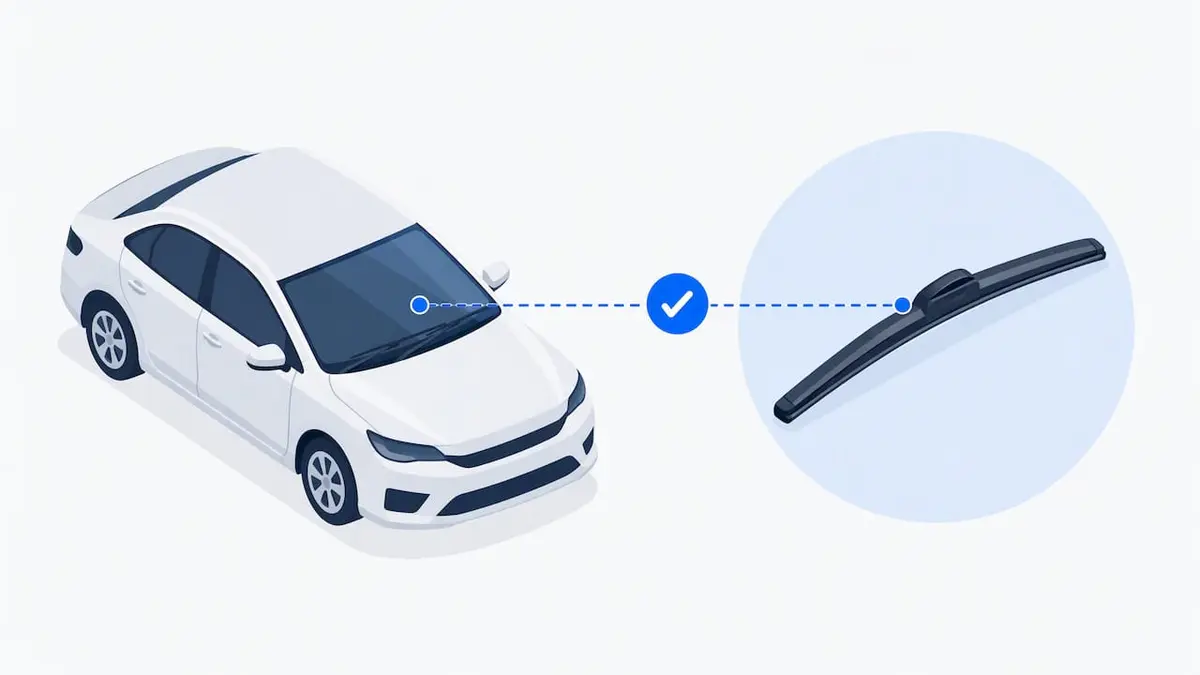
Getting the right blade the first time is what actually stops this happening again. Guessing at length or connector type is exactly how a mismatched blade ends up flapping loose at highway speed.
Our vehicle selector helps match your make, model and year to the correct wiper blades, rather than relying on a tape measure or trial and error at the auto store. Before you buy, run through this checklist:
- Confirm the exact blade length for both the driver and passenger side, since some vehicles use different sizes.
- Match the connector type precisely, whether hook, pin or bayonet, rather than assuming “universal” fittings will seat properly.
- Look for a preassembled adapter included with the blade, so you’re not sourcing a separate clip.
- Check that the product carries a fitment guarantee and a clear warranty, so a wrong match is easy to sort out.
Our guide to choosing wiper blades that fit breaks down why fitment, not just blade quality, is usually the real reason a wiper fails early. A pre-fitted blade with the correct adapter already attached also cuts roadside refit risk dramatically compared with a universal blade that needs trimming or forcing onto an arm it was never designed for. You can browse our full wiper blades range to start narrowing down the right option for your car, and our clean-or-replace test is worth running through if you’re still deciding whether your current blades need replacing at all.
Preventing future failures: inspection and maintenance routine
A few minutes of regular attention goes a long way toward stopping a repeat detachment. Build these habits into your normal car care routine rather than waiting for the next failure to remind you.
- Inspect your blades every month, and plan on full replacement roughly every six months as a baseline, per RACQ’s guidance.
- Clean the rubber edge and the windscreen regularly with a proper glass cleaner, since grit and road film accelerate wear and reduce clearing quality; this streak-free cleaning method is a handy reference for getting the glass genuinely clean rather than just smeared.
- Check the retaining nut and clip for looseness every few months, tightening gently if needed rather than leaving it to work loose further.
- Lift your blades away from the glass during long parking stints in frost or extreme heat to reduce strain on the rubber and the mounting point.
- Keep a spare blade or adapter in the car for long trips, and do a quick wiper test before any drive where rain is forecast.
It’s also worth remembering that the area your wipers sweep is treated as safety-critical glass under NHVIM standards, which means chips or cracks in that zone, not just the wiper itself, can affect roadworthiness.
Pro Tip: Set a reminder on your phone for a wiper check every six months, timed roughly to the start of the wetter months, so you’re never caught out by a blade that’s quietly been degrading all year.
Why getting the fit right matters more than the fix
A wiper falling off mid-drive is rarely bad luck. In our experience, it almost always traces back to a mismatch, whether that’s a connector that was never quite right, a clip under strain it wasn’t built for, or rubber that was already well past its useful life. Treating the roadside fix as the end of the story, rather than the start of a proper diagnosis, is where most drivers go wrong.
The reassuring part is that nearly all of this is preventable. A blade matched precisely to your vehicle’s arm, fitted with the correct adapter and checked every few months, is less likely to let go while driving. We’d rather see drivers spend five minutes confirming fitment now than spend a wet evening on the shoulder of a highway later. Use a proper vehicle lookup, follow the fitment checklist, and treat wiper care as routine maintenance rather than an emergency you deal with after the fact.
— Faisal
Get wipers guaranteed to fit your exact vehicle
Once you’ve dealt with the immediate problem, the lasting fix is making sure it can’t happen the same way twice. We design our blades for Australian conditions, and our vehicle selector helps match them to your make, model and year, so you’re not left guessing at length or connector type.
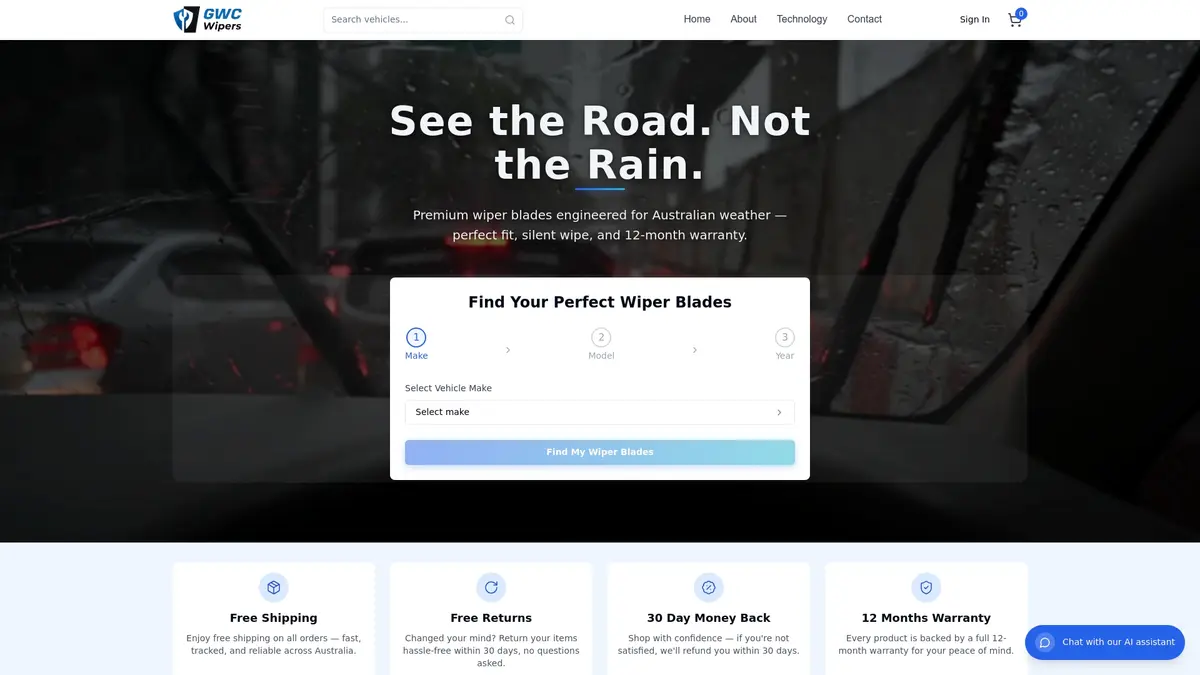
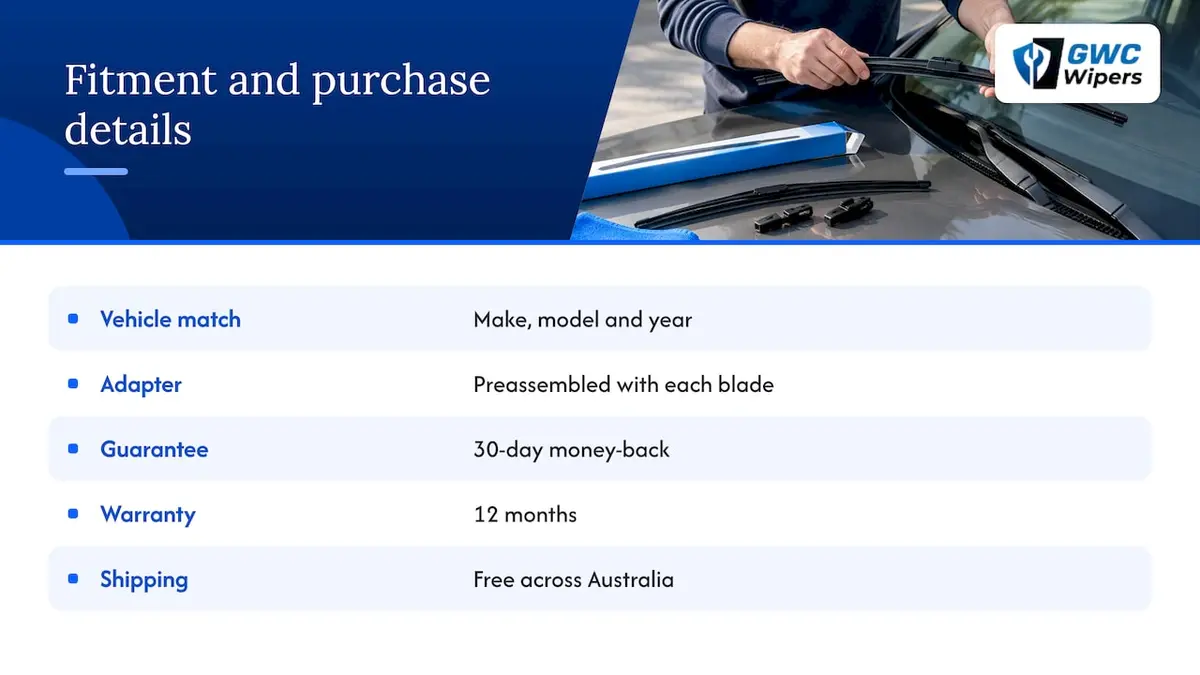
Each blade comes with a preassembled adapter, which can help avoid fitting issues. We back every order with a 30-day money-back guarantee and a 12-month warranty, and shipping is free across Australia. If you’d rather see the fit nailed down for a specific vehicle, our Toyota wiper blades page shows how the selector narrows things down by model and year.
Head to our wiper blades range, enter your vehicle’s details, and get a blade built to match your exact make, model and year, so the next wet drive doesn’t end with you back on the shoulder.
FAQ
Why shouldn’t you leave your windscreen wipers standing up?
Leaving wipers lifted away from the glass for extended periods in heat can weaken the spring tension in the arm over time, though lifting them briefly for frost or short parking is fine. For everyday parking, resting them flat against the glass is the safer default unless you’re protecting against ice.
How do you remove the rubber insert from a wiper blade?
Most blades have a small tab or clip at one end of the frame that releases the rubber insert, letting you slide it out along the metal spine. The exact release point varies by blade design, so checking your blade’s fitting guide before attempting this avoids damaging the frame.
Will an auto parts store fit wiper blades for you?
Many auto parts retailers will fit a blade you’ve purchased in-store, though this varies by location and isn’t guaranteed everywhere. Buying a pre-fitted blade with the correct adapter already attached, like those matched through our vehicle selector, makes a straightforward DIY fit realistic even if in-store fitting isn’t available.
What should you do if your wipers stop working while driving?
Slow down, signal, and pull over to a safe spot as soon as you reasonably can, keeping your hazard lights on once stopped, as guidance on driving in poor conditions sets out. Do not continue driving if rain or spray is affecting your vision, and call roadside assistance if you can’t restore safe clearing yourself.
How often should wiper blades be replaced?
Wiper blades typically need replacing about every six months under normal use, according to RACQ. Watch for streaking, smearing, chattering or torn rubber between scheduled replacements, since any of these signs mean it’s time to swap them sooner.