
Maintain your wipers for crystal-clear vision in harsh Aussie weather

TL;DR:
- Regular cleaning and inspection extend wiper life and ensure clear visibility in harsh Australian weather.
- Climate factors like UV, dust, and salt accelerate wiper wear, necessitating more frequent replacements.
- Using silicone or beam blades provides longer-lasting, safer performance suited for extreme conditions.
You’ve just demisted your windows, rain is hammering the windscreen, and you hit the wiper stalk — only to watch a smeared, streaky arc replace your view of the road. It’s a familiar and genuinely dangerous moment for Australian drivers. Whether you’re navigating a tropical downpour in Queensland, a red dust storm in the Pilbara, or a surprise frost on a Canberra morning, your windshield wipers play a crucial role in keeping your line of sight clear. Neglected blades are one of the most overlooked safety risks on Australian roads. This guide gives you practical, evidence-backed steps to clean, inspect, and replace your wipers so you’re always prepared, no matter what the weather throws at you.
Table of Contents
- What you need before you start
- Step-by-step: Cleaning your wipers and windscreen
- Inspecting and troubleshooting wiper issues
- When and how to replace wiper blades in Australian conditions
- Special tips for extreme and changing weather
- The truth about wiper care in Australia: What most guides miss
- Ready for safe driving? Choose the right wipers for your vehicle
- Frequently asked questions
Key Takeaways
| Point | Details |
|---|---|
| Clean monthly | Monthly cleaning prevents streaks and doubles wiper lifespan in harsh weather. |
| Replace blades regularly | In tough Aussie climates, change wipers every 6–12 months for best results. |
| Choose the right blade | Silicone or beam-style wipers resist UV, heat, and dust and outperform rubber in difficult conditions. |
| Inspect for wear | Check monthly for cracks, hardening, or streaks to stay safe and avoid sudden failure. |
| Prepare for extremes | Use special tips for frost and dust storms, and never run wipers on dry glass. |
What you need before you start
Now that you know why maintenance matters, let’s make sure you have everything you need. Getting set up correctly from the start saves time and protects both your blades and your glass. The right toolkit is simpler than you’d expect, but cutting corners here leads to scratched windscreens and accelerated blade wear.
For cleaning, you’ll need isopropyl alcohol wipes or a solution of warm soapy water, a quality glass cleaner, and a dedicated washer fluid that contains detergents and bug-removal agents. Standard tap water alone isn’t enough — it leaves mineral deposits that gunk up rubber edges over time. A torch helps you spot micro-cracks and debris in low light, and disposable gloves keep oils from your skin off freshly cleaned surfaces.
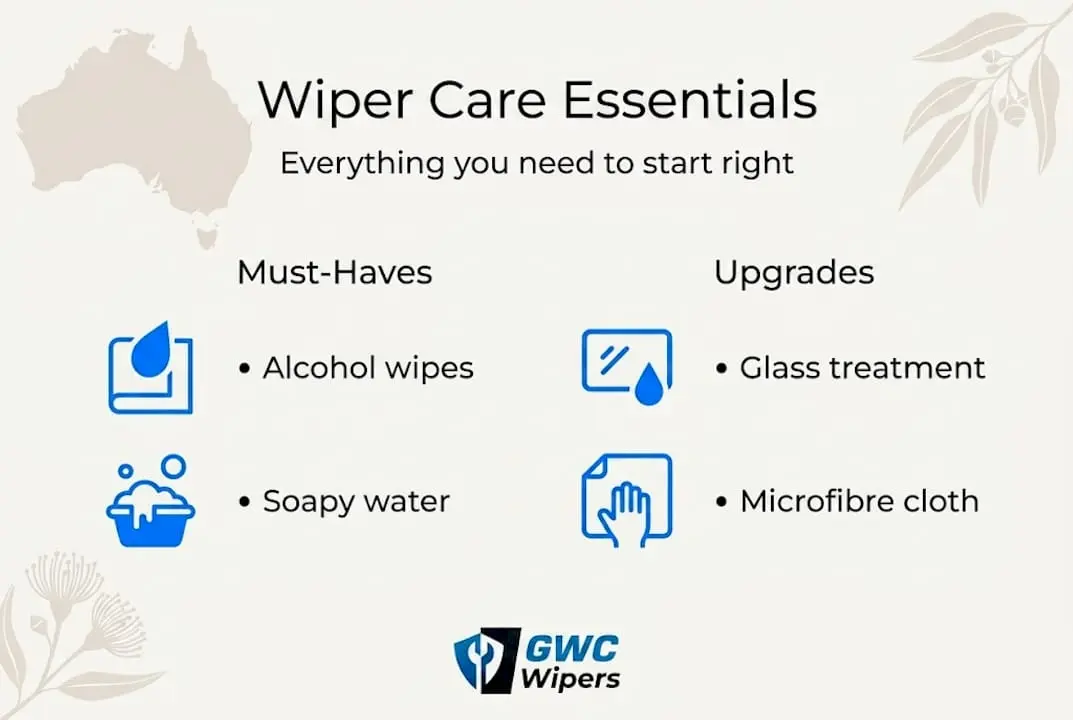
Regular cleaning of wiper blades and windscreen removes grime and extends blade life considerably. It’s one of the simplest yet most effective maintenance habits you can build. Understanding the different wiper blade types for Australia also helps you choose the right cleaning approach for your specific blade design.
| Essential items | Optional upgrades |
|---|---|
| Isopropyl alcohol wipes | Hydrophobic glass treatment |
| Warm soapy water | Bug and tar remover spray |
| Quality glass cleaner | Detailing clay bar |
| Washer fluid with detergent | UV-protective windscreen film |
| Torch and disposable gloves | Compressed air canister |
| Microfibre cloths | Blade protector sleeve |
Pro Tip: Always use a clean microfibre cloth when wiping blades and glass. Standard rags or paper towels leave fibres and fine scratches that shorten both blade and windscreen life.
Step-by-step: Cleaning your wipers and windscreen
With your toolkit prepared, let’s walk through the ideal wiper cleaning routine for harsh weather. The process is straightforward, but the order in which you do things matters more than most drivers realise.
- Lift the wiper arms away from the glass. Fold a folded cloth on the windscreen beneath each arm in case it snaps back accidentally — this protects your glass from a damaging impact.
- Wipe the full length of each rubber blade using an alcohol wipe or soapy cloth. Work from the hinge outward, and turn the cloth as it picks up grime. Don’t stop at the visible edge — run the cloth along both sides of the rubber squeegee.
- Rinse the blades with clean water and dry with a fresh microfibre cloth before lowering them back onto the glass.
- Clean the entire windscreen with a dedicated glass cleaner. Work in sections and buff dry to avoid streaks.
- Top up your washer fluid reservoir with a quality detergent-based fluid before driving.
Regular cleaning resolves most streaking issues and can double blade lifespan in some cases. Use your visibility checklist to make sure nothing is missed during your routine.
| Cleaning frequency | Scenario | Common fault to watch for |
|---|---|---|
| Monthly | Standard suburban driving | Light streaking, dust build-up |
| After every event | Dust storms, coastal drives, heavy rain | Grit scratches, salt residue |
| Every 3 months | Rural or outback travel | Cracked rubber, insect debris |
| Seasonal | Frost-prone areas | Ice damage, brittle edges |
Pro Tip: Clean your wipers monthly as a baseline, and always run a clean after harsh events like dust storms or coastal drives near salty sea spray. Salt and fine abrasive particles are the fastest ways to destroy a rubber edge.
Never run your wipers on a dry windscreen or across ice. Doing so tears the rubber edge and can permanently gouge the glass surface. Always apply washer fluid first.
Inspecting and troubleshooting wiper issues
Once your wipers are clean, regular inspections help you catch problems before they ruin your view. Many faults that drivers attribute to old blades are actually fixable with a simple inspection and targeted remedy.
The most common warning signs include:
- Streaking: Often caused by a dirty or hardened blade edge, or a contaminated windscreen.
- Chattering or skipping: Typically points to a warped rubber squeegee, incorrect arm tension, or a blade that’s lost its flex.
- Missed spots: Suggests a bent wiper arm that no longer applies even pressure across the glass.
- Squeaking: Usually caused by a dry or degraded rubber surface making uneven contact.
For a physical inspection, run your fingertip along the full rubber edge of each blade. You’re feeling for cracks, flat spots, hardened sections, or fraying. These all indicate the rubber has deteriorated and won’t make clean contact with the glass. Also check that the arm spring still applies firm, even pressure by gently pressing and releasing the blade against the glass.
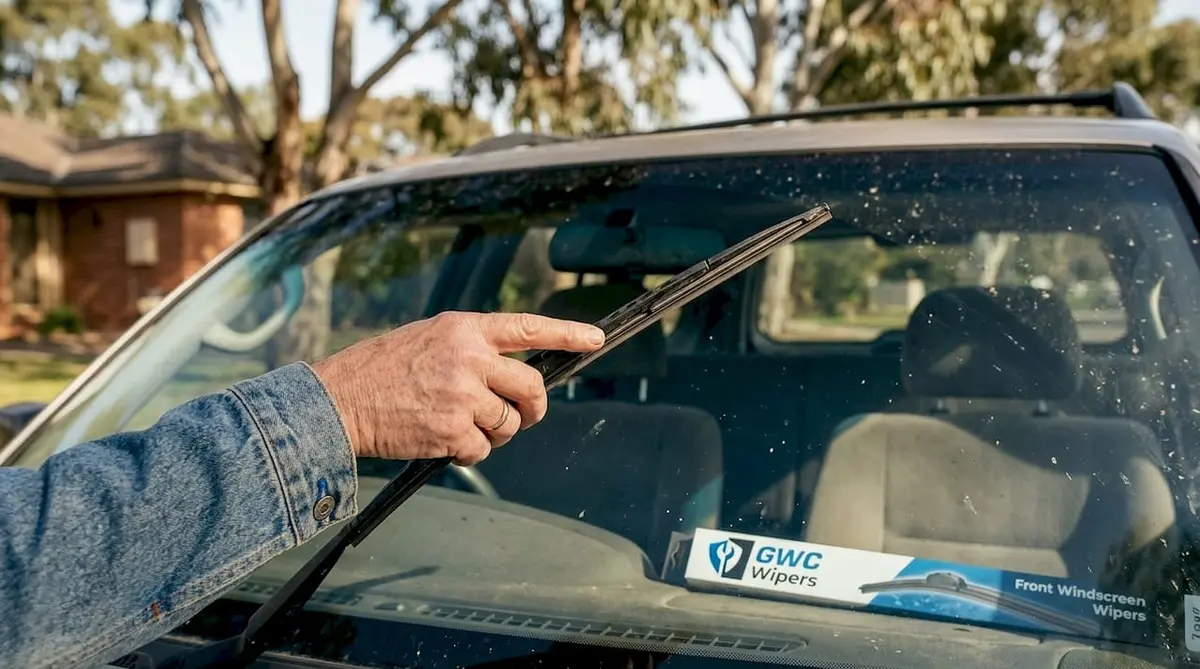
Inspect blades monthly for cracks, hardening, streaking, and skipping; check arm tension and connectors as part of the same routine. If the arm is weak, even a brand new blade will underperform. Understanding blade replacement importance helps you make an informed call on when to act. For guidance on the replacement process itself, changing wipers is simpler than most drivers expect.
Pro Tip: Check your wipers and washer fluid level every time you stop for fuel. It takes 30 seconds and can save you from a dangerous surprise on the road.
Reduced visibility increases accident risk significantly — monthly checks are your best defence against being caught off guard in a sudden downpour.
When and how to replace wiper blades in Australian conditions
If inspection reveals excess wear, replacement or choosing the best blade for your conditions is your next step. Australia’s climate is particularly hard on wiper rubber. Ultraviolet radiation, fine dust, and extreme heat combine to degrade standard rubber blades far faster than in cooler, wetter climates.
In cities like Darwin or Cairns, high humidity and intense UV accelerate breakdown year-round. In outback regions, fine abrasive dust is the primary culprit. Coastal areas add salt exposure into the mix. Each environment demands a slightly different approach.
Replace wiper blades every 6 to 12 months in Australian conditions due to climate degradation, with silicone or beam blades lasting longer than traditional rubber. Here’s how the three main types compare:
| Blade type | Lifespan in Aus. | Best suited for | Drawback |
|---|---|---|---|
| Traditional rubber | 6 months | Mild, shaded climates | Degrades fast in UV and heat |
| Silicone | 12 to 18 months | All climates, especially coastal and outback | Higher upfront cost |
| Beam (frameless) | 12 to 24 months | Tropical, dusty, and varied conditions | Premium price point |
- Silicone blades resist UV hardening and leave a hydrophobic coating on glass, improving clarity in rain.
- Beam blades apply even pressure across the full arc, eliminating the skipping common with traditional frames.
- Rubber blades are the most affordable but require more frequent replacement in harsh Aussie conditions.
Understand how Australian weather impacts wiper lifespan before choosing your next set, and consider heavy-duty wipers if your vehicle regularly operates in punishing conditions.
Pro Tip: If you park outdoors or near the coast, always prioritise silicone or beam designs. The additional investment pays for itself within the first year through fewer replacements.
Special tips for extreme and changing weather
Beyond routine maintenance, some scenarios call for specialised techniques. Australia’s weather can shift dramatically — frost one morning, a dust storm by afternoon, and a coastal squall by evening. Being ready for all of it requires a little forward planning.
For sudden frosts:
- Lift your wiper arms away from the glass overnight if frost is forecast. This prevents the rubber from bonding to the frozen windscreen.
- Never activate your wipers to de-ice the glass. The rubber edge tears against ice and the motor can be damaged under load.
- Use a proper ice scraper or de-icing spray before lowering the arms back onto the glass.
For dust storms:
- Frameless beam designs reduce dust build-up in storms by eliminating the metal frame crevices where grit collects.
- After any dust event, clean your blades and windscreen thoroughly before driving again. Trapped grit acts like sandpaper on both surfaces.
For bug-heavy and coastal drives:
- Use a washer fluid with a dedicated bug-removal agent before long rural drives where insect impact is heavy.
- Top up your reservoir with a product that includes a salt-neutralising formula if you regularly drive near the ocean.
For year-round preparation, read our guide on wipers for frost and our DIY wiper changing guide when it’s time to fit your new set.
Pro Tip: In extreme conditions, don’t wait for your monthly check. Inspect and clean after every significant weather event. The five minutes you spend could spare you a cracked blade mid-downpour.
The truth about wiper care in Australia: What most guides miss
Having covered the practical steps, there’s an often-overlooked reality about Aussie wiper care worth addressing directly. Most maintenance guides focus on rain. But in Australia, UV radiation and fine airborne dust do far more cumulative damage than water ever will. A blade that looks fine to the naked eye can already be hardened and cracked at the microscopic level, delivering poor contact and unsafe visibility.
The hesitation around silicone blades is understandable. They cost more upfront. But when you account for replacement frequency, the maths shifts quickly. A silicone blade lasting 18 months in outback conditions versus a rubber blade needing replacement every five months is a straightforward saving — and a safety improvement.
Garage parking isn’t realistic for most Australians. If your car sits under open sky, UV protection isn’t optional. What many guides also skip is the performance benefit of hydrophobic silicone coatings, which cause water to bead and roll off the glass at speed, reducing how hard your wipers have to work in the first place.
Our honest insight: superior performance from well-maintained, quality blades triples your odds of avoiding a last-minute emergency replacement before a long drive or a sudden storm. Proactive care is always cheaper and safer than reactive replacement.
Ready for safe driving? Choose the right wipers for your vehicle
With all the know-how, the next step is making sure you’re fitted out for the year ahead. At GWC Wipers, we stock premium silicone and beam blades designed specifically for Australian conditions, with fitments covering a huge range of popular models.

Whether you drive a Mercedes-Benz and need reliable GLE-class wiper blades or you’re looking for durable Toyota wiper blades built to handle everything from Darwin’s wet season to the Nullarbor’s red dust, we have a precise fit for your vehicle. Use our easy vehicle selector tool to find the right blade by make, model, and year. Every purchase comes with free shipping across Australia, a 30-day money-back guarantee, and a 12-month warranty, so you can shop with complete confidence.
Frequently asked questions
How often should I replace wiper blades in the outback or coastal Australia?
In harsh climates like the outback or salty coastal regions, replace wipers every 6 months due to accelerated wear from UV exposure and fine dust or salt abrasion.
What’s the best wiper blade for Australian summers?
Silicone or beam-style blades resist UV degradation and last longer than rubber, making them the strongest choice for high heat and dusty or coastal conditions.
Can I run my wipers without washer fluid if it’s just dust?
Never use your wipers dry. Even light dust causes glass abrasion and damages the rubber edge without the lubrication and suspension washer fluid provides.
How do I stop my wipers from chattering or squeaking?
Clean both blades and the windscreen monthly to remove grime that causes chatter, and inspect for hardened rubber or cracked edges that prevent smooth contact.
What if my wipers aren’t clearing properly after heavy rain?
If streaking or reduced visibility continues after a thorough clean, worn edges or skipping indicate the blades need replacing right away rather than further cleaning.